Best Ways to Send Money Abroad from Canada
Discover the best methods for sending money abroad from Canada. Compare options including bank wire transfers, online providers, and cash pickup services to find the best fit for your needs.
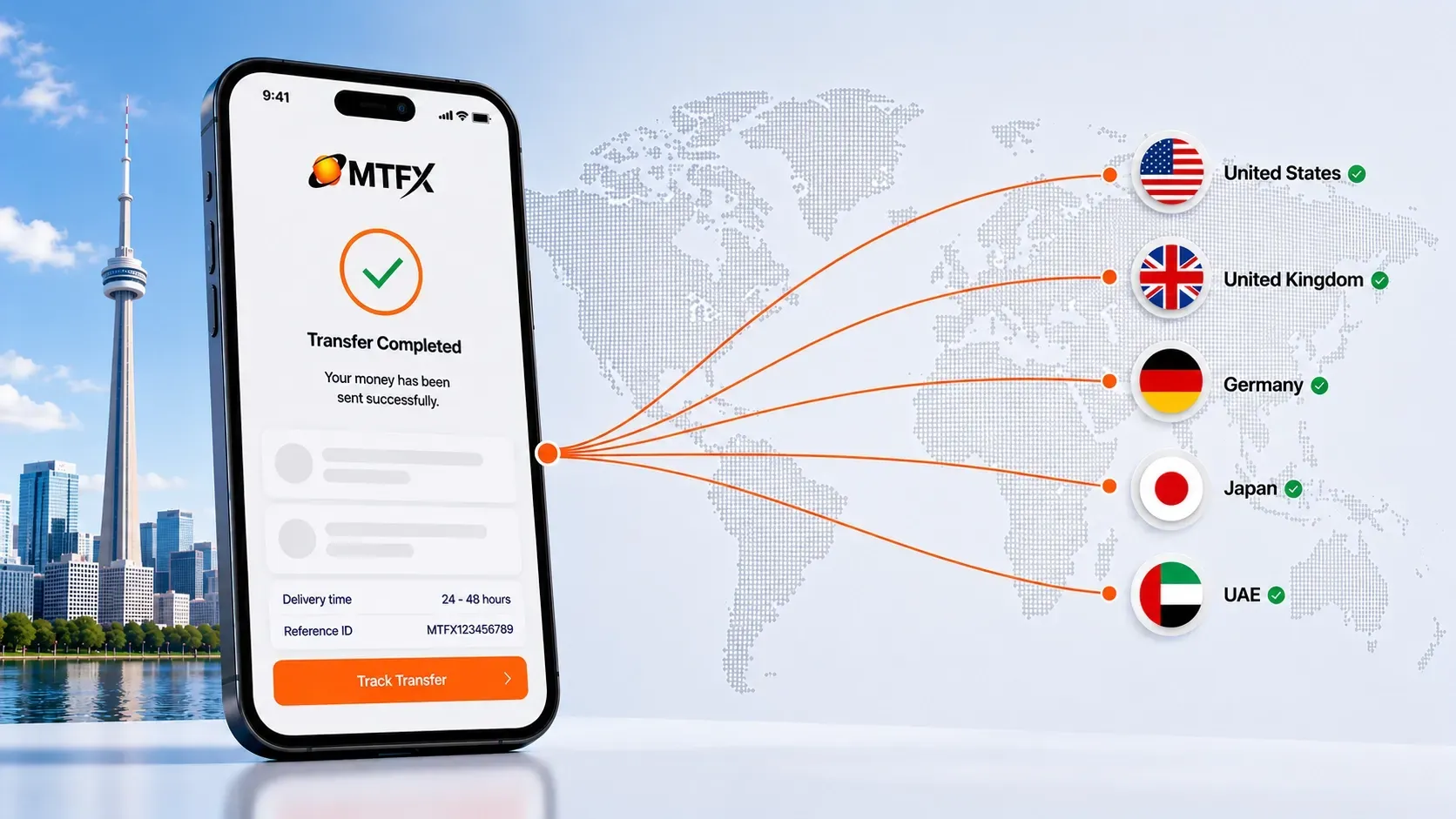
Canadians can send money abroad from Canada through banks, online money transfer providers, cash pickup services, digital wallets, and foreign exchange specialists. It's useful to compare the total transfer cost, not just the transfer fee.
It includes the exchange rate, FX markup, sending fee, receiving fee, delivery time, payment method, transfer limit, and the amount your recipient receives. For larger or planned transfers, MTFX can help Canadians compare exchange rates, manage currency transfers, use FX tools, and send money internationally.
Quick Answer - Canadians can send money outside Canada through banks, international money transfer providers, online foreign exchange platforms, and digital payment services. To complete a transfer, you typically need the recipient's name, banking details, destination country, and the amount and currency being sent.
Before choosing a provider, you can review current currency movement with our live currency charts to understand how exchange rates may affect your transfer. The following blog explains how to compare costs, what details you need, and how to choose the right transfer method from Canada.
What is the best way to send money abroad from Canada?
The best way to send money abroad from Canada is the method that fits your amount, destination, currency, speed, and total cost.
A low transfer fee does not always mean a lower-cost transfer. Some providers charge less upfront but include more cost in the exchange rate. Others may charge a fixed fee but offer a more competitive rate.
Before you send money internationally, compare:
For larger transfers, even a small exchange rate difference can have a bigger impact than the transfer fee.
Compare the main ways to transfer money overseas
The best ways to transfer money overseas from Canada include bank wire transfers, online money transfer providers, cash pickup services, digital wallets, and FX specialists.
Use this comparison as a starting point. The right option depends on the reason for your transfer and the amount the recipient needs to receive.
| Field | Value |
|---|---|
Amount Payable (USD) 10,000 | |
Bank Exchange Rate 1.4287 / 0.6999 | |
Total cost 14,287.14CAD |
| Field | Value |
|---|---|
Amount Payable (USD) 10,000 | |
MTFX Exchange Rate 1.4042 / 0.7121 | |
Total cost 14,042.02CAD |
You Save
CAD 245.12
CAD
22 October 2026
We use mid-market rates. This is for informational purposes only. Log in to view send rates.
Are bank wire transfers a good option?
Bank wire transfers are a common option for sending money internationally from Canada, especially when the recipient needs funds deposited directly into a bank account.
They are often used for:
- Tuition payments
- Property deposits
- Supplier invoices
- Relocation funds
- Large personal transfers
- Formal overseas payments
A wire transfer may require the recipient’s bank name, full legal name, account number, SWIFT/BIC code, IBAN if applicable, bank address, and payment reason. If you need to confirm international banking details, MTFX provides an IBAN tool that can help you review account format requirements before sending.
Bank wires are familiar, but they may include sending fees, exchange rate markups, intermediary bank fees, and receiving bank charges. They can also take longer if the transfer passes through multiple banks.
A bank wire may be suitable when you need a formal transfer record or when the recipient specifically asks for a bank-to-bank payment.
Online transfer providers work well for regular payments
Online money transfer providers are useful for Canadians who want to send money abroad without visiting a branch.
They are often used for:
- Family support
- Rent payments abroad
- Student living expenses
- Smaller personal transfers
- Recurring international payments
- Travel-related support
The main benefit is convenience. You can usually create an account, compare the rate, add recipient details, fund the transfer, and track the payment online.
The main thing to review is the total payout. Rates, fees, transfer limits, funding methods, and delivery times can vary by provider, destination, and currency.
Online transfer providers may work well for small and mid-sized transfers, but larger transfers may need more planning, especially if exchange rates move before the payment deadline.
When should you use cash pickup?
Cash pickup services are useful when the recipient does not have easy access to a bank account or needs cash quickly.
This option may work for:
- Emergency family support
- Recipients without bank accounts
- Remote areas with limited banking access
- Same-day or fast transfers
- Situations where cash is preferred
With cash pickup, the sender starts the transfer in Canada and the recipient collects cash from an agent location abroad. The recipient may need identification and a transaction reference number.
The main advantage is speed and accessibility. The main drawback is cost. Cash pickup services may charge higher fees or offer less favourable exchange rates because they provide fast payout access and agent networks.
Use this option when speed and recipient convenience matter more than getting the lowest total cost.
Digital wallets can work for smaller overseas transfers
Digital wallets can be useful for smaller international payments when both the sender and recipient can access the same platform.
They may work for:
- Small personal payments
- Travel support
- Shared expenses
- App-based transfers
- Quick payments between individuals
Before using a digital wallet, check:
- Whether the recipient can access the platform
- Which currencies are supported
- How the exchange rate is calculated
- Whether withdrawal fees apply
- How long it takes to move funds to a bank account
FX specialists can help with larger international transfers
Foreign exchange specialists can be useful when sending larger or planned international transfers from Canada.
This may include:
- Buying property abroad
- Paying international tuition
- Moving savings after relocation
- Sending inheritance funds
- Managing recurring business payments
- Converting larger CAD amounts into foreign currency
The main benefit is currency support. An FX specialist can help you compare exchange rates, review payment timing, set rate alerts, and manage transfers across different currencies.
MTFX supports personal international money transfers for Canadians who need a more structured way to send money abroad. This can be helpful when the transfer amount is large, the payment deadline matters, or you want more control over currency conversion.
What is the cheapest way to send money internationally?
The cheapest way to send money internationally from Canada is the option with the lowest total cost after fees and exchange rate markup are included.
Do not compare only the transfer fee. Compare the final amount the recipient receives.
For small transfers, the fee can matter more. For large transfers, the exchange rate can have the biggest impact. You can review market movement using live exchange rates before confirming your transfer, while the currency charts will keep you informed about the trends.
A simple way to compare options is:
Total transfer cost = transfer fee + FX markup + intermediary fees + receiving fees
How fast can you send money abroad from Canada?
Transfer speed depends on the provider, destination, currency, funding method, payout method, and compliance checks.
Transfers can take longer if recipient details are incorrect, the currency route is complex, banks are closed, or the provider needs additional verification.
For deadline-based payments, send early. This is especially important for tuition, property deposits, supplier invoices, or immigration-related payments.
6 steps to send money abroad from Canada
Sending money abroad from Canada is easier when you prepare the details first.
1. Confirm the country, currency, and amount
Start with the destination country, recipient currency, and amount you want the recipient to receive. This helps you compare providers more accurately.
2. Compare the exchange rate and fees
Compare exchange rates, transfer fees, and final payout before confirming the transfer. Use the MTFX live rate calculator to review the currency exchange rate before sending.
3. Collect the recipient’s details
For a bank deposit, you may need:
- Recipient’s full legal name
- Bank name
- Account number
- SWIFT/BIC code
- IBAN, if used
- Bank address
- Recipient address
- Payment purpose
If your transfer requires a SWIFT/BIC code, the MTFX SWIFT code tool can help you check bank code details before you send.
For cash pickup, the recipient may need identification and a transaction reference number.
4. Verify your identity
Regulated providers may need to verify your identity before processing a transfer. This supports compliance and helps protect customers.
5. Fund the transfer
Depending on the provider, you may fund the transfer by bank account, bill payment, EFT, wire, debit card, or another approved method.
6. Track the payment
Save your receipt and tracking details. For tuition, property, or business payments, keep confirmation for your records.
Which transfer method is best for your purpose?
The right method depends on why you are sending money abroad.
For larger or recurring payments, planning ahead can help you avoid rushed decisions and unexpected costs.
How can you reduce international transfer costs?
You can reduce international transfer costs by comparing the full payout, timing your transfer, and avoiding unnecessary fees.
Practical ways to manage costs include:
- Compare exchange rates before sending money
- Check the final recipient amount
- Avoid urgent transfers when possible
- Review bank receiving fees
- Use rate alerts for target currencies
- Send larger planned amounts instead of many small payments
- Pay in the invoice currency when required
- Check payment cut-off times
- Speak with an FX specialist for larger transfers
Exchange rates can change throughout the day, affecting the amount your recipient receives. The Bank of Canada publishes exchange rate information that can help Canadians understand currency movements before sending money abroad.
If you are paying tuition, sending property funds, or moving a larger amount overseas, MTFX can support companies that need to manage currency risk and cross-border payment planning.
What details do you need for an international money transfer?
You usually need sender details, recipient details, bank information, transfer amount, currency, and payment reason.
Incorrect details can delay the transfer or cause the payment to be returned. Always confirm the information with the recipient before sending.
Are international money transfers from Canada safe?
International transfers can be safe when you use a legitimate provider, verify recipient details, and avoid suspicious payment requests.
Before sending money abroad:
- Use a regulated or trusted provider
- Confirm the recipient’s identity
- Check bank details carefully
- Avoid sending money to strangers
- Be cautious with urgent payment requests
- Watch for romance, investment, rental, and invoice scams
- Keep receipts and confirmation records
- Ask your provider before sending a large transfer
MTFX provides Canada-specific details on its regulatory and compliance page for readers who want to review compliance information before choosing a provider.
For large payments, take extra time to verify the transfer instructions. If something feels unusual, pause before sending.
Sending large amounts abroad requires better planning
Large international transfers need more planning because exchange rate changes can affect the final amount.
Before sending a large amount, consider:
- Getting a live exchange rate quote
- Asking about transfer limits
- Confirming documentation requirements
- Checking the payment deadline
- Reviewing recipient bank instructions
- Setting rate alerts
- Speaking with an FX specialist


Canadians should consider using providers that comply with Canadian anti-money laundering and regulatory requirements. Information about Canada's financial intelligence agency and regulatory framework is available through FINTRAC.
What information do you need before sending money internationally?
Before sending money internationally, you may need:
- Recipient's legal name
- Bank account number
- SWIFT/BIC code
- IBAN (where applicable)
- Recipient bank name
- Recipient bank address (sometimes required)
- Transfer amount and currency
Some international transfers require a SWIFT/BIC code, which helps identify the recipient's financial institution and route payments correctly through the global banking network. According to SWIFT, BICs are standardized identifiers used to support international payment processing.
Why choose MTFX to send money abroad from Canada?
MTFX can help Canadians send money internationally from Canada with competitive exchange rates, secure cross-border transfers, online currency tools, and specialist support.
Individuals can use MTFX for overseas tuition, family payments, property transfers, relocation funds, and other personal international payments. Businesses can use our platform for supplier payments, foreign exchange, and cross-border payment solutions.
Make your overseas transfer easier
Sending money abroad is not just about choosing a provider. The main takeaway is simple: the more important the payment is, the more important it becomes to compare your options, review the exchange rate, and plan your transfer before the deadline.
Better planning can help you:
- Compare exchange rates more clearly
- Reduce avoidable transfer costs
- Avoid rushed currency conversion
- Improve payment timing
- Track international transfers more confidently
- Manage large overseas payments with better support
- Send money abroad with a clearer process
Sign up with MTFX to send money abroad from Canada with competitive exchange rates, secure cross-border transfers, currency tools, personal and business payment solutions, and specialist support for managing international payments.
FAQs
1. What is the best way to send money abroad from Canada?
The best way is to compare the exchange rate, transfer fee, delivery time, payout method, and final recipient amount. For larger transfers, an FX specialist may help with rate planning and currency support.
2. What are the cheapest ways to send money internationally from Canada?
The cheapest option is the provider that gives the recipient the highest final amount after exchange rate markup, transfer fees, intermediary charges, and receiving fees are included.
3. Can I send money from Canada to another country online?
Yes. Many banks, online transfer providers, and FX specialists allow Canadians to send money abroad online after account setup and identity verification.
4. How long does it take to send money overseas from Canada?
International transfers can take minutes, the same day, or several business days. Timing depends on the provider, destination, currency, payment method, and verification requirements.
5. Is a bank wire the best way to send money abroad?
A bank wire can be useful for formal bank-to-bank payments, but it may not always be the lowest-cost option. Compare the exchange rate, wire fee, intermediary charges, and receiving bank fees before sending.
6. What information do I need for an international money transfer?
You usually need the recipient’s full name, bank account number, bank name, SWIFT/BIC code, IBAN if applicable, destination currency, and payment purpose.
7. Are international money transfers from Canada safe?
They can be safe when sent through a legitimate provider and verified recipient details. Avoid sending money to unknown people or responding to suspicious urgent payment requests.
8. Can I send a large amount of money abroad from Canada?
Yes. Canadians can send large international transfers, but providers may require identity verification, documentation, and extra compliance checks. Plan large transfers early.
9. What is the fastest way to send money abroad from Canada?
Cash pickup and some online transfer services may offer fast delivery, depending on the destination and funding method. Faster transfers may cost more, so compare speed and total cost together.
10. Why use MTFX for international money transfers?
MTFX helps Canadians send money internationally, compare exchange rates, set rate alerts, and access FX support for personal and business payments.
11. What is the cheapest way to send money outside Canada?
International money transfer providers and foreign exchange specialists often offer lower fees and more competitive exchange rates than traditional banks. Comparing the total cost, including fees and exchange rates, can help you find the most cost-effective option.
12. How long do international transfers take?
International transfers can take anywhere from the same day to several business days, depending on the destination, payment method, and receiving bank. Processing times may be longer if additional verification is required.
13. What information is needed for an international transfer?
You typically need the recipient's full name, bank account details, destination country, and transfer currency. Some countries may also require a SWIFT/BIC code or IBAN.
14. Are international money transfers safe?
Yes, international money transfers are generally safe when sent through reputable and regulated providers. Always verify recipient details carefully and use secure platforms to help reduce the risk of fraud or payment errors.
Avoid unnecessary fees and keep more of your money with MTFX.