How to Pay Suppliers in China from Canada | CAD to CNY
Canadian businesses can pay suppliers in China by sending funds directly to the supplier’s verified bank account. Confirm the invoice currency, beneficiary details, SWIFT/BIC code, and payment reference before transferring. Comparing the CAD to CNY rate, FX markup, fees, and final amount received can help reduce the total cost.
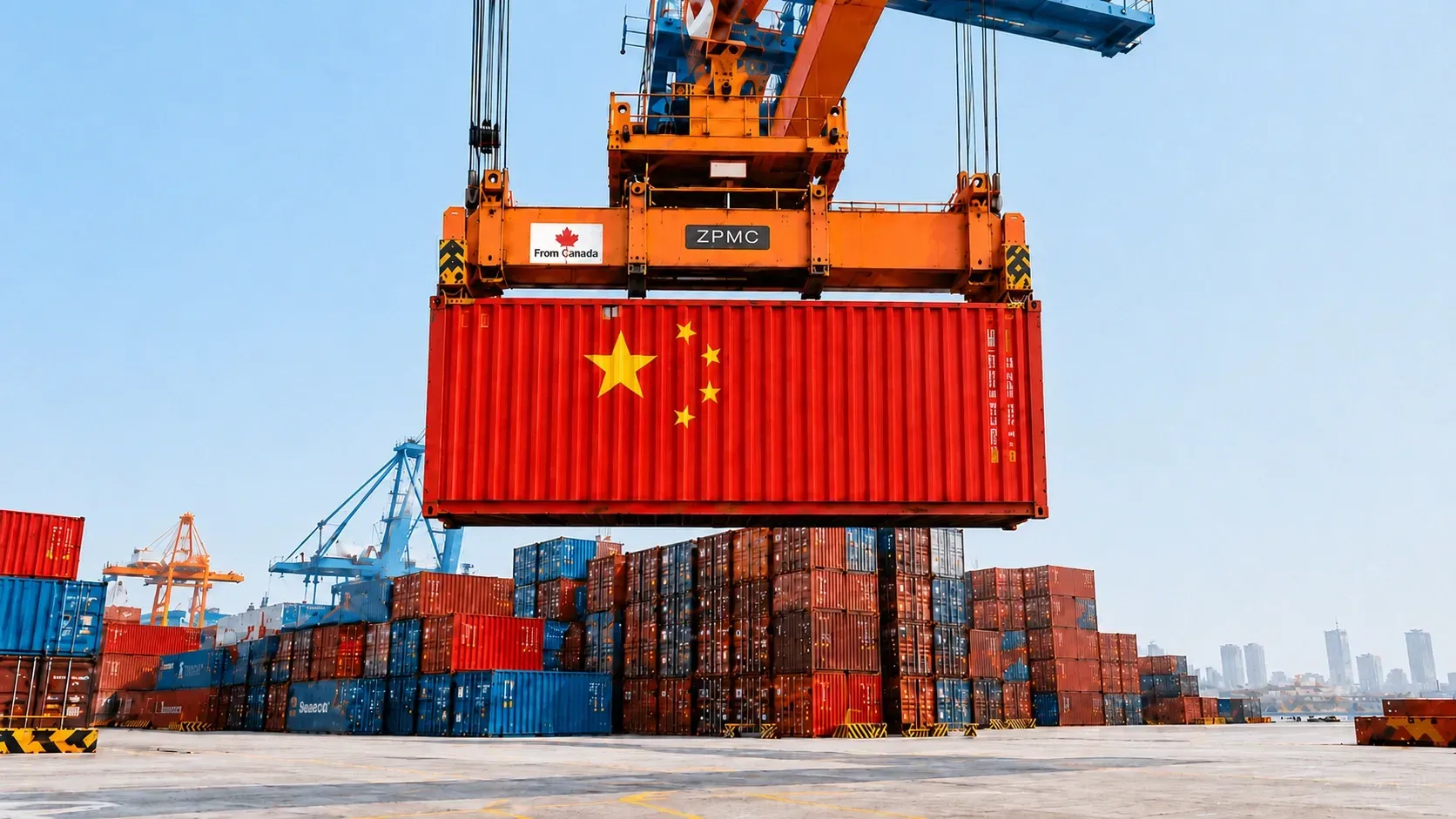
Canadian businesses can pay suppliers in China by converting Canadian dollars into the agreed invoice currency and sending the funds directly to the supplier’s verified business bank account. Before making the payment, confirm the supplier’s legal name, beneficiary details, invoice reference, currency, and payment terms.
The total cost of a supplier payment depends on more than the visible transfer fee. The CAD to CNY exchange rate, foreign exchange markup, intermediary bank deductions, receiving-bank charges, and transfer timing can all affect how much Chinese yuan reaches the supplier.
MTFX has been helping clients move money internationally since 1996. Canadian companies can use MTFX for secure business money transfers, competitive exchange rates, payment tracking, rate alerts, and specialist support when paying suppliers and commercial partners in China.
What is the best way to pay a supplier in China?
The best way to pay a Chinese supplier is to send the agreed invoice currency directly to the supplier’s verified business bank account through a provider that supports commercial payments to China.
Before transferring funds, compare the complete payment cost, including the exchange rate, FX markup, transfer fee, possible intermediary deductions, and the exact amount the supplier is expected to receive.
Businesses should also verify any new or amended banking instructions through a trusted supplier contact before authorizing the payment.
How do supplier payments from Canada to China work?
A supplier payment to China normally begins with an approved commercial invoice. Your Canadian business funds the payment in Canadian dollars, the currency is converted into Chinese yuan or another agreed currency, and the funds are routed to the supplier’s beneficiary bank.
The payment may pass through one or more intermediary or correspondent banks before reaching the supplier. The exact route depends on the currencies involved, the sending institution, the beneficiary bank, and the payment network.
What happens when CAD is converted to CNY?
The payment provider quotes an exchange rate showing how many Chinese yuan your Canadian dollars will purchase. The customer rate may differ from the reference market rate because an FX margin can be included in the quoted conversion rate.
For example, if your company needs to pay a CNY 500,000 invoice, the amount of Canadian dollars required will change as the CAD to CNY rate moves. Even a relatively small difference in the exchange rate can have a noticeable effect on a large supplier invoice.
When comparing payment quotes, focus on the total number of yuan delivered rather than looking only at the advertised transfer fee. You can also compare CAD to CNY exchange rates before approving the transfer.
| Field | Value |
|---|---|
Supplier Invoice Amount (CNY) 50,000 | |
Bank Exchange Rate 0.2130 / 4.6954 | |
Total cost 10,648.8CAD |
| Field | Value |
|---|---|
Supplier Invoice Amount (CNY) 50,000 | |
MTFX Exchange Rate 0.2093 / 4.7773 | |
Total cost 10,466.1CAD |
You Save
CAD 182.7
with MTFX
3 November 2026
We use mid-market rates. This is for informational purposes only. Log in to view send rates.
Should you pay Chinese suppliers in CNY or USD?
Chinese suppliers commonly invoice international customers in either Chinese yuan or US dollars. The better option depends on the supplier’s pricing, your company’s currency exposure, and the terms of the purchase agreement.
A Canadian buyer should request quotes in both currencies where possible. This makes it easier to determine whether the supplier has added an FX buffer to the USD price or is offering more competitive pricing in CNY.
1. Paying suppliers in Chinese yuan
Paying in CNY allows the supplier to receive the local invoice currency without completing its own USD to CNY conversion.
Potential advantages include:
- More transparent local-currency pricing.
- Less reliance on the supplier’s exchange rate.
- A clearer view of the exact amount due.
- Possible room to negotiate a better unit price.
- Direct alignment between the payment and the supplier’s local operating costs.
However, the Canadian buyer assumes the CAD to CNY exchange rate exposure and must arrange the currency conversion.
2. Paying suppliers in US dollars
USD remains widely used in international trade and may be preferred by suppliers that regularly export goods. However, paying in USD can create additional currency considerations.
Your business converts CAD into USD, while the supplier may later convert the received dollars into CNY. The supplier may also include a currency-risk buffer in its pricing.
The decision should be based on the complete commercial cost rather than the currency name alone. Ask the supplier for both CNY and USD quotations and compare them before approving the purchase order.
Businesses evaluating local-currency pricing can also review the advantages of paying Chinese suppliers in their local currency.
What are RMB, CNY, and CNH?
The terms RMB, CNY, and CNH are related, but they are not always used in exactly the same way.
Renminbi, commonly abbreviated as RMB, is the official name of China’s currency. Yuan is the main unit of that currency. CNY is the currency code generally associated with onshore Chinese yuan, while CNH is commonly used by financial markets to describe yuan traded outside mainland China.
For a supplier invoice, follow the exact currency and payment instructions provided by the supplier and confirmed by the beneficiary bank or payment provider.
What information do you need to pay a supplier in China?
To pay a Chinese supplier successfully, your business needs complete and accurate beneficiary information. Missing or inconsistent details can lead to payment delays, compliance questions, or returned funds.
You will typically need:
- The supplier’s registered legal business name.
- Beneficiary account name.
- Bank account number.
- Bank name.
- Bank branch name and address.
- SWIFT/BIC code.
- CNAPS code when requested for the payment route.
- Supplier’s registered address.
- Invoice number.
- Payment amount and currency.
- Payment purpose or description of the goods or services.
- Correspondent bank details where applicable.
- Supplier contact information.
A SWIFT code, also called a BIC, identifies a financial or non-financial institution within international financial messaging. SWIFT explains that the Business Identifier Code is an international standard used to identify institutions in financial transactions. Review SWIFT’s official BIC information.
Do not rely only on banking details sent in a new email, especially when the instructions have recently changed. Confirm amendments through a known phone number or an established supplier contact.
What documents may be required for a Chinese supplier payment?
International business payments may be reviewed by the sending provider, intermediary institutions, or the receiving bank. The information requested depends on the payment amount, supplier, goods or services, business relationship, and payment purpose.
Your company may be asked to provide:
- A commercial invoice.
- Purchase order.
- Supplier contract.
- Description of goods or services.
- Shipping or customs documents.
- Payment-purpose declaration.
- Corporate registration documents.
- Beneficial ownership information.
- Proof of source of funds.
- Prior payment history.
- Supplier verification records.
Having the documents ready can reduce delays, particularly for first-time beneficiaries, unusual payment amounts, or transactions that differ from your company’s normal activity.
Canadian companies exploring or expanding commercial relationships in China can also access market information and business resources through the Canadian Trade Commissioner Service.
How to pay a Chinese supplier from Canada in seven steps
A consistent supplier-payment process can help your business reduce errors, maintain approval controls, and make sure the supplier receives the correct amount.
1. Verify the supplier and invoice
Confirm the supplier’s legal identity before sending a deposit or final payment. The company name on the invoice should correspond with the beneficiary account name or have a reasonable documented explanation.
Review:
- Supplier registration details.
- Commercial contract.
- Purchase order.
- Invoice number.
- Goods or services being purchased.
- Payment schedule.
- Deposit and balance requirements.
For a new supplier, complete appropriate due diligence before making the first transfer.
2. Agree on the payment currency
Confirm whether the supplier expects payment in CNY, USD, or another currency. Ask the supplier to provide pricing in more than one currency where possible.
Compare the resulting cost after accounting for the relevant exchange rates rather than assuming one currency will always be cheaper. The currency should be clearly stated in the invoice, contract, and payment instructions.
3. Compare the complete payment cost
Do not compare providers based only on a flat wire fee.
Review:
- Quoted exchange rate.
- Difference from the reference rate.
- FX markup.
- Transfer fee.
- Intermediary charges.
- Receiving-bank deductions.
- Amount expected to arrive.
- Delivery estimate.
- Support available if the payment is delayed.
The CAD to CNY exchange rate comparison can help businesses review currency pricing before arranging a supplier payment.
4. Confirm the beneficiary details
Check every payment field carefully before submitting the transfer.
Verify:
- Beneficiary name.
- Account number.
- Bank name.
- Bank branch.
- SWIFT/BIC code.
- CNAPS code when requested.
- Supplier address.
- Payment reference.
- Invoice number.
If the supplier changes its bank details, confirm the change using an established communication channel rather than replying directly to the change request.
5. Choose an exchange rate strategy
For an immediate invoice, your business may convert at the current available rate. For planned or recurring invoices, the company may consider:
- Monitoring the exchange rate.
- Setting a target-rate alert.
- Converting funds in stages.
- Building an exchange rate assumption into the purchasing budget.
- Discussing a forward contract for an eligible future payment.
A forward contract may help an eligible business secure an exchange rate for a future payment, but it is a binding agreement and should be used only after understanding the applicable terms.
6. Fund and authorize the payment
Fund the transfer using a method supported by your payment provider and follow your company’s internal authorization process.
Larger payments may require:
- Dual approval.
- Supporting invoice documents.
- Confirmation of source of funds.
- Beneficiary screening.
- Additional payment-purpose information.
Do not divide legitimate payments solely to avoid standard reporting, verification, or record-keeping requirements.
7. Track, confirm, and reconcile the transfer
After the transfer has been released:
- Save the payment confirmation.
- Track the transaction status.
- Confirm receipt with the supplier.
- Record the amount delivered.
- Match the transfer against the invoice.
- Retain all supporting records.
- Investigate any shortfall or deduction.
This helps your accounts-payable team maintain accurate records and resolve supplier questions more efficiently.
Reduce FX costs with competitive CAD/CNY exchange rates
What does a CAD to CNY supplier payment really cost?
The real cost of a supplier payment includes the Canadian dollars spent to purchase the required yuan, plus any separate payment charges.
A provider advertising a low transfer fee may still apply a wider FX markup. Conversely, a provider charging a visible fee may offer a more competitive exchange rate. The important figure is the total cost required to deliver the agreed invoice amount.
Example of how the exchange rate affects a supplier payment
Suppose a Canadian business needs to pay a supplier CNY 500,000.
If one provider offers an effective rate of CNY 5.20 for every CAD, the business would need approximately CAD 96,154 before separate fees.
At an effective rate of CNY 5.10 for every CAD, the business would need approximately CAD 98,039. That is a difference of about CAD 1,885 on the same supplier invoice.
This example is illustrative only and does not represent a current market quote. Actual rates change continuously and vary by provider, payment size, market conditions, and service arrangement. Businesses can review live exchange rates before planning a transfer.
What payment methods can Canadian businesses use?
The appropriate payment method depends on the invoice value, supplier relationship, order risk, required delivery speed, and available banking arrangements.
1. Business FX and international payment providers
A specialist business-payment provider may be suitable for companies that regularly convert currency and pay overseas invoices.
Potential advantages include:
- Competitive business exchange rates.
- Direct foreign-currency payments.
- Saved beneficiary details.
- Transfer tracking.
- Rate alerts.
- Support for recurring payments.
- FX risk-management tools.
- Specialist assistance.
MTFX’s global payment solutions help Canadian businesses manage payments to international suppliers, vendors, and commercial partners.
2. Bank wire transfers
Bank wires are familiar and widely accepted for international supplier payments. However, businesses should review:
- The bank’s exchange rate markup.
- Outgoing wire fee.
- Intermediary charges.
- Recipient-bank fees.
- Payment-tracking options.
- Cut-off times.
- Support when instructions are rejected.
The bank’s posted transfer fee may represent only one part of the total cost.
3. Card and marketplace payments
Credit cards, purchasing cards, and marketplace payment systems may be convenient for samples, deposits, or smaller orders.
Possible drawbacks include:
- Percentage-based processing fees.
- Foreign transaction charges.
- Lower payment limits.
- Supplier surcharges.
- Chargeback restrictions.
- Less favourable exchange rates.
These methods may be less economical for large recurring invoices.
4. Alipay and WeChat Pay
Alipay and WeChat Pay are commonly used for retail and domestic payments in China, but they are not necessarily the most appropriate methods for a substantial Canadian B2B supplier invoice.
Commercial payments still require appropriate invoices, verified beneficiary information, accounting records, and a cross-border payment method suitable for the transaction size and purpose.
How long does it take to pay a supplier in China?
A supplier payment from Canada to China may take one to several business days, depending on the payment method, currency, verification requirements, and banking route.
Factors affecting delivery include:
- The time and day the transfer is submitted.
- Provider and bank cut-off times.
- Funding method.
- Currency availability.
- Compliance review.
- Accuracy of beneficiary details.
- Intermediary-bank routing.
- Receiving-bank processing.
- Canadian and Chinese bank holidays.
- Requests for additional documents.
A transfer may take longer when it is the first payment to a new supplier, when beneficiary information is incomplete, or when the transaction requires additional review.
Build sufficient time into the payment schedule so the supplier receives the funds before production, shipping, or document-release deadlines.
Can a Canadian business send more than CAD 10,000 to China?
Canadian businesses can make legitimate international supplier payments above CAD 10,000. A transaction does not become prohibited simply because it exceeds that amount.
However, banks, money services businesses, and other regulated financial entities have reporting, record-keeping, identity-verification, and compliance responsibilities. Your payment provider may request supporting documents such as the commercial invoice, supplier contract, payment purpose, source of funds, and beneficiary information.
FINTRAC provides information about reporting international electronic funds transfers through its electronic funds transfer reporting guidance.
Canadian businesses can also review MTFX’s Canadian compliance information before opening an account or arranging a large supplier payment.
How can businesses manage CAD to CNY exchange rate risk?
Exchange rate changes can increase or reduce the Canadian-dollar cost of a supplier invoice between the date the order is placed and the date payment becomes due.
Businesses with regular exposure should use a consistent process instead of attempting to predict short-term market movements.
1. Monitor the exchange rate before invoices fall due
Review the CAD to CNY rate throughout the purchasing cycle rather than checking it only on the payment date.
MTFX provides access to live exchange rates, an exchange rate calculator, and other currency tools that can help finance teams monitor market movements.
2. Set a target-rate alert
A currency rate alert can notify your business when the market reaches a selected level.
A rate alert does not guarantee that the chosen level will be reached, but it can help your finance team monitor the market without checking rates manually throughout the day.
3. Consider forward contracts for planned payments
An eligible business may use a forward contract to secure an exchange rate for a future supplier payment.
This can provide greater certainty over:
- Landed cost.
- Gross margin.
- Purchase budget.
- Customer pricing.
- Cash-flow forecasting.
Forward contracts are binding and may involve deposits, credit terms, or other conditions. Discuss the structure and obligations with an FX specialist before entering into an agreement.
4. Convert funds in stages
Instead of converting the full requirement on one date, a company with recurring invoices may purchase currency in several stages.
This layered approach can reduce reliance on a single market level, although it does not guarantee a lower average exchange rate.
5. Include FX assumptions in product costing
Importers should incorporate exchange rate assumptions into:
- Product costs.
- Freight costs.
- Customs and duties.
- Supplier deposits.
- Customer pricing.
- Gross-margin targets.
The purchasing and finance teams should agree on the rate used for budgeting and determine how significant market changes will be managed.
Businesses with regular currency exposure can explore FX risk-management solutions aligned with their payment schedules and financial objectives.
Common mistakes when paying suppliers in China
Supplier payments can be delayed, returned, or exposed to fraud when businesses do not follow a controlled payment process.
- Sending funds to unverified replacement bank details.
- Paying in USD without comparing the supplier’s CNY price.
- Focusing on the transfer fee while ignoring the FX markup.
- Entering a trading name instead of the legal beneficiary name.
- Omitting the invoice number or payment purpose.
- Using an incorrect SWIFT code or branch address.
- Paying too close to a production or shipping deadline.
- Failing to confirm who is responsible for intermediary charges.
- Ignoring Canadian or Chinese bank holidays.
- Sending a large deposit without completing supplier verification.
- Sending business funds to a personal bank account without proper verification.
- Failing to retain invoices, transfer receipts, and approvals.
- Assuming every payment provider supports direct CNY settlement.
How recurring Chinese supplier payments can be streamlined
Businesses making frequent supplier payments should standardize the process instead of rebuilding every transaction manually.
A more efficient payment workflow may include:
- Saving verified beneficiary details.
- Establishing payment approval limits.
- Using dual authorization for large transfers.
- Scheduling recurring invoice payments.
- Consolidating approved invoices into payment batches.
- Maintaining centralized transaction records.
- Using consistent invoice references.
- Connecting payment data with accounts-payable processes.
- Tracking payment status from one dashboard.
- Reconciling transfers against invoices and purchase orders.
Businesses processing a large number of supplier invoices can use payment automation and accounts-payable automation to reduce manual work, strengthen approval controls, and improve visibility across international payments.
A multi-currency account may also help companies manage balances in different currencies when their payment and collection structure supports it.
For additional planning guidance, review these practical tips for managing foreign vendor invoices.
How can supplier-payment fraud be prevented?
Business email compromise is a serious risk in supplier-payment workflows. Fraudsters may imitate a supplier, intercept an email conversation, or send false instructions directing the payment to a different bank account.
Reduce the risk by:
- Verifying every new beneficiary.
- Calling a known supplier contact to confirm bank changes.
- Avoiding phone numbers provided only in the change request.
- Requiring dual approval for amended banking instructions.
- Comparing the beneficiary name with the supplier’s legal name.
- Using secure supplier portals where available.
- Restricting who can create and approve beneficiaries.
- Keeping supplier contact records up to date.
- Training employees to recognize urgent or unusual requests.
- Reviewing the payment amount, currency, and destination before release.
Once a fraudulent international payment has been released, recovering the funds may be difficult. Treat every unexpected banking change as a high-risk event.
Why Canadian businesses use MTFX for China supplier payments
MTFX helps Canadian companies manage international supplier invoices, foreign exchange, and business payments through one platform. Top benefits of working with them include;
- Competitive CAD to CNY exchange rates.
- Secure international supplier and invoice payments.
- Foreign exchange rate alerts.
- Eligible FX risk-management solutions.
- Payment tracking and specialist support.
- Recurring and multiple-beneficiary payments.
- Business payment records and reporting.


Pay Chinese suppliers with greater control over FX costs
Paying a supplier in China requires more than entering bank details and submitting a wire. The invoice currency, exchange rate, FX markup, beneficiary information, bank deductions, and payment timing all affect the final cost and delivery.
Canadian businesses can improve the process by verifying every supplier, comparing CNY and USD pricing, monitoring CAD to CNY movements, maintaining clear approval controls, and confirming the exact amount expected to reach the beneficiary.
Sign up with MTFX to simplify supplier payments to China with competitive exchange rates, secure international transfers, specialist FX support, and business payment solutions designed for Canadian companies.
FAQ's
1. What is the best way to pay suppliers in China from Canada?
A business international-payment provider can convert CAD into the agreed invoice currency and send the funds directly to the supplier’s verified business bank account. Compare the exchange rate, fees, timing, and final amount received before choosing a provider.
2. Can Canadian companies pay Chinese suppliers in CNY?
Yes. Canadian companies can pay eligible Chinese business accounts in CNY when the supplier, receiving bank, and payment provider support local-currency settlement.
3. Is it better to pay a Chinese supplier in CNY or USD?
CNY may offer clearer local-currency pricing, while USD remains common in international trade. Ask for quotations in both currencies and compare the complete cost before deciding.
4. What bank details are required to pay a supplier in China?
You normally need the supplier’s legal name, beneficiary account number, bank name, branch details, address, SWIFT/BIC code, payment reference, and invoice number. A CNAPS code may also be required.
5. What is the difference between RMB and CNY?
RMB, or renminbi, is the official name of China’s currency. Yuan is its main unit, while CNY is the currency code commonly used for onshore Chinese yuan transactions.
6. How long does a supplier payment to China take?
Many supplier payments take one to several business days. Timing depends on verification checks, funding, cut-off times, intermediary routing, beneficiary details, and receiving-bank processing.
7. Can a CAD to CNY exchange rate be locked in?
Eligible businesses may be able to use a forward contract to secure an exchange rate for a future supplier payment. Forward contracts are binding and subject to the provider’s terms.
8. Can I send more than CAD 10,000 to a supplier in China?
Yes. Legitimate business payments can exceed CAD 10,000, although the payment provider may have reporting, verification, and record-keeping obligations and may request supporting documents.
9. How can I avoid fraud when paying a Chinese supplier?
Confirm new or changed bank details through a trusted supplier contact, check that the beneficiary matches the supplier’s legal company name, and require internal approval before releasing the payment.
10. Can recurring Chinese supplier invoices be automated?
Yes. Depending on the provider, businesses may save beneficiaries, schedule payments, upload payment batches, use approval workflows, and centralize payment records.