How to Choose an International Payment Provider for Your Business
Choosing the right international payment provider involves understanding your business's payment needs and comparing options based on cost, speed, security, and essential business tools.
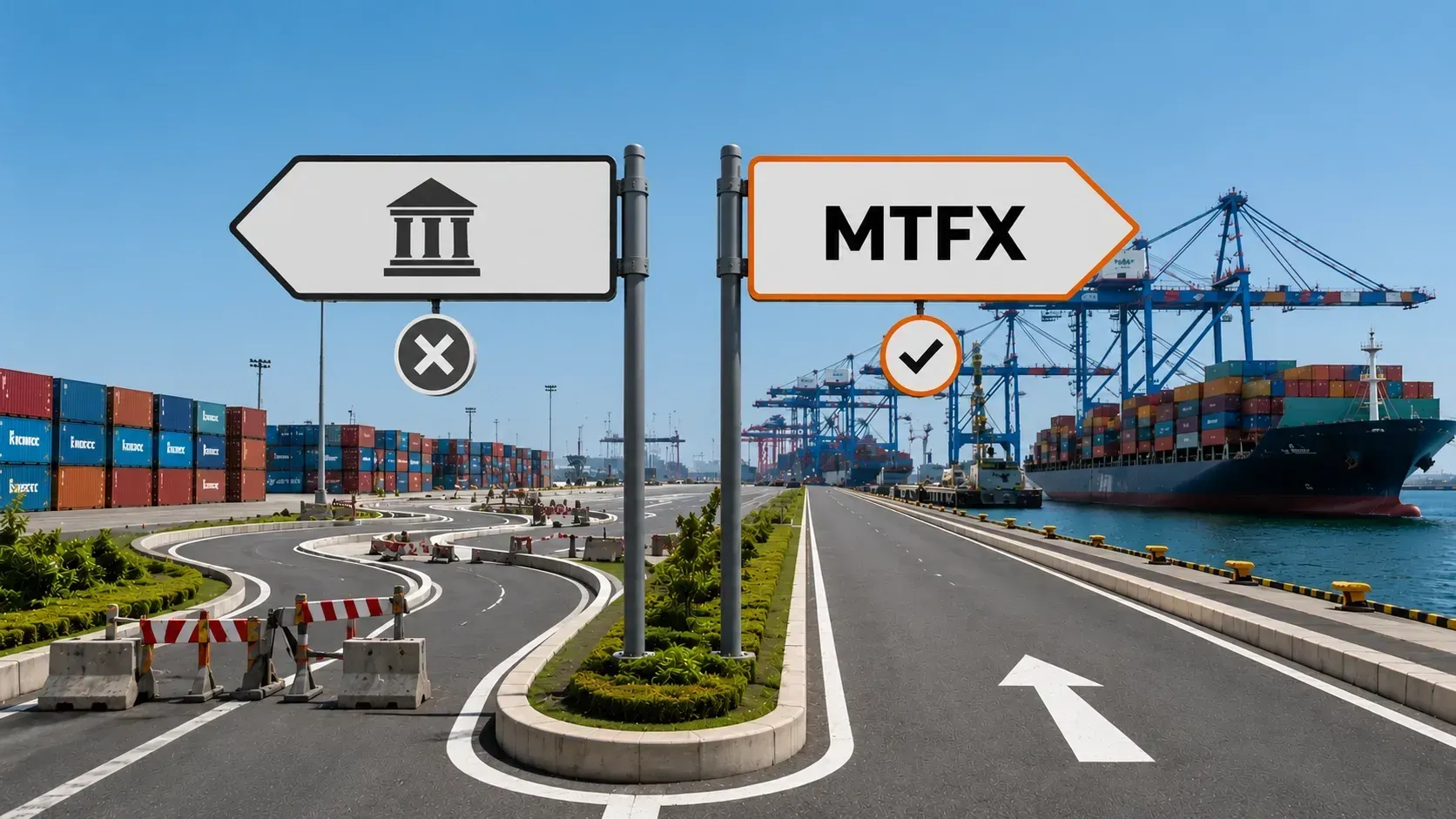
Planning to choose an international payment provider for your business? The right provider should help you send international payments securely, pay overseas suppliers on time, reduce foreign exchange costs, and manage cross-border payments with better control.
Canadian businesses should not choose a provider based only on transfer fees. Exchange rates, payment speed, supported currencies, supplier payment options, regulatory compliance, FX tools, payment tracking, and customer support all affect the real cost of business money transfers. A provider with a low upfront fee may still be expensive if the exchange rate includes a high markup.
Quick Answer:
The best international payment provider for your business should offer competitive exchange rates, transparent fees, fast delivery, strong compliance, multiple currencies, payment tracking, FX risk tools, and reliable business support.
MTFX has been helping clients move money globally since 1996. Canadian businesses can use business foreign exchange services for secure cross-border payments, competitive exchange rates, same-day wires where available, international supplier payments, and support from currency specialists when sending money overseas.
Step-by-step process to choose an International payment provider
Choosing the right international payment provider starts with understanding your business's payment requirements and comparing providers based on total cost, payment speed, security, business tools, and customer support. Instead of focusing only on transfer fees, evaluate how each provider supports your day-to-day operations and long-term growth through reliable global payment solutions.
Step 1. Identify your payment requirements
Start by assessing how your business sends and receives international payments. Consider:
- Countries where you make payments
- Currencies you regularly use
- Average payment size
- Payment frequency
- Whether you pay suppliers, contractors, or global employees
Knowing your requirements helps narrow your options before comparing providers.
Step 2. Compare the total cost
Look beyond the advertised transfer fee. Compare:
- Exchange rate markup
- Transfer fees
- Intermediary bank charges
- Receiving bank fees
- Total amount your supplier receives
A provider offering competitive live exchange rates can often save your business more than one with low transfer fees alone.
Step 3. Evaluate payment speed and coverage
Confirm that the provider supports the countries and currencies your business uses. Also check:
- Same-day or next-day payment options
- Payment tracking
- Delivery estimates
- Local payment networks
Reliable delivery helps avoid supplier delays and strengthens business relationships.
Step 4. Review business features
As your business grows, you will need more than simple international transfers. Look for features such as:
- Bulk payments
- Multi-currency accounts
- Payment approvals
- Payment history
- Reporting tools
- Rate alerts
- FX risk management solutions
These tools improve efficiency, reduce manual work, and simplify recurring international payments.
Step 5. Verify security and regulation
Only choose providers that operate under recognized regulatory standards. Ask whether they are:
- Regulated in Canada
- FINTRAC registered
- Compliant with anti-money laundering requirements
- Using secure payment and data protection measures
Canadian businesses can verify registered money services businesses through the official FINTRAC MSB Registry. Strong compliance helps protect both your business and your international transactions.
Step 6. Test the provider before committing
Before moving all your international payments, consider sending a smaller transfer first. This allows you to evaluate:
- Exchange rates
- Payment speed
- Platform usability
- Customer support responsiveness
- Overall experience
Testing first helps ensure the provider is a good fit before handling larger international transactions.
Not all international payment providers offer the same exchange rates or fees. Compare today's rates below to see how competitive pricing can help reduce your business's payment costs.
| Field | Value |
|---|---|
Amount Payable (USD) 20,000 | |
Bank Exchange Rate 1.4426 / 0.6932 | |
Total cost 28,851.11CAD |
| Field | Value |
|---|---|
Amount Payable (USD) 20,000 | |
MTFX Exchange Rate 1.4178 / 0.7053 | |
Total cost 28,356.11CAD |
You Save
CAD 494.99
with MTFX
24 September 2026
We use mid-market rates. This is for informational purposes only. Log in to view send rates.
Why choosing the right provider matters
The international payment provider you choose can directly affect your operating costs, cash flow, supplier relationships, and overall profitability. Even small differences in exchange rates or payment fees can add up quickly when your business regularly sends overseas payments or manages global collections.
A reliable provider helps your business:
- Lower foreign exchange costs
- Deliver payments on time
- Reduce hidden banking fees
- Improve payment visibility
- Access FX risk management solutions
- Scale international operations more efficiently
What should you look for first when selecting payment provider?
The first thing to check is the total cost of the payment. This includes the exchange rate, transfer fee, intermediary bank charges, receiving bank fees, and the final amount your supplier receives.
A low transfer fee does not always mean a cheaper payment. In many international business payments, the exchange rate markup can cost more than the visible fee. This matters most when your business sends large supplier invoices or recurring B2B money transfers.
For example, if your company sends $100,000 CAD to a supplier in USD, even a 1% exchange rate difference can affect your cost by about $1,000 CAD. For a business making monthly international supplier payments, that difference can reduce profit margins over time.
Before sending funds, compare rates using live exchange rates. This helps your finance team understand the real cost before confirming a cross-border payment.
1. Does the provider support your markets?
Paying suppliers in their local currency can make invoices easier to settle and reduce confusion around conversion costs. It can also help your business appear more professional because the supplier receives the exact currency listed on the invoice.
For businesses with global vendors, global payments for business can support international supplier payments, B2B money transfers, overseas contractor payments, and payments to partners in multiple currencies.
2. Are the exchange rates competitive?
Many companies focus on the transfer fee because it is easy to see. However, the exchange rate markup can quietly increase the final cost. That is why your business should always compare how much the recipient will receive, not just how much you send.
For example, if your supplier invoice is in USD and the Canadian dollar weakens before payment, your final CAD cost increases. This can reduce profit margins, especially if you already quoted your customer in Canadian dollars.
Businesses that make regular international payments should monitor currency movements through resources such as the Bank of Canada exchange rates and use provider tools that help track live market changes.
3. Are the fees easy to understand?
A good international payment provider should show the full payment cost before you approve the transaction. Clear pricing helps your finance team avoid payment shortfalls, invoice disputes, and reconciliation problems.
Your provider should clearly show:
- Exchange rate
- Transfer fee
- Amount sent
- Amount received
- Destination currency
- Estimated delivery date
- Payment reference
- Confirmation receipt
Transparent pricing also supports accounting. Your team can match payment confirmations to invoices, download receipts, track payment history, and report costs more accurately.
4. How fast can payments arrive?
Some international payments may arrive the same day, while others can take longer depending on the destination country, currency, cut-off time, intermediary banks, receiving bank, and compliance checks. A reliable provider should give your business a realistic timeline before the transfer is sent.
Ask these questions before choosing a provider:
- Are same-day wires available?
- What are the currency cut-off times?
- How long do USD, EUR, GBP, and JPY payments usually take?
- Can urgent supplier payments be prioritized?
- Will I receive payment tracking and confirmation?
- What happens if a payment is delayed?
For Canadian businesses that need reliable cross-border transfers, international money transfers can help support secure payments to overseas suppliers, contractors, and partners.
5. Does it fit your workflow?
The best international payment provider should fit your finance workflow, not create extra admin work. If your company sends only one payment a year, a basic transfer process may be enough. But if you pay suppliers every month, receive international revenue, or manage multiple currencies, you need stronger business payment solutions.
Businesses receiving funds from international customers, marketplaces, or partners may also need global collections. This can help companies collect overseas payments, convert currencies, and manage international receivables more efficiently.
6. Can it protect your margins?
An international payment provider can help protect business margins by offering FX tools such as rate alerts, forward contracts, limit orders, payment scheduling, and historical exchange-rate data. These tools help businesses plan payments when supplier invoices are in another currency.
For example, your company may quote a customer in CAD but pay a supplier in USD. If CAD weakens before you pay the invoice, the same USD invoice becomes more expensive in Canadian dollars. That extra cost may reduce your margin unless you planned for it.
7. Is the provider regulated?
Regulation and compliance are essential when choosing an international payment provider. Your business is moving money across borders, so the provider should follow proper verification, anti-fraud, and anti-money laundering processes.
For Canadian businesses, FINTRAC regulation is an important trust signal. FINTRAC oversees compliance requirements for money services businesses in Canada. You can review official guidance through FINTRAC's money services business information.
Before opening an account, ask:
- Is the provider regulated in Canada?
- What business verification documents are needed?
- How are payments monitored?
- Can my company add authorized users?
- Are there controls for large payments?
- What happens if a transfer is reviewed?
- How does the provider protect payment data?
8. Is the support reliable?
Look for support that includes:
- Phone or specialist support
- Business account managers
- Help with payment setup
- Support for beneficiary details
- Guidance for high-value payments
- Transfer tracking help
- FX market guidance
- Assistance with urgent supplier payments
For external reference, businesses can review international banking standards and payment messaging information through SWIFT, especially when checking SWIFT/BIC details for overseas transfers.
Bank vs fintech payment provider comparison
Many fintech providers also offer advanced foreign exchange solutions that traditional banks may not provide, making them suitable for companies with recurring international payments.
Before choosing an international payment provider, compare live exchange rates to understand how pricing differences can affect your overall payment costs.
Track live exchange rates before making business payments
| Currency | Rates | High | Low | Daily |
|---|---|---|---|---|
 USD | 1.4143 | 1.4147 | 1.4125 | 0.06% |
 EUR | 1.6091 | 1.6098 | 1.6077 | 0.04% |
 INR | 67.83 | 67.84 | 67.82 | -0.04% |
 GBP | 1.8693 | 1.8698 | 1.8667 | 0.07% |
 CNY | 4.7314 | 4.7503 | 4.7310 | -0.40% |
 JPY | 111.98 | 112.34 | 111.97 | -0.27% |
 MXN | 12.55 | 12.63 | 12.53 | -0.64% |
Manage international business payments with competitive exchange rates from MTFX.
What mistakes should you avoid?
Many businesses lose money or time because they choose a provider too quickly. These mistakes are easy to avoid if you know what to check.
- Comparing fees but ignoring exchange rates
- Sending payments without checking recipient details
- Choosing a provider that does not support key currencies
- Ignoring intermediary or receiving bank fees
- Not confirming payment timelines
- Waiting until the last minute to send supplier payments
- Not using rate alerts for major invoices
- Sending large payments without specialist support
- Choosing an unregulated or unclear provider
Questions to ask before choosing international payment provider
Before opening an account, ask these questions:
- How are exchange rates calculated?
- Are there any hidden intermediary bank fees?
- Which countries and currencies do you support?
- Can I lock in exchange rates using forward contracts?
- Do you offer payment tracking?
- Can I make bulk supplier payments?
- What FX risk management tools are available?
- Is your company regulated in Canada?
- Will I receive dedicated business support?
For businesses using SWIFT transfers, it is also helpful to understand international payment standards through the official SWIFT network.
Signs it is time to switch providers
If your current provider no longer supports your business efficiently, it may be time to consider alternatives. Common signs include:
- You are paying high exchange-rate markups.
- International payments frequently arrive late.
- Hidden fees reduce supplier payments.
- Limited currency support.
- No FX risk management tools.
- No payment tracking.
- Poor customer support.
- Your provider cannot scale with your business.
If these issues sound familiar, consider comparing providers that specialize in international business payments.
Final checklist
Before making your decision, review this checklist.
- Competitive exchange rates
- Transparent pricing
- Supported currencies
- Reliable payment delivery
- FINTRAC registration or equivalent regulatory oversight
- FX risk management tools
- Business payment features
- Responsive customer support
- Scalable international payment solutions
Quick recommendation: For most Canadian businesses, the best international payment provider is one that shows the full cost upfront, supports your supplier currencies, offers reliable delivery timelines, provides payment tracking, and gives access to FX tools when exchange-rate movement could affect profit margins.
Why choose MTFX for overseas supplier payments?
Sending payments to overseas suppliers requires a provider that offers competitive exchange rates, reliable delivery, and secure payment processing. MTFX has helped Canadian businesses manage international business payments since 1996 with solutions designed to reduce costs and simplify cross-border transactions.
No matter, either you are paying suppliers, contractors, or international partners, MTFX provides access to payments in 190+ countries and 50+ currencies, along with competitive live exchange rates and specialist support. As a FINTRAC-regulated money services business, MTFX helps businesses send global payments with confidence.


Grow your business with the right payment partner
Choosing the right international payment provider can help your business reduce payment costs, avoid delays, and better manage foreign exchange risk. Comparing exchange rates, fees, payment speed, and business features ensures you are getting the best value for every transaction.
MTFX combines competitive exchange rates, secure global payment solutions, and business foreign exchange services to help Canadian businesses make international payments with confidence. Whether you are sending one payment or managing ongoing supplier transactions, MTFX can support your international growth.
Sign up with MTFX to streamline your overseas supplier payments, access competitive exchange rates, and benefit from secure cross-border transfers backed by dedicated FX specialists.
FAQs
1. What is an international payment provider?
An international payment provider helps businesses send, receive, and convert money across borders. It supports international payments, foreign exchange, transfer tracking, and supplier payments.
2. How do I choose an international payment provider?
Compare exchange rates, fees, transfer speed, supported currencies, regulation, FX tools, payment tracking, and customer support.
3. What is the cheapest way to pay overseas suppliers?
The cheapest option depends on the exchange rate, transfer fee, and bank charges. Always compare the total cost, not only the upfront fee.
4. Why do exchange rates matter for business payments?
Exchange rates affect how much foreign currency your supplier receives. A small rate difference can have a large impact on high-value invoices.
5. Can Canadian businesses send payments in USD, EUR, or GBP?
Yes. Canadian businesses can send international payments in major currencies such as USD, EUR, GBP, JPY, CNY, and AUD when supported by the provider.
6. What details are needed for supplier payments?
You usually need the supplier's legal name, bank name, bank address, account number or IBAN, SWIFT/BIC code, currency, invoice number, and payment reference.
7. What is FX risk?
FX risk is the chance that exchange rate movements will increase your costs or reduce your profit margins before a payment is made.
8. How can businesses reduce FX risk?
Businesses can use rate alerts, forward contracts, limit orders, live exchange rates, currency charts, and specialist FX guidance.
9. Is FINTRAC regulation important?
Yes. FINTRAC regulation is important because it shows that a Canadian money services business follows compliance and anti-money laundering obligations.
10. Is MTFX useful for business international payments?
Yes. MTFX is useful for Canadian businesses that need cross-border payments, foreign exchange services, supplier payments, global collections, and FX risk management support.