Why CAD to USD Exchange Rate Fluctuates: Key Economic Drivers Explained for Canadians
The CAD to USD exchange rate fluctuates because currency markets react to interest rates, inflation, oil prices, economic data, trade flows, and demand for the US dollar. For Canadians, these movements can affect travel costs, tuition payments, and money transfers.
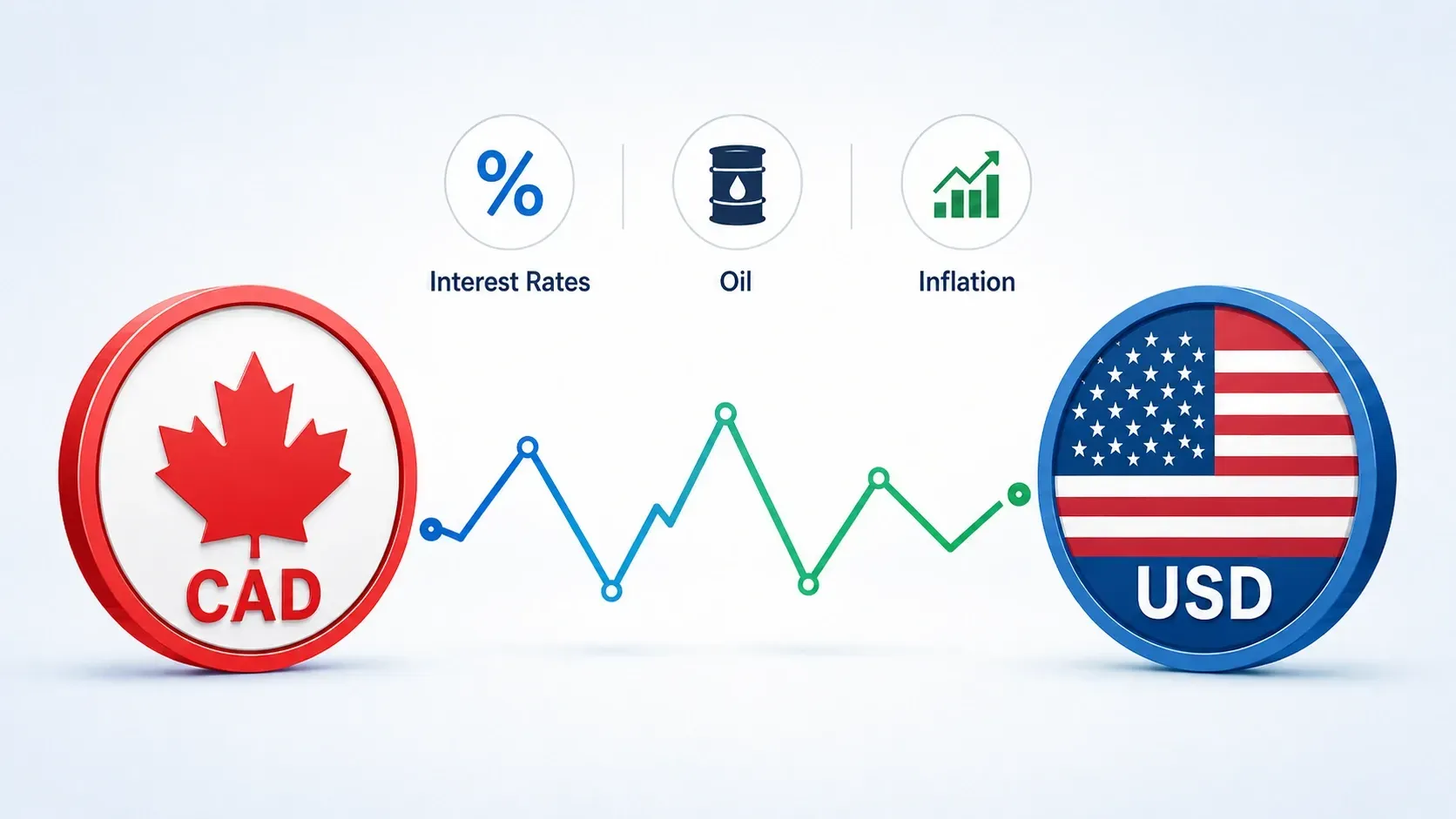
The CAD to USD exchange rate fluctuates because markets constantly compare the strength of the Canadian and US economies. Interest rates, inflation, oil prices, employment data, trade flows, and demand for the US dollar all influence how much USD Canadians receive when they convert Canadian dollars to US dollars.
For Canadians, these changes can affect US travel, snowbird expenses, tuition payments, property purchases, online shopping, investments, and family transfers. Whether you are planning to send money to the US, pay for studies, or cover seasonal expenses, even a small change in CAD/USD can affect the final amount received.
That is why it helps to understand what moves the CAD to USD exchange rate before making a transfer. With MTFX, Canadians can access competitive exchange rates, secure international transfers, and trusted FX support backed by over 30 years of experience in global payments.
What makes the CAD to USD exchange rate move?
The CAD to USD exchange rate moves when currency markets reassess the value of the Canadian dollar compared with the US dollar. The rate is not fixed; it changes as banks, investors, travellers, online shoppers, students, property buyers, and payment providers respond to new economic and market information.
The Bank of Canada notes that exchange rates are determined in the foreign exchange market, which means the Canadian dollar can move whenever expectations shift. For anyone checking the daily CAD/USD rate and outlook before a transfer, those movements may reflect inflation news, central bank decisions, oil prices, or changes in demand for the US dollar.
Key factors that affect CAD to USD:
These drivers matter most when the amount is large or the payment date is fixed. A Canadian paying international tuition fees, sending money to family, or preparing for a US property purchase may feel the impact more clearly than someone making a small card purchase.
| Field | Value |
|---|---|
Amount Payable (USD) 20,000 | |
Bank Exchange Rate 1.4277 / 0.7005 | |
Total cost 28,553.06CAD |
| Field | Value |
|---|---|
Amount Payable (USD) 20,000 | |
MTFX Exchange Rate 1.4032 / 0.7127 | |
Total cost 28,063.18CAD |
You Save
CAD 489.88
with MTFX
23 October 2026
We use mid-market rates. This is for informational purposes only. Log in to view send rates.
How do Bank of Canada and Federal Reserve decisions affect CAD/USD?
Bank of Canada and Federal Reserve decisions affect CAD/USD because interest rates influence how attractive each currency is to investors. When Canadian and US rate expectations change, the exchange rate can move quickly.
Higher interest rates can support a currency because investors may earn better returns on deposits, bonds, and other interest-bearing assets. Lower interest rates can reduce that appeal, which is why Canadians often see CAD/USD monthly forecast and daily outlook around rate announcements and major economic calendar events.
Why interest-rate differences matter:
The Bank of Canada policy interest rate influences short-term borrowing costs in Canada, while Federal Reserve policy decisions shape US dollar interest-rate conditions.
When interest-rate expectations shift, the effect can be practical for everyday Canadians. Someone planning US travel may pay more for hotels and spending money, while a family paying tuition may see the Canadian-dollar cost change before the payment deadline.
CAD/USD can move when either central bank:
- Changes its policy rate.
- Signals future rate cuts or rate hikes.
- Updates inflation forecasts.
- Comments on employment or economic growth.
- Changes the tone of its policy statement.
You can check the current trends in CAD to USD market with the below currency chart.
Check current rates and convert your funds securely with MTFX.
Example: how rate expectations can move CAD/USD
If US inflation remains higher than expected, investors may believe the Federal Reserve will keep rates elevated for longer. That can increase demand for US dollars and put downward pressure on the Canadian dollar.
If Canadian economic data looks stronger than expected, markets may believe the Bank of Canada will keep rates higher for longer. That can support CAD against USD.
This is why Canadians converting CAD to USD often benefit from watching rate decisions before making large transfers. For flexible payments, CAD to USD rate alerts can help monitor a preferred level before exchanging.
Why do oil prices affect the Canadian dollar?
Oil prices affect the Canadian dollar because Canada is a major commodity-exporting economy. When oil prices rise or fall, markets may reassess Canada’s export strength, trade balance, and economic outlook.
Energy products are an important part of Canada’s economy, so higher oil prices can support confidence in CAD. Canada Energy Regulator data shows that crude oil and petroleum products are a major part of Canada’s energy trade, which is one reason oil-market changes can influence sentiment toward the Canadian dollar. Lower oil prices can put pressure on the Canadian dollar if markets expect weaker export revenue or softer economic activity.
How oil prices can influence CAD/USD:
A stronger oil market does not always mean CAD will rise, and lower oil does not always mean CAD will fall. Interest rates, inflation, US dollar demand, and broader market sentiment can offset the impact of commodities.
For Canadians, the key point is simple: CAD/USD can move even when there is no Canada-specific news. A global oil price shift can still affect how much USD you receive, especially if you are converting for a larger payment such as a home deposit, tuition bill, or long-term stay in the United States.
Canadians planning seasonal travel or retirement stays in the US may also feel oil-linked currency movement through both exchange rates and travel costs. Snowbirds managing recurring USD expenses can reduce last-minute pressure by planning conversions before peak travel periods.
How do inflation, jobs, and economic growth affect CAD/USD?
Inflation, employment, and growth data affect CAD/USD because they shape expectations for future interest-rate decisions. Strong or weak economic reports can change how investors value the Canadian dollar and the US dollar.
Markets do not only react to whether data is good or bad. They react to whether the data is stronger or weaker than expected.
Economic data that can move the exchange rate:
Statistics Canada publishes key economic indicators such as inflation, employment, GDP, and retail sales, which markets often use to assess the strength of the Canadian economy.
If Canadian inflation is higher than expected, markets may think the Bank of Canada needs to keep rates higher. That can support CAD in the short term.
If inflation cools faster than expected, markets may price in lower future rates. That can weigh on the Canadian dollar.
The same logic applies to US data. Strong US jobs or inflation numbers can support USD, while weaker US data may reduce demand for the dollar.
Why surprises matter more than headlines
A strong report does not always strengthen the currency. If investors already expected the result, the exchange-rate reaction may be limited.
CAD/USD often moves more sharply when data surprises the market. That is why travellers, students, property buyers, and Canadians making large transfers may benefit from paying attention to major economic release dates.
How do Canada-US trade and US dollar demand affect CAD/USD?
Canada-US trade and US dollar demand affect CAD/USD because money constantly moves between both countries. Canadians buy US goods, travel to the United States, study at US schools, invest in US assets, and purchase US property.
These everyday cross-border activities create ongoing demand for US dollars. At the same time, demand for Canadian exports can support demand for CAD.
How cross-border activity affects CAD/USD:
Canada’s close economic relationship with the United States makes CAD/USD one of the most important exchange rates for Canadians. When trade conditions, tariffs, consumer demand, or cross-border travel patterns shift, the exchange rate can respond.
US dollar demand also rises during periods of global uncertainty. Investors often treat USD as a safe-haven currency, so the dollar may strengthen when markets become nervous.
CAD/USD can react to:
- Geopolitical tension.
- Global market selloffs.
- Banking or credit concerns.
- Unexpected inflation data.
- US economic surprises.
- Commodity supply shocks.
- Changes in investor risk appetite.
For Canadians, this means CAD/USD can fluctuate because of global events that may not seem directly connected to Canada.
How much can a small CAD/USD move cost Canadians?
A small CAD/USD move can have a large impact when the transfer amount is high. This is one of the most overlooked reasons Canadians should monitor the rate before converting money.
For example, a movement of just one cent in the exchange rate can affect the final CAD cost of a USD payment. The larger the transfer, the more visible the difference becomes.
Example: impact of a 1-cent exchange-rate movement
This example is simplified, but it shows why timing and provider pricing matter. The difference can be especially important for tuition, property deposits, investment transfers, snowbird expenses, or family support payments.
If you are planning a transfer, using a CAD to USD rate calculator can help you estimate the amount before sending.
How do CAD/USD fluctuations affect Canadians?
CAD/USD fluctuations affect Canadians whenever money crosses the border or prices are linked to US dollars. The impact is especially noticeable for large, recurring, or deadline-based payments.
A weaker Canadian dollar usually means it costs more CAD to buy the same amount of USD. A stronger Canadian dollar usually means Canadians need fewer Canadian dollars to buy US dollars.
Common ways CAD/USD affects individuals:
Canadians planning a US trip may feel the impact through hotels, fuel, dining, and credit-card conversion costs. Snowbirds can feel it more strongly because expenses continue for several months, making exchange-rate timing more important.
If you regularly spend time in the United States, minimizing currency exchange costs as a Canadian snowbird can make recurring USD expenses easier to plan before you travel.
What should Canadians watch before converting CAD to USD?
Canadians should watch central bank dates, inflation reports, jobs data, oil prices, and major US economic announcements before converting CAD to USD. These events can create short-term volatility and affect the rate available on the day of transfer.
This does not mean you need to become a currency trader. It simply means you should know when the market may be more sensitive to news.
CAD/USD watchlist for better timing:
If your payment deadline is flexible, setting CAD to USD rate alerts can help you monitor a preferred exchange rate without checking the market manually every day.
Should you convert CAD to USD now or wait?
Whether you should convert CAD to USD now or wait depends on your payment deadline, target rate, transfer amount, and comfort with exchange-rate movement. If the payment is urgent, certainty may matter more than trying to improve the rate.
When the payment is flexible, recent CAD/USD movement can help you avoid deciding only on the day the money is due. A tuition deadline may require certainty, a vacation budget may allow more flexibility, and a property deposit may need closer rate monitoring because the amount is larger.
CAD to USD decision guide:
A Canadian deciding whether to convert CAD to USD now or wait should think about timing, deadline pressure, and the amount being exchanged. For smaller transfers, convenience may matter more; for larger transfers, even a small rate difference can affect the final cost.
How can Canadians manage CAD to USD exchange rate risk?
Canadians can manage CAD to USD exchange rate risk by tracking rates early, comparing provider pricing, setting rate alerts, and planning transfers before deadlines. The goal is not to predict the market perfectly, but to reduce surprises.
You cannot control the CAD/USD exchange rate, but you can control how you prepare for it.
Practical ways to manage CAD/USD movement:
For Canadians sending money south of the border, transfer cost is not only about the exchange rate. Delivery time, payment method, recipient details, and provider fees can also affect the experience.
When you send money to the US from Canada, the final cost depends on both the rate and the transfer method. Checking those details before sending can help you avoid unnecessary surprises.
Are banks the best option for CAD to USD transfers?
Banks are convenient for CAD to USD transfers, but they are not always the most cost-effective option. The rate customers receive from a bank can include an exchange-rate markup, and wire fees may also apply.
The rate shown on financial news sites is usually a market or benchmark rate. It is not always the same rate offered to customers. Banks and payment providers may add a spread to the exchange rate, which affects the final amount received.
What to compare before sending CAD to USD:
A small exchange-rate markup can have a meaningful impact when converting thousands or hundreds of thousands of dollars. Canadians should compare the total cost of the transfer, not just the visible fee.
Before sending money, compare:
- The exchange rate offered.
- Any transfer fee or wire fee.
- The estimated delivery time.
- The final USD amount received.
- Whether support is available for large payments.
- Whether tools like rate alerts are available.
The difference between banks and online providers is especially important when the amount is large. Understanding online providers vs banks for CAD to USD conversion can help Canadians focus on the final amount received instead of only the upfront transfer fee.
How does MTFX help Canadians manage CAD/USD payments?
MTFX helps Canadians manage CAD/USD payments by offering competitive exchange rates, secure transfers, rate tools, and support for large or recurring US dollar payments.
Whether you are transferring funds for travel, tuition, family support, investments, or a US property purchase, the goal is to reduce unnecessary FX costs and give you more control over timing.
MTFX support for common CAD to USD needs:
For students and families, the exchange rate can affect the final cost of tuition and living expenses. Anyone studying in the US as a Canadian student should factor CAD/USD movement into the budget before payment deadlines arrive.
For property buyers, CAD/USD movement can affect deposits, closing costs, and the final Canadian-dollar budget. Canadians buying property in the United States may want to monitor the rate before transferring a large amount.


Turn CAD/USD volatility into smarter payment planning
CAD to USD exchange rate fluctuations are a normal part of currency markets, but they do not have to catch you off guard. By understanding the role of interest rates, oil prices, inflation, trade, economic data, and US dollar demand, Canadians can make more informed decisions before converting money.
Whether you are sending a one-time USD payment or managing recurring US expenses, planning ahead can help reduce uncertainty and improve cost visibility. Create your MTFX account today to access competitive CAD to USD exchange rates, secure global payments, and tools that help you transfer with confidence.
Note: Exchange rates can change quickly, and this article is for general information only. It should not be treated as financial advice or a guarantee of future CAD/USD movement.
FAQs
1. Why does the CAD to USD exchange rate change every day?
The CAD to USD exchange rate changes daily because currency markets respond to new information. Interest-rate expectations, inflation data, employment reports, oil prices, trade flows, and global risk sentiment can all affect demand for Canadian dollars and US dollars.
2. What is the biggest factor affecting CAD/USD?
There is no single factor that always dominates CAD/USD. Interest-rate differences between Canada and the US are often important, but oil prices, inflation, economic growth, trade flows, and global demand for the US dollar can also have a major impact.
3. Why does the Canadian dollar often move with oil prices?
The Canadian dollar can move with oil prices because Canada is a major energy exporter. Higher oil prices can support Canadian export revenue and improve sentiment toward CAD, while lower oil prices can put pressure on the currency.
4. How do US interest rates affect CAD to USD?
US interest rates affect CAD to USD because higher US rates can make the US dollar more attractive to investors. When US rates are expected to stay higher than Canadian rates, USD may strengthen against CAD, which can affect Canadians converting money for travel, tuition, property, or family transfers.
5. Is a weaker Canadian dollar good or bad?
A weaker Canadian dollar is good or bad depending on your situation. It can benefit Canadians receiving USD, but it can increase costs for US travel, tuition, online shopping, property purchases, and money transfers to the United States.
6. When is the best time to convert CAD to USD?
The best time to convert CAD to USD depends on your payment deadline, target rate, transfer amount, and market conditions. Canadians with flexible timing can monitor the rate before converting, while urgent payments usually require more certainty.
7. How can I reduce the impact of CAD/USD volatility?
You can reduce the impact of CAD/USD volatility by checking rates early, comparing providers, setting rate alerts, and avoiding last-minute transfers when possible. This is especially useful for larger payments such as tuition, US property deposits, investments, and snowbird expenses.
8. How much can a 1-cent move in CAD/USD affect a transfer?
A 1-cent move can make a meaningful difference on large transfers. For example, on a USD 100,000 payment, a 1-cent exchange-rate movement can change the CAD cost by about CAD 1,000 before provider fees or spreads.
9. Where can I check the CAD to USD exchange rate?
You can check the latest CAD to USD exchange rate before converting and compare it with the rate offered by your provider. The final amount received can depend on the exchange rate, transfer fee, provider spread, delivery method, and timing.
10. What should Canadians check before sending money to the US?
Canadians should check the CAD/USD exchange rate, transfer fees, delivery time, recipient details, and the final USD amount before sending money to the US. For larger transfers, it is also worth reviewing whether the rate has moved recently and whether the payment deadline gives you time to plan.