How Exchange Rates Affect the Cost of Doing Business Internationally
Exchange rates can quietly change the real cost of doing business, sending money, paying suppliers, or managing large international payments. This guide explains how FX movements affect margins, cash flow, transfer costs, pricing, and payment planning.
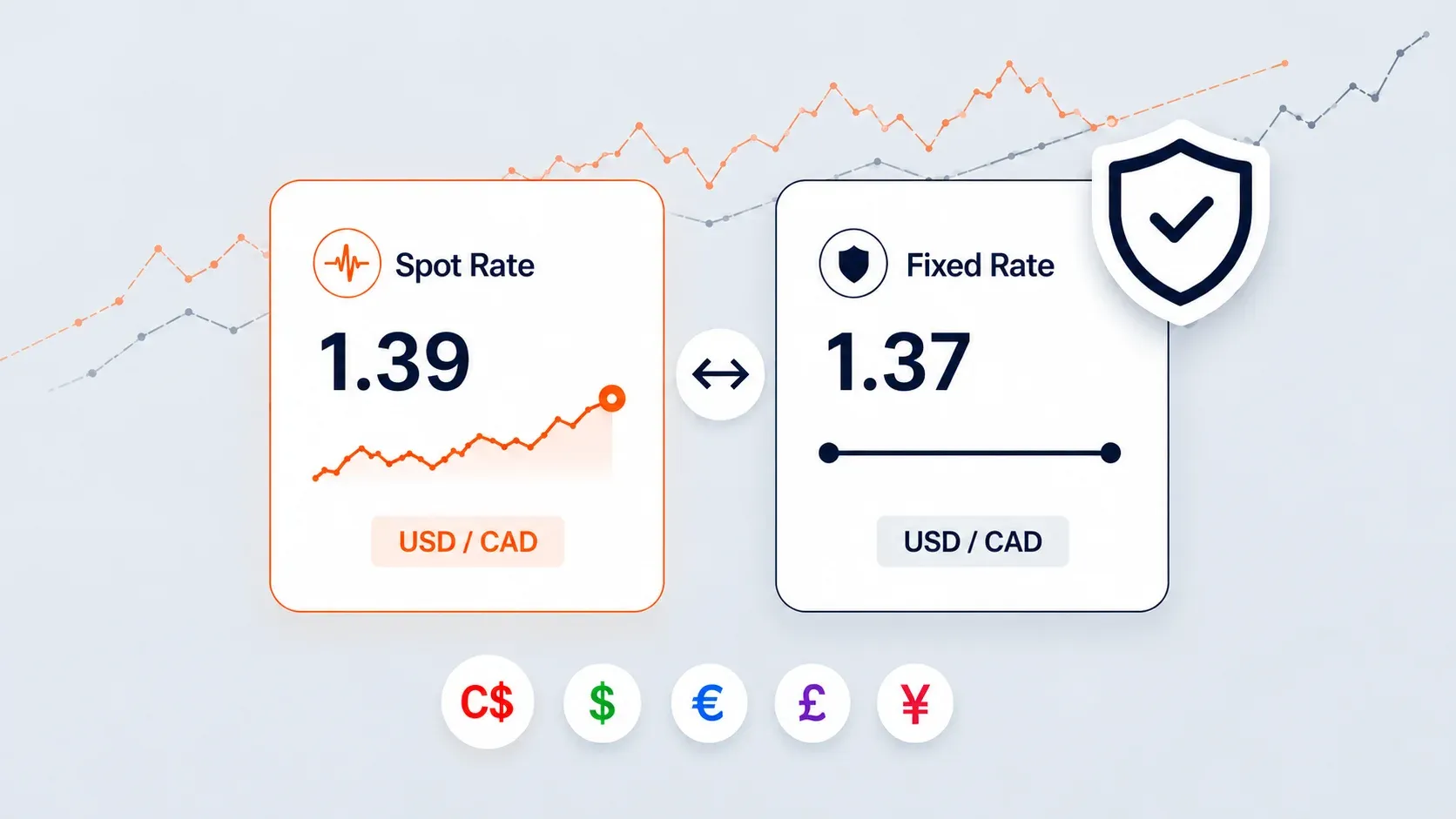
Exchange rates affect more than the amount you pay when converting one currency into another. They can change the real cost of supplier invoices, international transfers, overseas purchases, product pricing, profit margins, cash flow, and long-term financial planning.
For businesses in Canada, the exchange rate impact often appears between the moment a cost is planned and the moment money actually moves. A business may quote a customer today but pay a supplier next month. If the Canadian dollar moves during that gap, the final cost can be higher or lower than expected.
Quick overview: Exchange rates affect the cost of doing business internationally by changing how much you pay or receive once money is converted. Even a small currency movement can affect supplier invoices, profit margins, landed costs, budgets, and cash flow.
That is why exchange rates should not be treated as a small payment detail. They are part of the real cost of doing business, buying, investing, or sending money internationally.
What is the real exchange rate impact on business?
The real exchange rate impact on business is the difference between what a company expects to pay or receive in Canadian dollars and what it actually pays or receives when the currency is converted.
For example, a Canadian importer may agree to pay a US supplier USD 100,000. If the expected USD/CAD rate is 1.3500, the business may budget CAD 135,000. If the rate moves to 1.3900 by the payment date, the same invoice now costs CAD 139,000 before transfer fees or provider spreads.
That CAD 4,000 difference is not just a currency movement. It affects margin, working capital, pricing, and cash flow.
| Field | Value |
|---|---|
Amount Payable (USD) 35,000 | |
Bank Exchange Rate 1.4471 / 0.6910 | |
Total cost 50,650.09CAD |
| Field | Value |
|---|---|
Amount Payable (USD) 35,000 | |
MTFX Exchange Rate 1.4223 / 0.7031 | |
Total cost 49,781.09CAD |
You Save
CAD 869
with MTFX
29 September 2026
We use mid-market rates. This is for informational purposes only. Log in to view send rates.
Why exchange rates affect more than the conversion cost
Many people think exchange rates matter only at the moment of conversion. In reality, the exposure starts much earlier.
For businesses, FX risk can begin when a supplier quote is accepted, a customer price is set, a purchase order is issued, or a contract is signed. For individuals, it may begin when tuition fees, property deposits, travel costs, or investment amounts are first budgeted.
The Bank of Canada exchange rates are useful as a reference point, but they are not necessarily the rate a business or individual receives from a bank or transfer provider. The actual cost depends on the rate offered, FX spread, transfer fees, payment timing, and any intermediary charges.
Where exchange rates quietly increase costs
Exchange rate costs are not always obvious. Sometimes the visible transfer fee is small, but the exchange rate includes a spread. Sometimes the market rate looks acceptable, but approval delays push the conversion into a worse rate window.
For anyone sending money internationally, the full cost usually includes the exchange rate, FX spread, transfer fee, receiving bank charges, and timing risk.
This is why a “no-fee” or “low-fee” transfer is not automatically the lowest-cost option. The exchange rate itself needs to be checked.
Businesses can monitor current rates with MTFX’s live exchange rates and estimate conversions with the currency calculator. These tools help compare the rate impact before committing to a transfer.
What common exchange rate mistakes do businesses make?
Exchange rate mistakes usually happen when the transfer is treated as an afterthought. The money may still arrive, but the sender may pay more than necessary or lose visibility over the real cost.
Comparing only transfer fees and ignoring the FX spread
A transfer fee is easy to see. The exchange rate spread is often less obvious.
For example, one provider may charge a CAD 20 transfer fee but offer a weaker exchange rate. Another may charge a slightly higher fee but offer a better rate. On a small transfer, the difference may be minor. On a CAD 100,000 supplier payment, the exchange rate spread can matter far more than the flat fee.
The better question is not “What is the fee?” It is “How much foreign currency will the recipient actually receive for the total CAD amount paid?”
Waiting until the payment deadline
Leaving conversion until the last day gives the sender less flexibility. Businesses may be forced to accept the available rate because the supplier deadline is close.
Planning earlier allows time to watch rates, compare providers, set alerts, or consider whether locking a rate makes sense.
Using today’s rate for future costs
A business may price an order today using the current USD/CAD rate, then pay the supplier several weeks later. If the Canadian dollar weakens during that period, the business may still make the sale but earn a lower margin.
The same issue can affect business budgets. A company may calculate import costs at one rate, but if the payment is made later at a different rate, the company may need more CAD than expected.
Treating FX as an admin task
For many companies, FX sits with accounts payable or operations because it is connected to payments. But exchange rates affect pricing, procurement, margin, and cash-flow planning.
If a business sends foreign payments every month, FX decisions should not be made one invoice at a time. They should be part of a simple payment and risk-management process.
Not checking the recipient currency
A supplier or overseas bank may require payment in a specific currency. Sending the wrong currency can create delays, extra conversion charges, or short payments.
Before sending funds, confirm the beneficiary name, account details, payment currency, bank details, and whether intermediary bank information is required.
Not reviewing FX losses or gains
Businesses may record exchange differences in accounting systems but not review what caused them. If the same issue repeats every month, the company may be losing margin without seeing it clearly.
A monthly FX review can show whether losses are coming from timing, spreads, poor budgeting rates, or supplier currency terms.
How exchange rates affect supplier payments and international transfers
Supplier payments are one of the clearest examples of exchange rate risk. A Canadian business may purchase goods from a US, European, UK, or Asian supplier, but the invoice may not be paid until 30, 60, or 90 days later.
During that period, the exchange rate can move. If the foreign currency strengthens against the Canadian dollar, the business needs more CAD to settle the same invoice.
A business paying suppliers regularly can use MTFX’s international business payment solutions to manage recurring cross-border payments with more visibility. Businesses that regularly pay overseas vendors may also benefit from a clearer process for wire transfers for overseas suppliers.
How currency fluctuations reduce profit margins
A small exchange rate move can have a large effect when the payment amount is high or recurring.
Here is a simple example.
If the business expected to earn CAD 20,000 on the order, the CAD 4,000 FX difference reduces that margin by 20%. Sales volume did not change. The supplier invoice did not change. The business simply needed more Canadian dollars to pay the same foreign-currency bill.
This can be especially painful for importers, retailers, manufacturers, e-commerce sellers, and distributors operating on tight margins.
How exchange rates affect landed cost and pricing
Landed cost is the full cost of getting a product from supplier to final destination. It usually includes the product price, shipping, insurance, duties, taxes, storage, payment fees, and currency conversion.
If a business only looks at the supplier invoice and ignores FX movement, pricing can become inaccurate.
Example: a Canadian retailer imports products from Europe and sells them in Canada. If the euro strengthens after the retailer sets its Canadian price, the cost of replacing inventory may rise. Unless the retailer increases prices, negotiates better supplier terms, or manages FX exposure, margins can narrow.
That is why exchange rate planning should be connected to pricing, not only to payment processing.
How exchange rates affect cash flow and budgeting
Exchange rates affect cash flow because the sender may need more or less CAD than expected when the payment date arrives.
For businesses, this can create working capital pressure. A company may have enough cash to pay the invoice based on its original budget, but if the rate moves unfavourably, the payment may require additional funds. That can affect payroll planning, inventory purchasing, credit line usage, or other operating expenses.
The safest approach is to budget with a buffer and monitor rates before the payment deadline. MTFX’s historical exchange rates and currency chart tools can help you compare current rates with past levels before making a decision.
Compare FX rates and manage global business transfers.
How to calculate the cost of an exchange rate move
The basic formula is simple:
Foreign-currency amount × exchange rate = CAD cost
Then compare the budgeted cost with the actual cost:
Actual CAD cost − budgeted CAD cost = exchange rate impact
Here is an example.
This calculation only measures the rate movement. To understand the full transfer cost, add:
- FX spread
- transfer fee
- receiving bank fee
- intermediary bank fee, if applicable
- any shortfall if the beneficiary receives less than expected
For businesses, this calculation should be part of supplier payment planning.
What to check before making an international payment
Before sending money internationally, check the full payment picture, not only the rate shown on screen.
- What currency does the recipient need?
- What exchange rate is being offered?
- How does that rate compare with the market or reference rate?
- Is there an FX spread?
- What transfer fee applies?
- Are there intermediary or receiving bank charges?
- What is the payment deadline?
- Are there cut-off times?
- Will the recipient receive the full amount?
- Does the payment need to be tracked or confirmed?
- Is this a one-time transfer or part of a recurring payment plan?
- Would a rate alert, scheduled payment, or forward contract help?
The Financial Consumer Agency of Canada advises consumers to understand the exchange rate, fees, cancellation terms, and delivery details before sending international money transfers. That same principle applies to business payments as well: the sender should understand the full cost and process before moving funds.
How to reduce exchange rate risk
Exchange rate risk cannot be removed completely, but it can be managed. The right approach depends on the payment amount, timing, currency, and level of certainty needed.
Compare the total cost, not just the fee
A provider with a low transfer fee may still be expensive if the exchange rate is weaker. Compare how much the recipient receives after all costs.
Set rate alerts
Rate alerts are useful when the transfer is not urgent. They help businesses act when the market reaches a preferred level.
Plan recurring payments in advance
Businesses with monthly supplier invoices, software payments, payroll, or contractor payments should avoid making each transfer as a last-minute decision. A simple payment schedule can improve visibility.
Match inflows and outflows where possible
If a business receives USD and also pays USD suppliers, it may not need to convert all USD revenue back into CAD immediately. Matching foreign-currency inflows and outflows can reduce unnecessary conversions.
Use forward contracts when certainty matters
A forward contract allows a business or eligible client to lock in an exchange rate for a future date. This can help with budgeting and margin protection when a known payment is due later.
Forward contracts are commonly used by importers and exporters to manage currency risk between the agreement date and payment date, although they may limit the ability to benefit if the market later moves favourably.
Review FX exposure regularly
Businesses should review FX gains, losses, and payment timing at least monthly if they send or receive foreign currency often. This helps identify whether costs are coming from market movement, provider spreads, payment delays, or pricing gaps.
When should you consider locking in an exchange rate?
Locking in a rate may make sense when certainty matters more than waiting for a potentially better rate.
The key is not to hedge everything automatically. It is to understand what is confirmed, what is only expected, and what level of risk you can tolerate.
How MTFX helps manage exchange rate impact
MTFX helps Canadian businesses move money internationally with more visibility over rates, costs, and timing. Instead of treating FX as the last step in a payment, MTFX gives users tools to plan conversions before the money moves.
Businesses can use MTFX for supplier payments, recurring international invoices, large transfers, and currency risk planning through business payment solutions.
Useful MTFX tools and resources include:
- Live exchange rates to monitor current currency levels
- Currency converter to estimate transfer amounts
- Historical exchange rates to compare past currency movements
- Daily exchange rate lookup for date-specific rate checks
- FX forecast for longer-term currency expectations
- Daily FX updates for short-term market context
- Monthly FX outlook for broader currency trends
MTFX is a Canadian-based international payment provider and operates as a money services business in a regulated environment. FINTRAC outlines requirements for money services businesses in Canada, including obligations under the Proceeds of Crime (Money Laundering) and Terrorist Financing Act.


The real cost is bigger than the rate on screen
Exchange rates affect more than the final conversion amount. They can change the cost of supplier invoices, landed goods, customer pricing, cash flow, and profit margins.
The most expensive FX mistakes often happen before the transfer is sent. They happen when businesses price goods without a currency buffer, when invoices are paid at the last minute, when payments are budgeted using old rates, or when the visible transfer fee is compared without checking the exchange rate spread.
Planning ahead gives you more control. Create your MTFX business account today and compare rates, track currency movements, and move money internationally with greater confidence.
FAQs
1. How do exchange rates affect business profitability?
Exchange rates affect business profitability by changing the Canadian-dollar value of foreign costs, revenue, invoices, and payments. If foreign costs rise and customer prices stay the same, profit margins can shrink.
2. What is the biggest exchange rate mistake businesses make?
One of the biggest mistakes is comparing only transfer fees while ignoring the exchange rate spread. The spread can have a larger impact than the visible fee, especially on large or recurring transfers.
3. How do exchange rates affect supplier payments?
Exchange rates affect supplier payments by changing the CAD amount needed to pay a foreign-currency invoice. If the foreign currency strengthens before payment, the Canadian business may need more CAD to settle the same invoice.
4. How do exchange rates affect international money transfers?
Exchange rates affect international business transfers by changing how much foreign currency the recipient receives. This matters for invoices, supplier payments, payroll, import and export costs, and other large one-time transfers.
5. How can businesses reduce exchange rate risk?
Businesses can reduce exchange rate risk by planning payments early, setting rate alerts, comparing total transfer costs, matching foreign-currency inflows and outflows, and using forward contracts when payment certainty is important.
6. Should businesses lock in exchange rates?
Businesses may consider locking in exchange rates when they have confirmed future foreign-currency payments and need cost certainty. This can support budgeting, but it may limit upside if the rate later moves favourably.
7. How do currency fluctuations affect pricing?
Currency fluctuations affect pricing by changing the cost of imported goods, materials, shipping, and supplier payments. If prices are not updated or protected with a buffer, margins can fall.
8. How can I calculate the exchange rate impact on a payment?
Multiply the foreign-currency amount by the budgeted rate, then compare it with the same amount multiplied by the actual rate. The difference shows the exchange rate impact before fees and spreads.
9. Why is the exchange rate from a provider different from the market rate?
A provider’s exchange rate may include a spread or markup. That is why it is important to compare the total cost of the transfer, not only the listed fee.
10. How often should businesses review FX exposure?
Businesses with regular international payments should review FX exposure at least monthly. Companies with large, frequent, or time-sensitive payments may need to monitor rates more often.
Disclaimer: The information provided in this article is for general informational purposes only and should not be considered financial, investment, tax, or legal advice. Exchange rates fluctuate and transfer costs can vary based on currency pair, payment amount, provider, timing, and market conditions. Businesses and individuals should review their own circumstances and seek professional advice where appropriate before making financial decisions.
Compare FX rates and manage global business transfers.