How to Pay International Contractors from Canada
Pay overseas freelancers and contractors from Canada with fewer payment delays. Learn what details to collect, which currency to use, and how to manage FX costs.
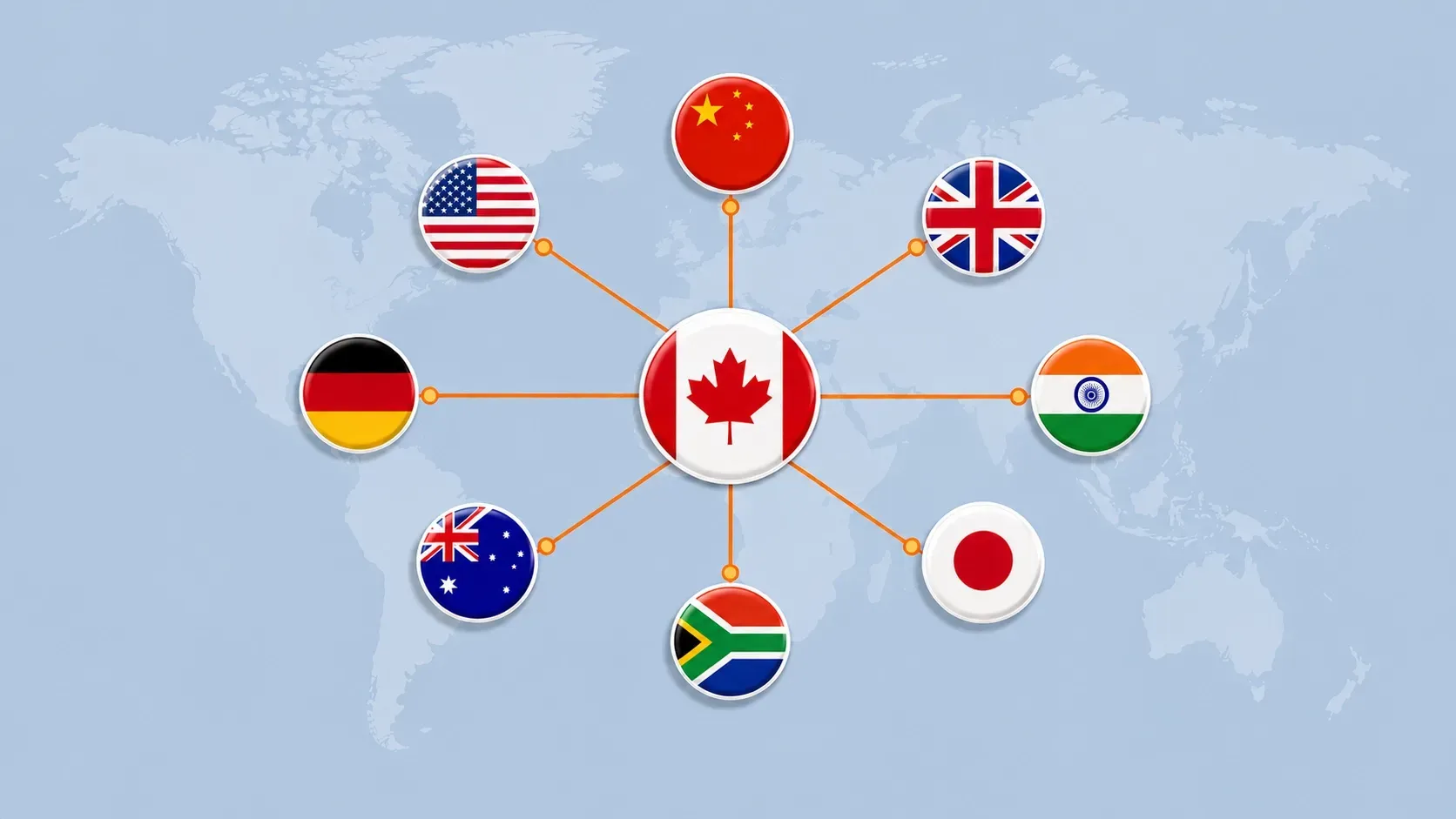
Canadian businesses can pay international contractors by confirming the contractor relationship, agreeing on the payment currency, collecting a proper invoice and banking details, and sending funds through a secure international payment provider.
The best method depends on the contractor’s country, payment amount, currency, transfer frequency, exchange rate, and whether your business needs one-off, recurring, or bulk payments.
Quick answer: The most practical way for a Canadian business to pay international contractors is to use a cross-border payment method that supports the contractor’s preferred currency, provides clear exchange rates, and gives your finance team a reliable payment record.
This guide is for Canadian business owners, finance teams, CFOs, AP teams, operations teams, agencies, SaaS companies, and other businesses working with overseas freelancers, consultants, developers, designers, marketers, and remote specialists.
You’ll learn how to pay international contractors from Canada, how to compare payment methods, how foreign exchange costs affect the total amount paid, and when a cross-border payment provider like MTFX can help.
How can Canadian businesses pay international contractors?
Canadian businesses can pay international contractors through international bank wires, online money transfer providers, digital wallets, freelance marketplaces, contractor-management platforms, or a business-focused international payment provider such as MTFX.
The right option depends on cost, speed, currency, payment tracking, business records, and whether your business needs payment support or contractor compliance support. For most businesses, the process includes:
- Confirming the contractor relationship.
- Agreeing on the currency and payment schedule.
- Collecting a valid invoice.
- Confirming the contractor’s banking details.
- Comparing transfer fees and exchange rates.
- Sending the payment securely.
- Keeping payment records for bookkeeping and reconciliation.
International contractor payments may be one-time project payments, recurring retainers, milestone payments, weekly freelancer payments, or monthly payments to a distributed team.
MTFX supports global workforce payments in 50+ currencies and 190+ countries, including payments to freelancers, vendors, and overseas teams.
What is the difference between international contractors, employees, and overseas suppliers?
International contractors, employees, and overseas suppliers are not the same. The payment method may look similar, but the business relationship, documentation, compliance considerations, and payment workflow can be very different.
This article focuses on paying international contractors and freelancers. For broader cross-border business payment needs, check out MTFX business global payments.
| Field | Value |
|---|---|
Invoice Amount (USD) 10,000 | |
Banks Exchange Rate 1.4084 / 0.7100 | |
Total cost 14,084.16CAD |
| Field | Value |
|---|---|
Invoice Amount (USD) 10,000 | |
MTFX Exchange Rate 1.3843 / 0.7224 | |
Total cost 13,842.52CAD |
You Save
CAD 241.64
with MTFX
3 September 2026
We use mid-market rates. This is for informational purposes only. Log in to view send rates.
What should you confirm before paying an international contractor?
Before paying an international contractor, confirm their contractor status, contract terms, invoice details, payment currency, banking information, tax documentation, and payment schedule. Getting these details right can help reduce payment delays, FX surprises, and record-keeping issues.
Is the worker truly a contractor?
Before sending payments, confirm that the worker is properly treated as an independent contractor and not an employee. This matters because employment status can affect payroll, tax, CPP, EI, and reporting obligations.
The CRA says employment status affects how a worker is treated under EI, the Canada Pension Plan, and the Income Tax Act, and that the facts of the working relationship as a whole determine the worker’s status. See the CRA’s guidance on employee or self-employed status.
A contractor relationship is typically more independent than an employment relationship. The contractor may control how the work is done, use their own tools, take on financial risk, invoice for services, and work with multiple clients. However, classification can be complex, especially when a contractor works full-time, follows company processes, or depends heavily on one business.
For classification questions, speak with a qualified tax, legal, or employment advisor.
Do you have a written agreement?
A written agreement helps both sides understand the scope of work and payment expectations.
Your agreement should usually include:
- Scope of work: What the contractor is expected to deliver.
- Deliverables: Specific outputs, milestones, or project stages.
- Payment amount: The agreed fee, hourly rate, retainer, or project price.
- Payment currency: CAD, USD, EUR, GBP, or local currency.
- Payment timing: Upfront, milestone-based, weekly, monthly, or upon completion.
- Invoice requirements: What details must appear on the invoice.
- Late-payment terms: Any fees, grace periods, or payment windows.
- Termination terms: How either party can end the agreement.
Do you have a proper invoice?
A clear invoice makes payment easier and supports your bookkeeping records.
A contractor invoice should usually include:
- Contractor name or business name
- Contractor address
- Invoice number
- Invoice date
- Description of services
- Amount due
- Currency
- Payment due date
- Tax, VAT, or GST information where relevant
- Payment instructions
- Any project, purchase, or internal reference number
For more invoice-related best practices, MTFX also has a guide on managing foreign vendor invoices.
Do you have the right banking details?
Incorrect banking details can cause failed payments, delays, return fees, or short payments.
Depending on the destination country, you may need:
- Beneficiary name
- Beneficiary address
- Bank name
- Bank address
- Account number
- SWIFT/BIC
- IBAN, where applicable
- Routing number or local bank code, where applicable
- Payment reference
- Intermediary bank details, if required
Always confirm whether the contractor should be paid to a personal account, business account, digital wallet, or marketplace account.
What are the best ways to pay international contractors from Canada?
The best way to pay international contractors from Canada depends on the payment amount, destination country, currency, frequency, and level of business support needed. For many Canadian businesses, a specialized international payment provider can offer a practical balance of cost, speed, currency support, and payment tracking.
MTFX is a strong fit when your business already has a contractor relationship in place and needs to send secure, cost-effective international payments. If your business needs hiring, onboarding, classification, employment contracts, benefits, or HR compliance support, an EOR or contractor-management platform may also be required.
For businesses making repeat international payments, MTFX also offers bulk payment solutions for payroll, vendor, contractor, and mass disbursement use cases.
Should you pay international contractors in CAD, USD, or local currency?
The best currency depends on the contractor’s invoice, country, preferred payment currency, and who will absorb the exchange-rate cost. Many contractors prefer to be paid in their local currency because it gives them more certainty about the amount they receive.
The payment currency should be agreed in the contract and reflected on the invoice. This avoids confusion over whether the contractor should receive a fixed foreign-currency amount or the converted equivalent of a CAD amount.
Before confirming a payment, finance teams can check live exchange rates or use the MTFX currency converter to estimate the CAD cost.
What fees affect international contractor payments?
The main costs of paying international contractors are transfer fees, exchange-rate markups, intermediary bank fees, recipient bank fees, and possible platform fees. The lowest advertised transfer fee is not always the lowest total cost if the exchange rate includes a large markup.
When comparing options, review the total CAD cost and the final amount the contractor receives, not just the visible transfer fee.
MTFX’s live exchange rates page explains that live FX rates can help users monitor currency pairs before converting funds and that banks may add markups to exchange rates.
How can exchange rates affect contractor payment costs?
Exchange rates can change the total CAD cost of contractor payments, especially when your business sends larger or recurring payments. A small exchange-rate difference can become meaningful over time.
Example: If a Canadian business pays a contractor USD 25,000 and the CAD/USD exchange rate is 1.40, the approximate CAD cost before fees is CAD 35,000. If the effective rate or FX margin increases the cost by 1%, the business may pay about CAD 350 more. For companies paying several contractors each month, small rate differences can add up quickly.
FX costs matter most when your business:
- Pays contractors regularly
- Pays in USD, EUR, GBP, or another foreign currency
- Has multiple contractors in different countries
- Works with fixed project budgets
- Needs a predictable monthly cash flow
- Wants to protect margins on client work or project delivery
To monitor currency movement, use MTFX’s live exchange rates, historical CAD to USD exchange rates, and daily FX updates.
How can Canadian businesses reduce FX fees when paying contractors abroad?
Canadian businesses can reduce FX costs by comparing exchange rates, avoiding unnecessary currency conversions, using rate alerts, planning payment timing, batching payments where practical, and working with a provider that specializes in cross-border business payments.
To reduce costs, consider these steps:
- Compare the exchange rate, not just the fee. A low transfer fee may still come with an unfavourable rate.
- Avoid unnecessary currency conversions. For example, avoid converting CAD to USD and then USD to local currency unless there is a clear reason.
- Use rate alerts. MTFX currency rate alerts can notify users when a target exchange rate is reached.
- Plan recurring payments. Regular payment dates make it easier to manage cash flow and FX exposure.
- Batch payments where practical. Paying several contractors through a streamlined workflow can reduce manual work.
- Use local-currency payments where appropriate. This can help contractors receive a clearer amount.
- Review payment timing. Cut-off times, bank holidays, and local banking systems can affect delivery.
Need to pay contractors in multiple currencies? MTFX global workforce payments helps Canadian businesses manage international contractor payments with competitive exchange rates, secure transfers, and business-focused payment support.
How do bulk payments work for international contractors?
Bulk payments allow a Canadian business to pay multiple international contractors in one streamlined payment process instead of sending each payment manually. This can reduce admin time, improve reconciliation, and make recurring contractor payments easier to manage.
Bulk contractor payments can be useful for:
- Agencies working with overseas freelancers
- SaaS companies with distributed technical teams
- Marketplaces paying international service providers
- Businesses with monthly contractor retainers
- Finance teams handling multi-currency payments
- Companies paying contractors in several countries
Instead of entering each payment separately through a bank, a business can standardize contractor details, payment amounts, currencies, and references. This helps reduce manual errors and creates a clearer payment trail for reconciliation.
MTFX’s bulk payments page states that businesses can streamline payroll, vendor, and contractor payments, reduce manual errors, and send bulk payments to 190+ countries in 50+ currencies.
How do recurring payments work for overseas contractors?
Recurring payments are useful when a business pays overseas contractors on a regular schedule, such as weekly, biweekly, monthly, or milestone-based payments. Setting a repeatable process helps reduce missed payments, manual errors, and FX planning issues.
Recurring contractor payments are common for:
- Monthly retainers
- Ongoing consulting work
- Remote development support
- Design or marketing retainers
- Virtual assistant services
- Long-term freelance projects
- Milestone-based project work
To manage recurring payments properly, your business should document the invoice cycle, payment date, payment currency, approval process, and reconciliation steps. This makes it easier for finance teams to manage contractor expectations and avoid last-minute payment issues.
For related payment workflow context, see MTFX’s guide on recurring international invoices and monthly vendor payments.
What mistakes should Canadian businesses avoid when paying international contractors?
Canadian businesses should avoid mistakes that create payment delays, unexpected FX costs, record-keeping issues, or contractor relationship problems.
Common mistakes include:
- Misclassifying a worker: Contractor and employee status should be reviewed carefully. CRA guidance states that the whole working relationship matters when deciding employment status.
- Ignoring exchange-rate costs: A low transfer fee can still come with an unfavourable FX rate.
- Paying in the wrong currency: This can create unexpected costs for the contractor or the business.
- Using banks by default: Banks may be familiar, but they may not always offer the most efficient option for recurring international contractor payments.
- Missing invoice details: Incomplete invoices can create accounting and reconciliation problems.
- Entering incorrect bank details: Errors can delay or fail payments.
- Forgetting local banking timelines: Holidays, cut-off times, and intermediary banks can affect delivery.
- Not keeping payment records: Payment confirmations, invoices, and exchange-rate records can support bookkeeping and audit trails.
For more guidance, see MTFX’s guide on common international payment mistakes.
When should you use MTFX to pay international contractors?
MTFX can be a practical option for Canadian businesses that need to pay overseas contractors securely, manage FX costs, send funds in foreign currencies, and handle one-off, recurring, or bulk international payments.
MTFX may be a good fit if your business:
- Pays contractors, freelancers, consultants, or remote specialists abroad
- Sends payments in foreign currencies
- Wants to reduce reliance on traditional bank wires
- Needs recurring or bulk contractor payments
- Wants business-focused payment support
- Needs payment tracking and reconciliation support
- Already has the contractor relationship and agreement in place
- Wants access to FX tools such as live rates, currency conversion, and rate alerts
MTFX states that it is FINTRAC-regulated, trusted since 1996, and offers same-day wires. You can also link to FINTRAC’s official Money services businesses page where regulatory context is needed.
MTFX supports international payments and foreign exchange. Businesses that need legal, tax, employment classification, HR, or local compliance support should consult qualified advisors or use a dedicated contractor-management or EOR solution where appropriate.
How to pay international contractors from Canada with MTFX?
Step 1 - Open or log in to your MTFX business account
Start by opening or accessing your MTFX business account. This gives your business a secure platform to manage international payments, review exchange rates, and organize contractor transfers from one place.
Step 2 - Add the contractor as a beneficiary
Enter the contractor’s beneficiary details, including their legal name or business name, country, bank details, and payment currency. Accurate beneficiary details help reduce failed transfers, delays, and returned payments.
Step 3 - Confirm the invoice and agreed payment currency
Match the payment to the contractor’s invoice, due date, and agreed currency. This step helps your finance team avoid underpayments, overpayments, or confusion between CAD, USD, and the contractor’s local currency.
Step 4 - Review the exchange rate and total CAD cost
Before sending funds, review the exchange rate, transfer cost, and expected recipient amount. You can use MTFX tools such as the currency converter and live exchange rates to support payment timing decisions.
Step 5 - Send the contractor payment securely
Once the details are confirmed, submit the international payment through MTFX. This can support one-off contractor invoices, recurring contractor retainers, or multi-currency payments to overseas service providers.
Step 6 - Track the transfer and keep records
Keep payment confirmations, invoices, exchange-rate details, and internal references for reconciliation. These records can help your accounting team match payments to contractor invoices and maintain a clearer audit trail.
Step 7 - Set up recurring or bulk payments where needed
If your business pays several contractors or sends payments on a regular schedule, use a more repeatable workflow. MTFX’s bulk payment solutions can help businesses streamline contractor, freelancer, payroll, and mass payment processes across multiple countries and currencies.


Conclusion: What is the best approach for paying international contractors from Canada?
The best approach is to confirm the contractor relationship, agree on currency and payment terms, collect accurate invoice and banking details, compare total payment costs, and use a secure international payment method that supports your business workflow.
For Canadian businesses paying overseas contractors regularly, FX costs, transfer speed, local-currency payments, and payment tracking can have a meaningful impact on total cost and contractor experience. Planning ahead helps your business avoid payment delays, reduce unnecessary fees, and build stronger relationships with international contractors.
Pay international contractors from Canada with confidence. Open an MTFX business account or speak with an FX specialist to compare rates, send secure payments, and streamline recurring or bulk contractor payments.
FAQs
1. Can a Canadian company pay an international contractor?
Yes. A Canadian company can pay an international contractor if the contractor relationship is properly documented, the invoice and payment details are accurate, and the business follows applicable tax, accounting, and compliance requirements.
2. What is the best way to pay international contractors from Canada?
The best way depends on payment size, country, currency, and frequency. Many businesses use an international payment provider to manage FX costs, send funds securely, and support recurring or bulk contractor payments.
3. Should I pay international contractors in CAD or local currency?
It depends on the contractor’s invoice terms and preferred currency. Paying in local currency can give the contractor more certainty, while CAD or USD may be simpler in some situations.
4. What details do I need to pay an overseas contractor?
You usually need the contractor’s legal name or business name, invoice, bank name, account number, SWIFT/BIC, IBAN where applicable, local routing details, payment currency, and payment reference.
5. How can I reduce FX fees when paying foreign contractors?
Compare total payment costs, review the exchange rate, avoid unnecessary conversions, use rate alerts, and consider a cross-border payment provider instead of relying only on traditional bank wires.
6. Can I pay multiple international contractors at once?
Yes. Bulk payment tools can help businesses send multiple contractor payments more efficiently, reduce manual entry, and improve reconciliation.
7. Do I need to withhold tax when paying a foreign contractor?
It depends on the contractor’s location, tax residency, services provided, tax treaty rules, and your business situation. A qualified tax advisor should confirm the requirements.
8. What is the difference between paying contractors and overseas suppliers?
Contractors are usually individuals or service providers paid for independent work. Overseas suppliers are usually companies paid for goods, inventory, materials, manufacturing, distribution, or business services.
9. When should I use an EOR instead of MTFX?
Use an EOR if you need hiring, onboarding, contracts, classification, payroll, benefits, or local employment support. Use MTFX when you need to send secure international payments and manage foreign exchange.
Disclaimer: This article is for general information only and does not provide legal, tax, accounting, employment, or financial advice. Contractor classification, withholding requirements, reporting obligations, and local compliance rules can vary based on the contractor’s location, tax residency, services provided, and your business situation. Canadian businesses should consult qualified legal, tax, accounting, or employment advisors before making decisions about contractor status, tax treatment, or cross-border compliance.
Avoid unnecessary fees and keep more of your money with MTFX.