Importing Goods into Canada: A Step-by-Step Guide for Businesses
Importing commercial goods into Canada requires careful planning across registration, product classification, customs documentation and landed-cost calculations. This guide outlines the complete import process while covering duties, taxes, supplier payments and foreign exchange considerations.
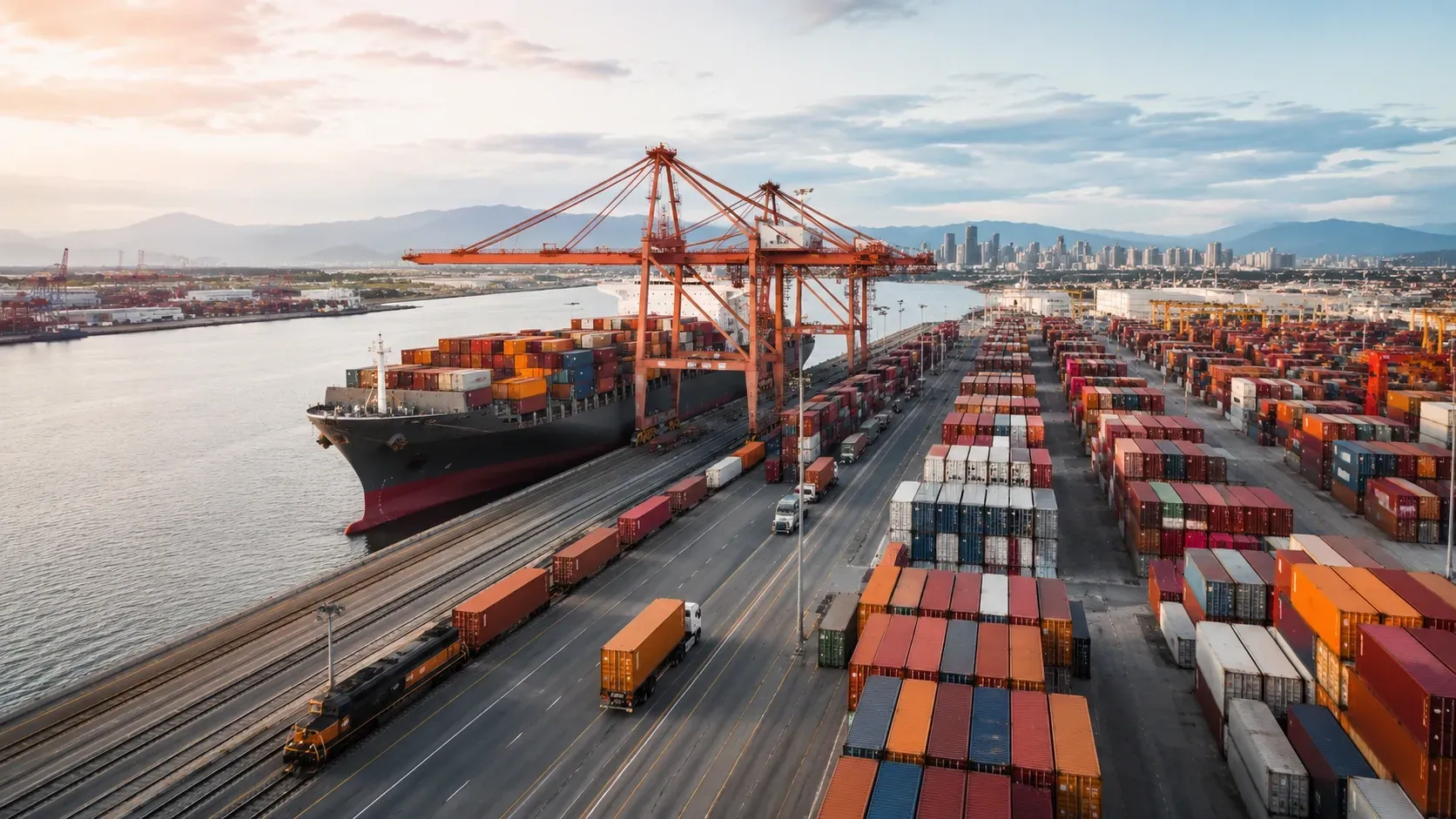
Importing commercial goods into Canada involves more than arranging transportation and paying an overseas supplier. Canadian businesses generally need to register in the CARM Client Portal, obtain the appropriate business and import-export accounts, confirm that their products can legally enter Canada, calculate import costs and prepare accurate customs documents.
Quick overview: To import commercial goods into Canada, your business must have the required import account, classify the goods, confirm admissibility and prepare accurate customs documents. You should also budget for duties, taxes, shipping, brokerage and foreign exchange costs before paying your supplier.
The process becomes much easier when each decision is made before the goods leave the supplier. This guide takes Canadian business owners, procurement teams, finance professionals and importers through the complete journey, from placing the purchase order to calculating the final landed cost.
What are commercial goods in Canada?
The Canada Border Services Agency defines commercial goods as goods imported into Canada for sale or for industrial, occupational, commercial or similar use.
That definition is broader than many first-time importers expect. Goods may still be considered commercial even if they are not being resold directly. Machinery used in a factory, laptops purchased for employees, ingredients used in food production and packaging imported for an ecommerce business can all qualify as commercial goods.
The commercial import process can also apply when an individual brings goods into Canada on behalf of a business. What matters is how the goods will be used, not simply the size of the shipment or the person arranging it.
The current CBSA definition of commercial goods can help businesses distinguish commercial shipments from personal or casual imports.
What should a business do before importing goods into Canada?
A successful import often begins weeks before the supplier starts preparing the shipment. This is the time to confirm that the product can enter Canada and whether it will still be profitable after every cost is included.
Start by gathering detailed information about the goods. Ask the supplier for product specifications, materials, intended uses, technical sheets, photographs and any relevant safety or origin certificates. A vague description such as “electronic parts” may not be enough to classify the product correctly.
Your business should also:
- Verify the supplier’s legal name, address and banking information
- Request samples or arrange quality inspections where appropriate
- Confirm production and delivery timelines
- Agree on the invoice currency and payment schedule
- Review the applicable Incoterm
- Identify the importer of record
- Check whether permits, licences or inspections are required
- Estimate the total landed cost
- Confirm how customs clearance will be handled
For businesses still developing their international sourcing strategy, understanding how to grow an import-export business in Canada can help connect supplier selection, logistics, cash flow and currency planning.
Before paying a deposit: Confirm that the product is admissible, commercially viable and correctly classified. Discovering a permit or tariff problem after production begins can be expensive.
How do you import commercial goods into Canada?
The exact process depends on the product, origin, value and transportation method. However, most Canadian businesses will need to work through the following steps.
Step 1: Decide who will be the importer of record
The importer of record is the party responsible for the customs declaration, payment of duties and taxes, and accuracy of the information provided to CBSA.
This responsibility should be settled before the supplier ships the goods. In some transactions, the Canadian buyer is the importer of record. In others, a non-resident supplier may have arranged to act as the importer.
Using a customs broker does not automatically transfer the importer’s legal responsibilities. The broker can prepare documents, submit declarations and communicate with CBSA, but the importer is still responsible for providing complete and accurate information.
Confirm the importer of record in the purchase agreement and make sure the selected Incoterm supports that arrangement.
| Field | Value |
|---|---|
Amount Payable (USD) 40,000 | |
Bank Exchange Rate 1.4422 / 0.6934 | |
Total cost 57,689.57CAD |
| Field | Value |
|---|---|
Amount Payable (USD) 40,000 | |
MTFX Exchange Rate 1.4175 / 0.7055 | |
Total cost 56,699.8CAD |
You Save
CAD 989.77
with MTFX
16 October 2026
We use mid-market rates. This is for informational purposes only. Log in to view send rates.
Step 2: Register the business in the CARM Client Portal
CARM, or CBSA Assessment and Revenue Management, is the official system of record for collecting duties and taxes on commercial goods imported into Canada.
Businesses need a nine-digit Business Number, known as a BN9, to complete their CARM registration. Resident businesses can generally obtain a BN9 during the portal registration process, while non-resident businesses normally need to request one from the Canada Revenue Agency first.
The business must also enrol in the import-export program and obtain an RM account. An RM account uses the business number followed by a program identifier, such as RM0001.
Importers must register their own businesses in the portal. A customs broker cannot complete the initial business registration on a client’s behalf. Once registered, the importer can establish a business relationship with a broker and delegate the appropriate authority.
The CBSA CARM registration guidance explains the current registration process and the information businesses should prepare.
Step 3: Confirm that the goods are permitted in Canada
Not every product can enter Canada without additional approval. Some goods are prohibited, while others are controlled or regulated by CBSA or another government department.
Requirements can apply to:
- Food, plants and agricultural products
- Pharmaceuticals and medical devices
- Wireless and electronic equipment
- Vehicles and auto parts
- Chemicals and hazardous materials
- Textiles and consumer products
- Alcohol and tobacco
- Weapons and controlled equipment
A product may need a permit, licence, inspection, safety certification or specific label before it can be sold in Canada. More than one government agency may be involved.
The Government of Canada’s business import portal provides links to product controls, import permits, customs requirements and other federal resources.
Do not wait until the shipment reaches the border to investigate these rules. Goods that arrive without the correct authorization can be delayed, returned or subject to additional costs.
Step 4: Determine the HS code and country of origin
Every imported product needs a tariff classification. Canada uses a ten-digit tariff item based on the international Harmonized System, commonly called the HS code.
The classification helps determine:
- The customs duty rate
- Whether a preferential tariff applies
- Whether the product is subject to a surtax
- Whether permits or restrictions apply
- What information must be reported
Businesses should not automatically use the code shown on a foreign supplier’s invoice. The international portion may be similar, but Canada applies its own tariff items and classification rules.
Country of origin also needs careful attention. It generally refers to where a product was manufactured, produced or grown, not simply the country from which it was shipped.
For example, a Canadian company may buy machinery from a distributor in the United States, but the machinery could have been manufactured in another country. The shipping country and origin country would therefore be different.
Businesses can review current classifications and tariff treatments through the 2026 Canadian Customs Tariff. Complex products may justify professional classification advice or an advance ruling from CBSA.
Step 5: Determine duties, taxes and value for duty
The customs duty is not always calculated directly from the amount that appears on the supplier invoice. Businesses must establish a value for duty under Canada’s customs valuation rules.
The transaction value method, based on the price paid or payable for the goods, is normally used when its requirements are met. Certain amounts may need to be added or deducted depending on the transaction and the agreed Incoterm.
Potential import charges include:
- Customs duty
- Surtaxes
- Anti-dumping or countervailing duties
- Excise duty
- GST or the federal portion of HST
- Provincial taxes where applicable
- Customs brokerage fees
- Storage and examination charges
A product with a zero customs duty rate can still be subject to GST, brokerage and other import costs.
The Canada Revenue Agency explains that imported goods are generally subject to GST or the federal portion of HST unless they qualify as non-taxable imports. Eligible GST/HST-registered importers may be able to claim an input tax credit, subject to the relevant requirements. This means the tax may affect cash flow at importation even if it is later recoverable.
The CRA guidance on GST/HST and imported goods provides additional information on how these rules apply.
Step 6: Agree on shipping, payment and Incoterms
Incoterms define how transportation costs, insurance, customs responsibilities and delivery risks are divided between the buyer and seller. They can also change which costs are already included in the supplier’s price.
Before confirming the purchase order, establish:
- Where responsibility transfers from the supplier to your business
- Who arranges international freight
- Who pays for cargo insurance
- Who manages export clearance
- Who handles Canadian import clearance
- Who pays duties and taxes
- Where final delivery takes place
The payment terms should be equally clear. Confirm the deposit, production milestones, final balance, invoice currency and payment deadline.
For example, a supplier may request 30% when the order is placed and the remaining 70% before shipment. The first payment may be converted at one exchange rate and the second several weeks later at a different rate. That movement can change the total CAD cost even when the foreign currency price stays the same.
Businesses comparing advance payments, open account terms, letters of credit and digital transfers can examine the broader payment methods used in international trade.
Step 7: Prepare the required documents
Accurate documentation helps CBSA understand what is being imported, who is involved and how the declared value was calculated.
A commercial shipment may require:
- A commercial invoice
- A Canada Customs Invoice
- A packing list
- A bill of lading or air waybill
- Proof or certificate of origin
- Import permits and licences
- Insurance documents
- A purchase order
- Product certificates or inspection records
Names, quantities, currencies, prices and product descriptions should be consistent across the documents. A mismatch between the supplier invoice, packing list and customs declaration can lead to questions or delays.
The official Canada Customs Invoice shows the information CBSA may need, including the settlement currency, origin, conditions of sale, transport method and detailed commodity values.
Step 8: Arrange transportation and customs clearance
Several parties may be involved in moving the goods, but their roles are different.
A carrier physically transports the shipment. A freight forwarder coordinates transportation and may combine services from several carriers. A customs broker helps prepare and submit customs information and arrange the release of goods.
A broker can be especially useful when:
- Your business is importing for the first time
- The shipment contains several products or HS codes
- The goods are regulated
- A trade agreement is being claimed
- Surtaxes or SIMA measures may apply
- The shipment is high value
- Imports will occur regularly
Businesses may also clear their own goods when they have the knowledge, systems and resources to do so. Whichever option you choose, responsibilities and fees should be agreed before the shipment leaves the supplier.
Step 9: Clear the goods and reconcile the shipment
When the shipment reaches Canada, it must be reported and accounted for. The required customs information is submitted, applicable duties and taxes are addressed, and the goods may be examined before release.
Once the shipment is delivered, compare the original estimate with the actual cost. Include:
- Supplier payments
- Currency conversion
- International freight
- Insurance
- Duties and taxes
- Brokerage
- Storage or examination fees
- Inland transportation
This reconciliation shows whether the imported goods still meet the company’s target margin. It can also improve the estimate used for the next order.
Importers should retain their customs, origin and payment records in an organized format. CBSA generally requires relevant commercial import records to be kept for six years, as outlined in its proof of origin requirements.
What documents are required to import commercial goods?
The exact documents depend on the product, origin, value and shipping method. However, most commercial imports rely on the following records.
The product description deserves particular attention. “Clothing,” “machine parts” or “electronics” may be too broad. Include enough detail to identify the product’s material, function and commercial use.
How much does it cost to import goods into Canada?
The landed cost is the total amount required to buy, transport, clear and deliver imported goods to their final Canadian destination.
Landed cost = supplier payment in CAD + freight + insurance + duties and surtaxes + non-recoverable taxes + brokerage + storage + inland delivery + payment and financing costs
Consider a simplified example. A Canadian distributor buys USD 50,000 of products from a foreign supplier.
For this illustration, assume the following:
The example assumes that the value for duty also works out to CAD 69,000 for simplicity. In a real shipment, CBSA’s valuation rules and customs conversion rate must be applied separately. Recoverable GST/HST may also mean the accounting cost differs from the initial cash requirement.
This is why comparing suppliers by unit price alone can be misleading. A lower factory price may be offset by higher freight, tariffs, compliance costs or currency conversion expenses.
How do exchange rates affect the cost of imported goods?
Exchange rate movement can change the CAD cost of an order between the day it is approved and the day the supplier is paid.
Suppose a Canadian importer has a USD 100,000 invoice:
- At a USD/CAD rate of 1.35, the invoice costs CAD 135,000.
- At a USD/CAD rate of 1.39, the same invoice costs CAD 139,000.
The difference is CAD 4,000 before transfer fees, freight, duties or taxes are included. If the importer has already priced the goods for Canadian customers, that additional cost may come directly out of the expected margin.
Businesses should also distinguish between two different currency calculations.
Customs conversion rate: CBSA states that the value for duty of foreign currency goods is converted using the Bank of Canada rate prevailing on the date of direct shipment.
Supplier payment rate: This is the rate available when the business converts CAD and sends the payment. The payment may happen before or after the direct shipment date.
The two rates may therefore be different. The CBSA customs exchange rate guidance explains the conversion used for value for duty.
Finance teams can use the MTFX currency converter to estimate the CAD value of an upcoming invoice. The live exchange rates and currency forecast can provide additional context when planning the timing of future payments.
Compare FX rates and manage global supplier payments.
Forecasts are not guarantees, so payment deadlines, budgets and risk tolerance should remain central to the decision.
What is the best way to pay an overseas supplier?
There is no universal payment method for every import. The right option depends on the supplier relationship, transaction value, currency, payment deadline and level of protection required.
When comparing payment options, look beyond the visible transfer fee. Review:
- The exchange rate and FX margin
- Transfer and intermediary bank fees
- The amount the supplier will receive
- Delivery time
- Payment tracking
- Currency support
- Invoice references
- Compliance requirements
- Support if the transfer is delayed
Canadian businesses can pay overseas supplier invoices in the currency agreed with the vendor. Paying in the supplier’s local currency may also create room to negotiate pricing, since the supplier no longer needs to build its own conversion costs into the quote.
Businesses making regular payments can use a multi-currency account to manage supported foreign currencies and reduce unnecessary conversions. A broader international business payments strategy can also help finance teams compare costs, timing, tracking and approval requirements across all overseas obligations.
How can businesses manage currency risk on future imports?
An importer may agree to a foreign currency price months before the final balance becomes due. If CAD weakens during that period, the business will need more Canadian dollars to settle the same invoice.
Businesses can manage this exposure by:
- Monitoring the currencies used by key suppliers
- Recording foreign currency obligations and payment dates
- Setting target exchange rates
- Staggering conversions where appropriate
- Holding supported foreign currency balances
- Aligning payment plans with cash flow
- Considering a forward contract when greater cost certainty is required
A forward contract can allow an eligible business to secure an exchange rate for a future payment. This may help with budgeting, but it also creates an obligation to transact under the agreed terms. The strategy should therefore match the company’s confirmed exposure, payment schedule and risk tolerance.
MTFX’s business FX risk management solutions include forward contracts, market orders and other tools for qualifying business needs. Companies waiting for a specific market level can also create currency rate alerts rather than monitoring the market throughout the day.
What mistakes should Canadian importers avoid?
- Shipping before completing CARM registration: This can create avoidable clearance delays.
- Using an unverified HS code: The supplier’s classification may not match Canada’s tariff system.
- Confusing shipping country with origin: Tariff treatment depends on where the goods originated, not only where they were dispatched.
- Paying before checking admissibility: A low-cost product is not a bargain if it cannot legally enter or be sold in Canada.
- Using vague invoice descriptions: Customs documents should identify the material, function and commercial nature of the goods.
- Ignoring permits and product standards: Requirements may apply before the goods are shipped.
- Assuming a broker accepts all responsibility: The importer remains responsible for the accuracy of the information provided.
- Budgeting only for the supplier price: Freight, duties, taxes, brokerage and currency costs can materially change the margin.
- Waiting until the due date to arrange payment: Missing information or compliance checks can delay an urgent supplier transfer.
- Failing to verify changed banking details: Unexpected payment instructions should be confirmed through a known supplier contact.
- Overlooking the exchange rate: A small movement can have a meaningful effect on a large commercial invoice.
- Failing to retain records: Import, origin and payment documents should be stored together for future reference.
What should be on a first-time importer checklist?
Before the first commercial shipment leaves the supplier, confirm that:
- The business is registered in CARM
- The BN9 and RM account are active
- The importer of record is identified
- Product admissibility has been checked
- Required permits and licences are in place
- The HS classification has been verified
- The country of origin is supported
- Tariff treatment has been reviewed
- The total landed cost has been estimated
- The Incoterm is understood
- Supplier payment terms are documented
- Beneficiary bank details have been verified
- The commercial invoice has been reviewed
- Transportation has been arranged
- Broker authority has been delegated where applicable
- Funds are available for duties, taxes and supplier payments
- Import and payment records can be stored and reconciled
Completing this checklist before shipment is far easier than solving the same issues while goods are waiting at the border.
How can MTFX support Canadian importers?
MTFX helps Canadian businesses manage the currency conversion and international payment side of importing. Businesses can convert CAD into the supplier’s invoice currency, send payments to overseas vendors, track payment activity and plan future currency requirements.
For importers making large or recurring payments, this can help with:
- Comparing the total CAD cost before approving an invoice
- Paying suppliers in supported local currencies
- Planning deposits and final balances
- Setting rate alerts
- Managing recurring vendor obligations
- Holding and managing supported foreign currencies
- Exploring suitable FX risk management strategies
- Maintaining payment records for reconciliation
Businesses can also pay overseas suppliers from Canada and follow practical steps for paying an international invoice when building an accounts payable process.
MTFX is Canadian-based, has served clients since 1996 and is regulated by FINTRAC. MTFX supports currency exchange and international business payments; customs classification, permits, tariffs and clearance should be confirmed with CBSA, the relevant government agency or a licensed customs professional.


Bring every import cost into view before the shipment moves
Importing commercial goods into Canada becomes much more manageable when registration, product compliance, customs documentation and payment planning are handled as one connected process.
The supplier’s quoted price is only the beginning. Freight, duties, taxes, brokerage and currency conversion all influence what the inventory ultimately costs in Canadian dollars. Calculating those expenses before placing an order gives your business a clearer margin, a stronger cash flow plan and fewer surprises when the shipment arrives.
Set up your MTFX business account today and plan currency conversions, manage overseas invoices and send supplier payments with greater visibility.
FAQs
1. Do Canadian businesses need an import licence?
Canada does not have one general import licence that covers every commercial product. However, certain goods require product-specific permits, licences, certificates or inspections. Businesses should check CBSA and the responsible federal or provincial agency before placing an order.
2. What is a CARM import-export RM account?
An RM account is a CBSA commercial program account linked to a business’s nine-digit Business Number. Importers use the CARM Client Portal to register their business, enrol in the import-export program and manage customs accounting activities.
3. Can a business import commercial goods without a customs broker?
Yes, a business can generally prepare and submit its own customs information if it has the necessary knowledge and systems. Many importers use a licensed customs broker because classification, valuation and clearance can become complex, especially for regulated or high-value goods.
4. What is the difference between a commercial invoice and a Canada Customs Invoice?
A commercial invoice records the sale between the supplier and buyer. A Canada Customs Invoice provides the detailed information CBSA requires for certain commercial shipments. A commercial invoice may be accepted when it contains all the necessary customs data.
5. How are import duties calculated in Canada?
Import duties generally depend on the product’s tariff classification, country of origin, applicable tariff treatment and value for duty. Surtaxes, excise duties or SIMA measures may also apply to certain goods.
6. Is GST/HST charged on commercial imports?
Imported goods are generally subject to GST or the federal portion of HST unless they qualify as non-taxable imports. An eligible GST/HST-registered importer may be able to claim an input tax credit, subject to the applicable requirements.
7. What is included in the landed cost of imported goods?
Landed cost normally includes the supplier payment, currency conversion, freight, insurance, duties, taxes, brokerage, storage and delivery to the final business location. The exact components depend on the product, route and Incoterm.
8. Which exchange rate does CBSA use for customs valuation?
CBSA generally uses the Bank of Canada exchange rate prevailing on the date of direct shipment to convert a foreign currency value for duty into Canadian dollars. This may be different from the rate the business receives when paying its supplier.
9. Should a Canadian importer pay a supplier in CAD or foreign currency?
The better option depends on the supplier’s pricing and conversion costs. Paying in the supplier’s local currency may produce a better quote, but the Canadian importer then assumes the currency exposure. Businesses should compare the total CAD cost under both options.
10. How long should a business retain its import documents?
Canadian importers generally need to retain relevant customs, origin and accounting records for six years. Keeping supplier invoices, payment confirmations, customs entries and transportation records together makes future verification and reconciliation easier.
Disclaimer: This article is provided for general informational purposes only and does not constitute customs, tax, legal or financial advice. Import rules, tariffs and documentation requirements may change and can vary by product and country of origin. Businesses should confirm current requirements with the CBSA, CRA and relevant regulatory authorities, and consult a qualified customs broker or professional adviser where appropriate. Any examples are illustrative, and foreign exchange rates are subject to market movements.