Working Capital Management for Importers and Exporters
Working capital management for importers and exporters means managing the timing gap between supplier payments, customer receipts and currency conversions. Better payment terms, FX planning, rate alerts and forward contracts can help reduce cash-flow pressure.
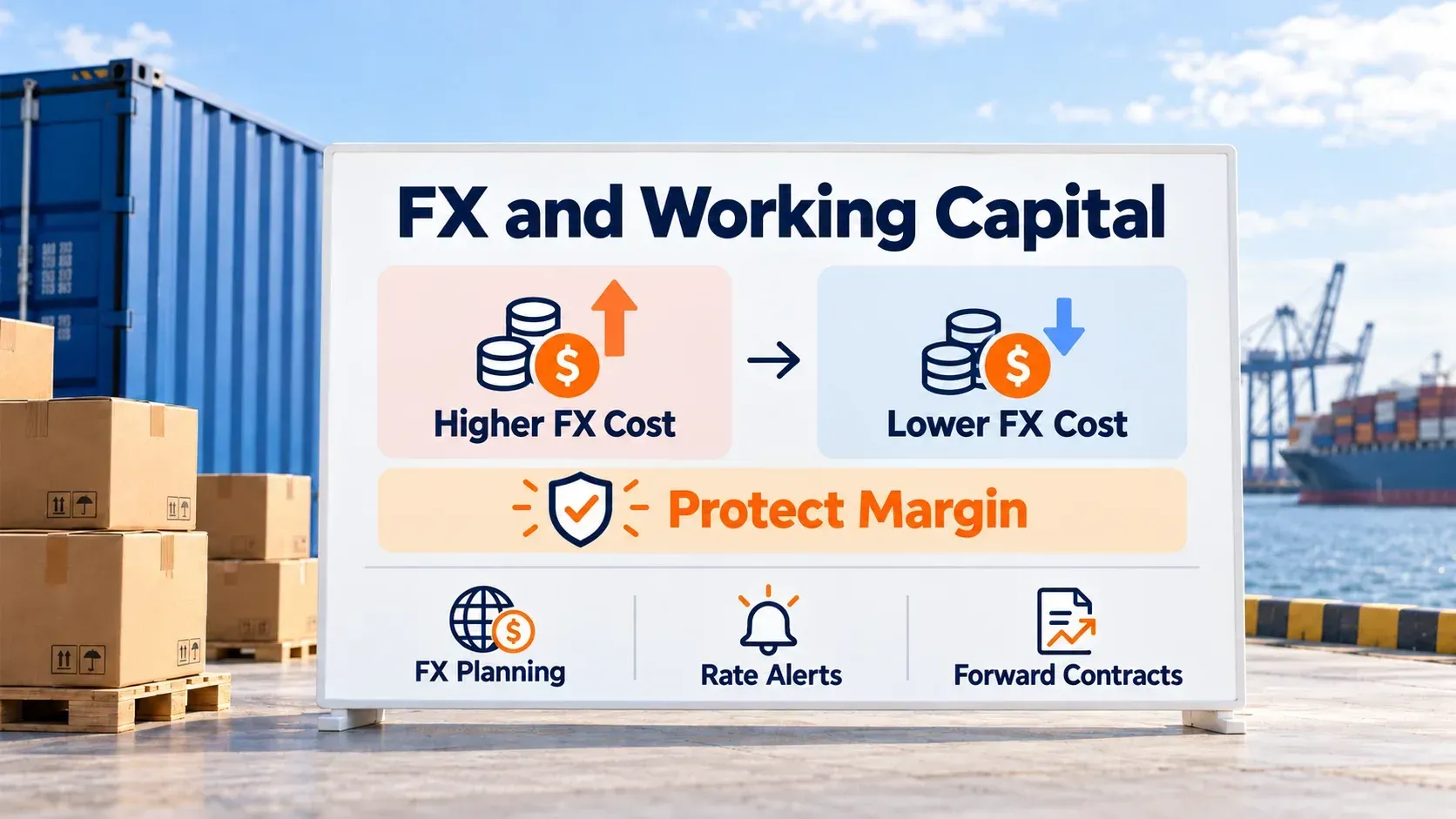
Working capital management for importers and exporters means keeping enough cash available for supplier payments, shipping, duties, payroll and inventory while waiting for customer payments. For international businesses, the real challenge is timing: when money leaves, when it returns and how currency movements affect the amount in between.
Importers often pay overseas suppliers before inventory is sold. Exporters may ship goods or deliver services before international buyers settle invoices. In both cases, cash can be tied up for weeks or months while exchange rates, payment terms and operating costs continue to move.
MTFX helps Canadian businesses manage international payments with competitive exchange rates, secure business transfers, rate alerts, forward contracts and specialist FX support. For companies buying from overseas suppliers or collecting from global customers, better payment timing can protect margins and make cash flow easier to plan.
What is working capital management for importers and exporters?
Working capital management is the process of managing short-term assets and liabilities so a business can keep operating smoothly. In simple terms, it answers one question: does the business have enough cash available to cover what it needs to pay next?
For importers and exporters, working capital usually connects to:
- Cash available in CAD and foreign currencies
- Accounts receivable from domestic or international customers
- Accounts payable owed to overseas suppliers
- Inventory purchased before sales revenue arrives
- Freight, duties, customs, insurance and warehousing costs
- Foreign currency invoices and exchange rate movements
- Short-term financing or operating lines of credit
A domestic business may already have payment timing pressure, but international trade adds extra layers. Supplier deposits may be due in USD, EUR, GBP or CNY. Shipping costs may need to be paid before goods arrive. Customers may pay 30, 60 or 90 days after delivery. Exchange rates can move between the date an invoice is issued and the date the payment is made.
That is why working capital management for importers and exporters needs to include both cash-flow planning and foreign exchange planning.
Before you send or receive an international payment, check how the exchange rate could affect your cash flow. A quick rate comparison can help you plan supplier payments, customer receipts and currency conversions more clearly.
| Field | Value |
|---|---|
Amount Payable (USD) 50,000 | |
Bank Exchange Rate 1.4345 / 0.6971 | |
Total cost 71,727.42CAD |
| Field | Value |
|---|---|
Amount Payable (USD) 50,000 | |
MTFX Exchange Rate 1.4099 / 0.7093 | |
Total cost 70,496.8CAD |
You Save
CAD 1,230.62
with MTFX
21 October 2026
We use mid-market rates. This is for informational purposes only. Log in to view send rates.
Why payment timing gaps create cash-flow pressure
A payment timing gap happens when cash leaves the business before replacement cash comes in. This is common in international trade because buying, shipping, selling and collecting money rarely happen on the same date.
For example, a Canadian importer may pay a 30% supplier deposit today, pay the remaining balance before shipment, pay freight and duties when the goods arrive, and only receive customer revenue after inventory is sold. The business may be profitable on paper, but cash is still tied up for the full cycle.
An exporter can face the opposite problem. The company may pay production costs, packaging, logistics and wages before receiving funds from an overseas buyer. If the buyer has longer payment terms, the exporter may wait weeks after shipment before cash returns.
This is where many businesses get caught. They calculate the cost of a supplier invoice or customer order, but they do not always map the timing of each cash movement. A profitable order can still create stress if too much cash is locked in inventory, receivables or foreign currency exposure.
The OpenStax working capital guide explains that working capital is closely tied to cash, inventory, accounts receivable and accounts payable. For international businesses, those same areas become more complex because supplier and customer payments may sit in different currencies.
Closing a receipts-to-payments timing gap
Closing a receipts-to-payments timing gap starts with seeing the full timeline. A business should know when supplier payments are due, when customer receipts are expected, what currency each side uses and when the exchange rate will matter.
Imagine a Canadian importer buying goods from a US supplier. The supplier invoice is USD 100,000. The importer expects to sell the goods in Canada and collect CAD revenue over the next 60 days. If the business waits until the payment date to convert CAD to USD, a weaker Canadian dollar could increase the final cost. If the business converts too early, it may tie up cash that could be used elsewhere.
A better approach is to map the timeline before committing to the order:
- When is the supplier deposit due?
- When is the balance due?
- What currency is the invoice in?
- When will the goods arrive?
- When will customers pay?
- What exchange rate has been used in the margin calculation?
- Is the business exposed to rate movement before payment?
- Would a rate alert, forward contract or scheduled payment help?
This does not remove every risk, but it gives the finance team more control. Instead of reacting to each payment at the last minute, the business can plan the currency decision alongside the cash-flow decision.
How importers can manage supplier payments before sales revenue arrives
Importers usually face working capital pressure because money often leaves before inventory turns into sales. A supplier may ask for a deposit before production starts and the balance before shipment. After that, the importer may still need to pay freight, customs duties, taxes, insurance, warehousing and local distribution costs.
This creates a long cash-flow chain. If the importer does not plan it carefully, too much cash can be locked into one order while other expenses continue.
Importers can improve working capital by reviewing the full supplier payment process before each major purchase. That includes negotiating payment terms, planning foreign currency needs and avoiding rushed conversions.
Useful steps include:
- Ask suppliers for staged payment terms instead of paying the full amount upfront.
- Match large supplier payments with expected customer receipts where possible.
- Confirm the invoice currency before agreeing on final pricing.
- Build exchange rate assumptions into product margins.
- Use rate alerts to monitor target exchange rates before payment dates.
- Consider forward contracts for known future invoices.
- Avoid paying too early if it creates unnecessary cash pressure.
- Keep supplier payment records organized for reconciliation.
For Canadian companies regularly paying overseas vendors, MTFX offers business money transfers and invoice payment solutions that can help streamline international supplier payments and reduce friction in the payment process.
How exporters can manage delayed customer receipts
Exporters often face working capital pressure after the sale is made. The business may have shipped goods, delivered a service or completed production, but the payment may not arrive until later. International buyers may request extended payment terms, especially for larger orders or repeat contracts.
This can be good for sales but difficult for cash flow. A longer payment term may help win the deal, but it also means the exporter is financing the customer for a longer period.
Exporters should review each international order through a cash-flow lens. A large contract is not only a revenue opportunity. It also creates a funding requirement until the buyer pays.
Before accepting longer payment terms, exporters should check:
- How much cash will be tied up before payment arrives
- Which costs must be paid before shipment or delivery
- How long receivables may remain unpaid
- What currency the customer will pay in
- What exchange rate is used in the pricing model
- How delayed payment could affect payroll, supplier payments or new orders
- How the business will follow up and reconcile international receipts
Export Development Canada notes that exporters can face cash-flow pressure from upfront costs, longer payment terms and delayed international customer payments. That makes payment timing a real planning issue, not just an accounting detail.
Exporters can also improve cash flow by making payment instructions clear, invoicing quickly, confirming bank details early and using a reliable process for receiving international payments. MTFX’s global collections and receive payments solutions can support businesses that collect money from customers, marketplaces or international partners.
Payment timing is only part of the picture. Use the widget below to check current exchange rates and see how currency movement could change the CAD value of your upcoming business payment.
Monitor exchange rate trends before making cross-border business payments.
| Currency | Rates | High | Low | Daily |
|---|---|---|---|---|
 CAD | 1.4064 | 1.4082 | 1.4038 | 0.04% |
 EUR | 1.1225 | 1.1242 | 1.1217 | -0.13% |
 INR | 94.45 | 94.81 | 94.42 | -0.34% |
 GBP | 1.3386 | 1.3403 | 1.3364 | 0.05% |
 CNY | 6.6642 | 6.6801 | 6.6641 | -0.20% |
 JPY | 158.12 | 158.39 | 157.83 | -0.01% |
 MXN | 18.62 | 18.65 | 18.39 | 1.11% |
Reduce FX costs on supplier payments and international transfers.
Where foreign exchange affects working capital
Foreign exchange can affect working capital at several points. It can change the CAD cost of a supplier invoice, the CAD value of an overseas customer receipt or the final margin on an international transaction.
The risk is not always obvious at the beginning. A quote may look profitable when the order is accepted, but if the exchange rate moves before payment is made or received, the final result can change.
For importers, a weaker Canadian dollar can make foreign supplier invoices more expensive in CAD. For exporters, a stronger Canadian dollar can reduce the value of foreign currency receipts once converted back to CAD.
This is why FX planning belongs inside working capital management. It is not just a treasury topic for large corporations. Any Canadian importer or exporter with recurring foreign currency payments can be affected.
Businesses can use FX risk management tools such as forward contracts, rate alerts and planned conversions to create more certainty around known payment dates. The goal is not to predict the market perfectly. The goal is to reduce surprise costs when cash is already committed.
Ways to improve international working capital
Working capital optimization is not only about holding more cash. It is about making cash move through the business more efficiently. For importers and exporters, that means connecting payment timing, inventory movement, receivables collection and currency decisions.
A practical improvement plan can start with a simple payment calendar. List every expected supplier payment, customer receipt, tax cost, freight charge, loan payment and payroll date. Then mark the currency attached to each item. This gives the finance team a clearer view of when cash pressure may build.
Businesses can improve international working capital by focusing on these areas:
- Shorten the time between invoicing and collection.
- Avoid carrying slow-moving inventory for too long.
- Negotiate supplier terms that match the sales cycle.
- Use clear payment instructions to reduce delays.
- Review FX exposure before confirming large orders.
- Track foreign currency payables and receivables separately.
- Use scheduled payments for recurring supplier invoices.
- Set rate alerts for planned conversions.
- Consider forward contracts for known future payment dates.
- Reconcile payments quickly so unpaid items are not missed.
The Business Development Bank of Canada explains that the cash conversion cycle measures how fast a company turns cash into inventory and then back into cash. For importers and exporters, that cycle should also include foreign currency timing because supplier payments and customer receipts may not happen in the same currency.
The best approach depends on the business model. A wholesaler importing seasonal goods may need to focus on inventory timing and supplier deposits. A service exporter may care more about receivables, invoice follow-up and foreign currency collections. A manufacturer may need to manage both sides at once.
A simple example of working capital timing
Consider a Canadian business importing goods from Europe.
The supplier invoice is EUR 80,000. The supplier asks for 30% upfront and 70% before shipment. The goods are expected to arrive in 45 days, and the business expects to sell the inventory over the following 60 days.
Here is the cash-flow problem:
The importer may have a strong gross margin, but cash is tied up for months. If EUR/CAD moves during this period, the final landed cost may also change.
This is why the business should not treat the supplier payment as a single transaction. It should treat it as a working capital cycle. The finance team may decide to book a forward contract for the balance payment, set rate alerts before the deposit, or align future orders with expected customer receipts.
Common mistakes that create cash-flow problems
Many international payment issues begin before the money moves. The business may agree to supplier terms, accept customer terms or price an order without fully reviewing the cash-flow impact.
Common mistakes include:
- Pricing international orders without allowing for currency movement.
- Paying suppliers too early without a cash-flow reason.
- Accepting long customer payment terms without checking available working capital.
- Ignoring freight, duties and tax timing.
- Treating FX cost as separate from product margin.
- Waiting until the due date to arrange large foreign currency payments.
- Not tracking foreign receivables by currency.
- Assuming bank transfer fees are the only international payment cost.
- Using the same process for every country, supplier or invoice size.
- Failing to reconcile partial payments, deductions or delayed receipts.
The fix is usually not complicated. Businesses need better visibility, cleaner payment processes and earlier FX planning. When payment timing is visible, decisions become easier.
How MTFX supports international payment planning
MTFX helps Canadian businesses make and receive international payments with tools that support cash-flow planning and foreign exchange management. For importers and exporters, that can make payment timing easier to manage across suppliers, customers and currencies.
Businesses can use MTFX for:
- Competitive exchange rates for international business payments
- Secure transfers to overseas suppliers and vendors
- Support for recurring foreign currency payments
- Rate alerts for planned conversions
- Forward contracts for known future payment needs
- Multi-currency payment planning
- Global collections and receivables support
- Specialist guidance for business FX decisions
MTFX has supported clients with global money movement since 1996. For companies managing supplier invoices, international receivables or multi-currency exposure, MTFX’s global payments and multi-currency account solutions can help simplify the payment side of working capital management.


Make payment timing part of your cash-flow strategy
Working capital management for importers and exporters is not only about having cash in the bank. It is about knowing when cash leaves, when it returns and how currency movements can affect the amount in between.
Importers need to plan supplier deposits, balance payments, landed costs and inventory turnover. Exporters need to plan production costs, shipping expenses, buyer payment terms and international receivables. Both need to understand how foreign exchange can change the final cost or value of a transaction.
A business that connects payment timing with FX planning can make better decisions before cash gets tight. With the right process, international growth becomes easier to fund, easier to track and easier to scale.
If your business regularly pays overseas suppliers, receives international customer payments or manages foreign currency invoices, MTFX business payment solutions can help you streamline international transfers, compare exchange rates and plan payments with specialist FX support. Register with MTFX and send your international payments with ease.
FAQs
1. What is working capital management for importers and exporters?
Working capital management for importers and exporters means managing cash, inventory, receivables, payables and foreign currency payments so the business can cover short-term obligations while trading internationally.
2. Why do importers need working capital?
Importers need working capital because supplier payments, deposits, freight, duties and inventory costs often come before customer sales revenue arrives.
3. Why do exporters face cash-flow gaps?
Exporters often pay production, shipping and operating costs before international customers pay. If buyers use 30, 60 or 90-day terms, cash can stay tied up for weeks. This can affect payroll, supplier payments and new orders.
4. What is a payment timing gap?
A payment timing gap is the period between when cash leaves a business and when replacement cash comes back in. In international trade, this gap can be extended by shipping times, payment terms and currency conversion timing.
5. How does foreign exchange affect working capital?
Foreign exchange changes the CAD value of foreign invoices, customer receipts and currency balances. If rates move before payment or conversion, the final cost or value can change. This affects both importers paying suppliers and exporters converting overseas revenue.
6. How can importers improve cash flow?
Importers can improve cash flow by planning supplier payments before placing major orders. They can negotiate staged terms, monitor FX exposure and match payment dates with expected sales revenue. Rate alerts or forward contracts can help with known future payments.
7. How can exporters collect international payments faster?
Exporters can collect faster by issuing invoices quickly, giving clear payment instructions, confirming banking details early, following up before due dates and using reliable international collection solutions.
8. Can forward contracts help with working capital planning?
Forward contracts can help when a business has a known future foreign currency payment or receipt. They can lock in an exchange rate and reduce uncertainty around future cash needs.
9. How do rate alerts help business cash flow?
Rate alerts notify businesses when a target exchange rate is reached. This helps finance teams plan conversions before supplier payments or expected receipts. It can also reduce rushed currency decisions when invoices are due.
10. What is the difference between cash flow and working capital?
Cash flow is the movement of money in and out of a business. Working capital is the short-term financial position created by current assets, such as cash and receivables, minus current liabilities, such as payables.