10 Best Places to Retire in Europe for Canadians in 2026
Portugal, Spain and Greece are among the best places for Canadians to retire in Europe because they offer warmer climates, established residency pathways and comparatively manageable living costs. France, Italy and Ireland provide strong cultural and lifestyle benefits, while Germany, Austria and Switzerland suit retirees prioritizing infrastructure, safety and high-quality services.

Portugal, Spain and Greece are among the strongest European retirement destinations for Canadians seeking warmer weather, established residency pathways and comparatively manageable living costs. France and Italy stand out for culture and regional variety, while Ireland provides an English-speaking environment. Germany, Austria and Switzerland may appeal to retirees prepared to spend more for infrastructure, stability and public services.
Choosing where to retire involves more than comparing beaches, sunshine and restaurant prices. Canadians also need to examine legal residency, healthcare access, housing costs, pension eligibility, taxation and the effect of currency movements on income received in Canadian dollars.
MTFX has helped Canadians move money internationally since 1996. Retirees can use MTFX to convert Canadian dollars, arrange regular international money transfers, move larger amounts for property or relocation costs and send funds to European bank accounts.
Quick comparison of the best European retirement destinations
The table below compares the destinations based on lifestyle, relative costs, commonly used residency routes and suitable cities or regions. Immigration rules, financial thresholds and health-insurance requirements can change, so always verify the latest information with the relevant consulate or immigration authority.
| Field | Value |
|---|---|
Amount Payable (EUR) 50,000 | |
Bank Exchange Rate 1.6412 / 0.6093 | |
Total cost 82,060.02CAD |
| Field | Value |
|---|---|
Amount Payable (EUR) 50,000 | |
MTFX Exchange Rate 1.6130 / 0.6199 | |
Total cost 80,652.13CAD |
You Save
CAD 1,407.89
with MTFX
22 September 2026
We use mid-market rates. This is for informational purposes only. Log in to view send rates.
10 best places for Canadians to retire in Europe in 2026
Here is a quick rundown on the top 10 European places for Canadians to retire in 2026.
1. Portugal – best overall for lifestyle and accessibility

Portugal remains one of Europe’s most practical retirement choices for Canadians. It combines a mild climate, attractive coastal and inland communities, an established international population and a residence route designed for retirees and people who live on pensions or other independent income.
The Portuguese government provides a residence-visa process for retirees and people living on their own income. Applicants must apply through the appropriate Portuguese consular office and meet the current documentation, income, accommodation and insurance requirements.
The Algarve attracts retirees who want beaches, golf and a large English-speaking community, but housing in its most popular towns can be expensive. Braga and Coimbra provide a more local atmosphere, while communities outside Porto offer access to city services without central Lisbon prices.
Portugal is particularly suitable for Canadians seeking a balance between climate, residency accessibility and connections to the rest of Europe. Retirees moving funds there can also review options for sending money to Portugal from Canada.
Advantages:
- Mild winters in many regions
- Established international and retiree communities
- Good connections to other European countries
- Smaller cities that may cost less than Lisbon
Considerations:
- Housing costs have risen in popular areas
- Administrative processing can be slow
- Tax rules and incentive programs can change
2. Spain – best for warm weather and established expat living

Spain offers much more than resort communities. Retirees can choose between Mediterranean cities, quieter inland towns, island living and northern regions with cooler, greener climates.
Valencia is one of the strongest all-round options because it combines beaches, public transportation, healthcare services and city amenities without consistently matching Barcelona or Madrid prices. Alicante and Málaga have larger international communities, while Murcia and smaller Andalusian towns may provide better housing value.
Spain’s official non-working residence visa is intended for applicants who have sufficient financial means to live in Spain without undertaking paid professional activity. It is not a work permit, so Canadians planning to work remotely or operate a business should confirm whether a different immigration route is required.
Canadians moving retirement income or savings can use the dedicated Spain money-transfer page to understand the payment process and banking information commonly required.
Advantages:
- Warm Mediterranean climate in southern and eastern regions
- Established international communities
- Strong transportation network
- Wide range of city, coastal and rural choices
Considerations:
- The non-working residence visa does not permit employment
- Private medical insurance may be required during the application stage
- Taxes and living costs vary by region
3. Greece – best for affordability and Mediterranean living

Greece appeals to Canadians seeking sunshine, slower-paced living and potentially lower everyday costs than many Western European destinations. Its most practical retirement choices are not limited to the famous holiday islands.
Crete offers established communities, healthcare facilities and year-round services. Kalamata combines coastal access with a more local atmosphere, while Thessaloniki provides urban amenities at a different pace from Athens. Smaller mainland communities may be more affordable but generally provide fewer English-language services.
Greece has residence options for non-EU nationals who can demonstrate sufficient independent resources, but applicants should verify current income, accommodation and insurance requirements with the Greek consular authorities in Canada.
For related payment planning, Canadians can review how to send money to Greece from Canada.
Advantages:
- Warm climate and a long outdoor season
- Lower housing costs in many mainland communities
- Strong food culture and relaxed lifestyle
- Growing international communities
Considerations:
- Administrative procedures may take time
- Year-round healthcare access varies by location
- Some islands become quiet outside the tourist season
4. France – best for healthcare, culture and regional variety

France is often dismissed as too expensive for retirement, but costs vary considerably by region. Paris and parts of the French Riviera require substantial budgets, while communities in Occitanie, Brittany, Nouvelle-Aquitaine and central France can be more accessible.
Montpellier offers a warm climate and an active cultural scene. Toulouse combines a major-city economy with access to smaller southwestern towns. Dordogne is popular with international residents, while Brittany provides coastal living without the intense summer heat found farther south.
Canadians planning to remain in France for more than 90 days generally need an appropriate long-stay visa. The official France-Visas service explains that applicants seeking an extended private stay without professional activity must demonstrate sufficient resources, accommodation and medical coverage.
Retirees can also review the process for sending Canadian dollars to France for living expenses, property costs and other payments.
Advantages:
- Strong healthcare infrastructure
- Excellent rail and transportation network
- Exceptional regional diversity
- Large selection of smaller cities and rural communities
Considerations:
- French is important for healthcare and administration
- Taxes and social charges require professional advice
- Some regions have high property costs
5. Italy – best for culture and affordable smaller communities

Italy offers dozens of possible retirement lifestyles. A retiree could live near the Adriatic coast, in a hill town, on a Mediterranean island or close to a historic regional city.
Rome, Milan, Florence and central Venice can be costly and crowded. Better retirement value may be available in Abruzzo, Puglia, Umbria, Le Marche, Sicily and smaller communities outside the major tourist corridors.
Italy’s elective residence visa is intended for people with stable financial resources who plan to live in the country without working. Official guidance from the Consulate General of Italy in Toronto should be consulted for current eligibility requirements and application procedures.
Canadians transferring funds can review the dedicated guide to sending money to Italy, including the information needed for a European bank transfer.
Advantages:
- Rich cultural and culinary life
- Attractive smaller cities and rural areas
- Diverse climates and landscapes
- Strong regional identities
Considerations:
- Bureaucracy can be slow and document-heavy
- Healthcare delivery varies by region
- Italian is important outside tourist areas
6. Ireland – best for Canadians wanting an English-speaking country

Ireland removes one of the largest challenges associated with retiring abroad: the language barrier. Canadians can navigate healthcare, housing, banking and daily communication in English while retaining easy access to the rest of Europe.
Dublin provides the widest range of services but faces substantial housing pressure. Cork and Galway offer lively cultural environments, while Waterford and Kilkenny may appeal to retirees seeking smaller urban communities.
Ireland is not a low-cost retirement destination. Housing availability is a major consideration, and people seeking residence based on independent means must carefully review the current financial and insurance conditions published by Irish Immigration.
Canadians arranging transfers can also review the MTFX guide on sending money to Ireland from Canada.
Advantages:
- English-speaking environment
- Strong cultural connections with Canada
- Good access to the United Kingdom and continental Europe
- Appealing smaller cities and coastal areas
Considerations:
- High rental and property costs
- Limited housing availability in popular areas
- Cool, wet and changeable weather
7. Croatia – best for coastal living at a moderate cost
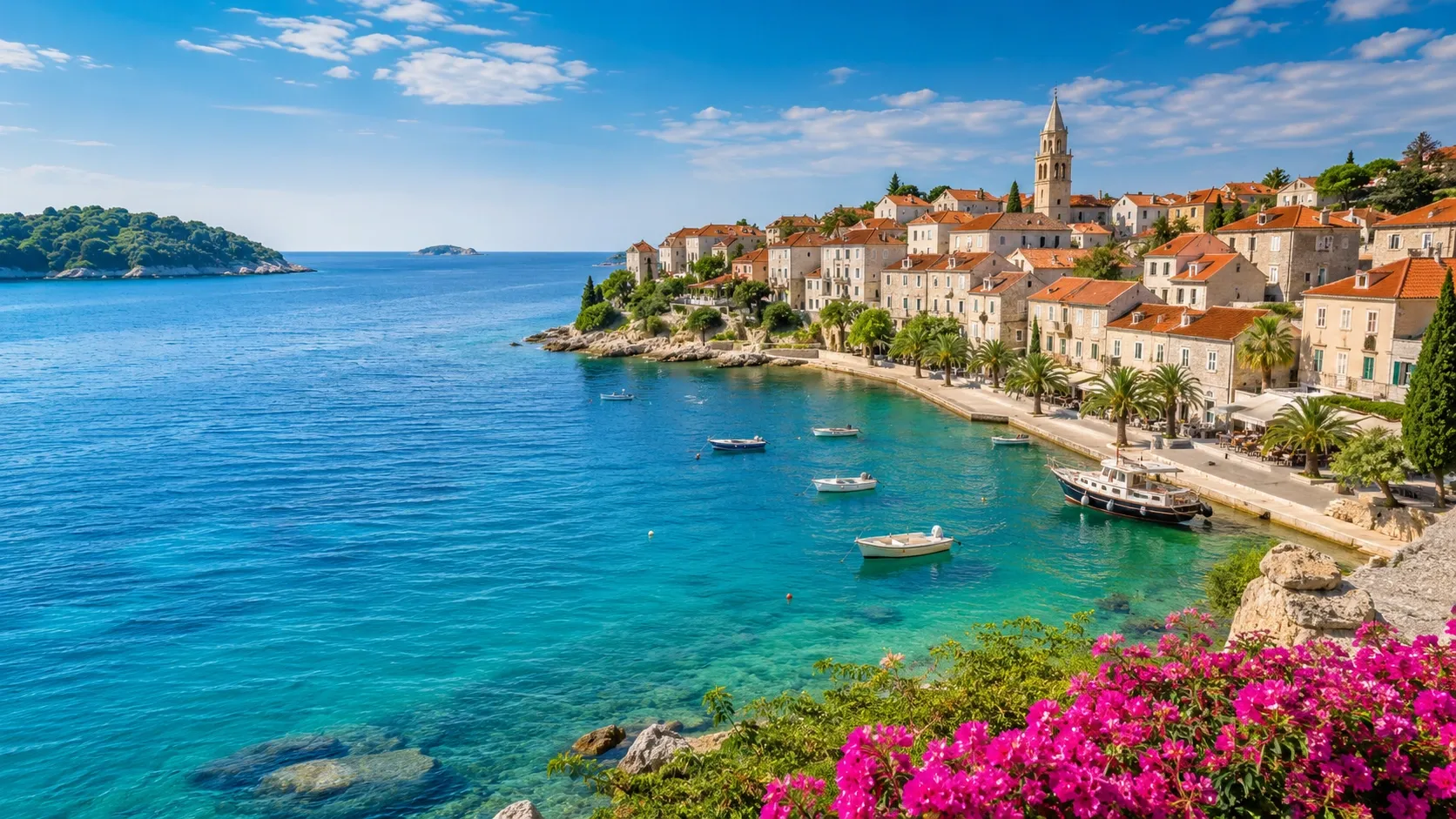
Croatia combines Adriatic scenery, historic towns and comparatively manageable costs outside its busiest tourism centres. Since adopting the euro, budgeting and travel within much of Europe have become simpler, although prices have risen in some popular coastal locations.
Zadar and Pula offer coastal access with more practical year-round services than certain smaller resort communities. Rijeka is a working port city with local infrastructure, while neighbourhoods outside Split may provide better value than the historic centre.
Croatia should not be described as having one simple retirement visa. Canadians must establish a qualifying legal basis for temporary residence and confirm the current process through the Croatian Ministry of the Interior.
Advantages:
- Beautiful coastline and islands
- Good regional travel connections
- Attractive historic communities
- Growing international population
Considerations:
- Seasonal crowds affect coastal cities
- Smaller towns may provide limited winter services
- Residency options depend on the applicant’s circumstances
8. Germany – best for infrastructure and dependable services

Germany suits retirees who value reliable transportation, organized cities, healthcare infrastructure and easy access to neighbouring countries. It is less suitable for someone whose main priority is year-round warmth.
Berlin, Munich and Hamburg can be expensive. Leipzig, Bremen and smaller university cities may offer a better balance of housing costs and amenities. Freiburg provides a high quality of life near France and Switzerland, although it is not among Germany’s cheapest cities.
Germany does not have a universal visa marketed specifically to retirees. Eligibility depends on financial resources, insurance, intended residence and individual circumstances. Canadians should consult the official German missions in Canada before making relocation commitments.
For payment planning, MTFX provides a guide to sending money to Germany from Canada.
Advantages:
- Excellent transportation and infrastructure
- Strong healthcare system
- Safe and well-serviced cities
- Central location for European travel
Considerations:
- Health-insurance arrangements can be complex
- German is important for administration and healthcare
- Winters may feel long and dark
9. Austria – best for safety, nature and public services

Austria combines clean cities, Alpine scenery, cultural life and efficient public transportation. Vienna is widely recognized for its quality of life, but smaller cities such as Graz, Klagenfurt and Linz may provide a more relaxed retirement setting.
The country can be challenging for non-EU retirees because settlement permits for people of independent means may involve strict eligibility requirements and numerical limits. Applicants generally need sufficient resources, suitable accommodation and comprehensive insurance.
Current residence requirements should be verified through the official Austrian migration portal.
Advantages:
- High levels of safety and cleanliness
- Excellent public transportation
- Strong healthcare services
- Central position within Europe
Considerations:
- Higher everyday and housing costs
- Residency availability can be restricted
- German-language ability is valuable
10. Switzerland – best for high-budget retirees prioritizing stability

Switzerland provides exceptional scenery, transportation, security and public infrastructure, but it is the most expensive destination in this ranking.
Ticino may appeal to retirees seeking an Italian-speaking environment and relatively mild weather. Vaud offers access to Lake Geneva and French-speaking communities, while smaller towns can provide a quieter lifestyle than Zurich or Geneva.
Residence approval for financially independent non-EU nationals may depend on the canton and the applicant’s circumstances. Mandatory health insurance can also represent a substantial recurring expense. Canadians should begin with the official Swiss State Secretariat for Migration.
Retirees receiving funds in Swiss francs can review options for sending money to Switzerland and monitoring the CAD to CHF exchange rate.
Advantages:
- Political and economic stability
- Excellent transportation
- High standards of healthcare
- Outstanding natural environment
Considerations:
- Very high housing and everyday expenses
- Mandatory health-insurance costs
- Canton-specific residency requirements
Which European country is best for your retirement priorities?
Your ideal destination depends on what you value most. A retiree seeking an English-speaking environment may prefer Ireland, while someone prioritizing sunshine and moderate housing costs may choose Greece or a smaller Portuguese community.
Portugal offers perhaps the broadest overall balance, but no destination is universally best. The final decision should reflect your healthcare needs, residency eligibility, language preferences, tax position and sustainable retirement budget.
Can Canadians legally retire in Europe?
Canadians can retire in Europe, but they cannot normally remain indefinitely as tourists. Most people need a national long-stay visa or residence permit from the country in which they plan to live.
Canadian passport holders can generally make short visits within the Schengen Area under the applicable short-stay rules. According to the European Union, Canadian travellers are visa-exempt for short visits, but a permanent move requires a separate national immigration process.
A residence application may require:
- Proof of pension, investment or other recurring income
- Evidence of savings or financial resources
- Comprehensive health insurance
- A criminal-record certificate
- Proof of suitable accommodation
- A valid passport
- Marriage and dependent documents, where applicable
- Certified translations or legalized documents
- An agreement not to work under certain residence categories
Buying a home does not automatically provide residence rights in most European countries. Property ownership and immigration status are separate legal matters. Canadians planning to purchase a retirement home can consult MTFX’s guide on funding a retirement home abroad.
Can you receive CPP and OAS while living in Europe?
Canadians may continue receiving certain Canadian pensions while living in Europe, but eligibility and taxation depend on the benefit, residency history and destination country.
The Government of Canada has international social security agreements with numerous countries. These agreements can help people qualify for Canadian or foreign benefits by coordinating periods of residence or contributions, although the exact terms differ by country.
CPP is based primarily on contributions made during a person’s working life. OAS rules are different and depend partly on how long the individual lived in Canada after turning 18. The Government of Canada explains that some recipients can continue receiving OAS while living outside Canada, depending on their residency history and applicable agreements.
Before moving, confirm:
- Your CPP and OAS eligibility
- Payment arrangements outside Canada
- The social security agreement covering your destination
- Non-resident withholding tax
- OAS recovery-tax obligations
- Whether other income-tested benefits stop after an extended absence
- How payments will be deposited and converted
For a broader overview, review these pension questions asked by Canadians retiring abroad.
How taxes work when a Canadian retires in Europe
Moving to Europe does not automatically end every Canadian tax obligation. The result depends on whether you remain a factual resident of Canada, become a non-resident or are treated as resident in another country under a tax treaty.
Canada maintains tax treaties with many countries to allocate taxing rights, reduce certain withholding rates and provide mechanisms that can help prevent double taxation. These agreements do not make every type of pension or investment income tax-free.
A Canadian retiring abroad may need professional advice regarding:
- The date Canadian tax residency ends
- Departure-tax implications
- CPP and OAS taxation
- RRSP and RRIF withdrawals
- Employer and private pensions
- Canadian dividends and investment income
- Rental income from Canadian property
- Foreign tax credits
- Estate and inheritance planning
- Tax filing in the new country
The Canada Revenue Agency explains that non-resident seniors may face withholding tax on Canadian-source income. A tax treaty may reduce the rate for certain payments, and some retirees may benefit from filing a Section 217 return.
Cross-border taxation is highly individual. Obtain advice from a qualified professional familiar with both Canadian and destination-country tax rules before establishing residency.
What healthcare should Canadian retirees arrange before moving?
Canadian provincial healthcare plans are not designed to provide complete permanent coverage in another country. A Canadian health card may not cover routine treatment, prescriptions, hospitalization or long-term care after relocation.
Healthcare planning should include:
- Private insurance required for the visa
- Eligibility for public healthcare after residence
- Waiting periods
- Prescription coverage
- Dental and vision costs
- Pre-existing-condition exclusions
- Access to English-speaking doctors
- Emergency treatment in rural areas
- Long-term care
- Medical evacuation or repatriation
A country may have an excellent national healthcare system while still requiring new foreign residents to pay privately during their initial period of residence.
How much does it cost to retire in Europe?
The amount needed to retire in Europe depends more on the selected city and lifestyle than on the country name alone. A retiree living in a small inland community may spend considerably less than someone in a popular coastal district within the same country.
The largest variables generally include:
- Renting versus owning
- City-centre versus regional housing
- Private health insurance
- Property taxes and maintenance
- Heating and cooling
- Vehicle ownership
- Flights back to Canada
- Dining and leisure habits
- Tax residency
- Currency-conversion costs
Build your budget for the specific community under consideration rather than relying on a national average. Include additional room for inflation, healthcare costs and exchange-rate changes.
How exchange rates affect retirement income in Europe
A Canadian retiree may receive CPP, OAS, private pensions, investment income or rental income in Canadian dollars while paying most expenses in euros or Swiss francs.
If the Canadian dollar weakens, the same CAD pension buys less foreign currency. This can raise the Canadian-dollar cost of rent, groceries, healthcare, property maintenance and travel without any increase in the local price.
For example, a retiree who needs €3,000 each month must convert enough Canadian dollars to purchase that amount. The required CAD total will change with the CAD to EUR exchange rate and the currency margin applied to the transaction.
Exchange-rate planning may involve:
- Monitoring the CAD to EUR or CAD to CHF rate
- Setting CAD to EUR rate alerts
- Converting funds in stages
- Maintaining a local-currency reserve
- Scheduling recurring transfers
- Separating monthly expenses from large property payments
- Comparing the full conversion cost instead of only the transfer fee
No strategy removes all currency risk. The objective is to prevent each conversion from becoming an urgent, last-minute decision.
Save on retirement fund transfers with competitive exchange rates from MTFX.
How to move your retirement money from Canada to Europe
Moving retirement funds becomes easier when monthly living expenses, one-time purchases and emergency reserves are handled separately.
- Estimate your European expenses.
- Decide how much to keep in Canada.
- Open the appropriate European bank account.
- Compare the total transfer cost.
- Choose a transfer schedule.
- Prepare source-of-funds documents.
- Convert CAD into the required currency.
- Track the payment and confirm receipt.
- Review the plan regularly.
Large relocation or property payments may require additional planning. MTFX’s large money transfer service supports higher-value international payments, while the expat payment solution is relevant for recurring cross-border expenses.
A checklist before retiring in Europe
A successful overseas retirement begins well before the moving date. Use this checklist to identify practical gaps while there is still time to address them.
- Spend time in the destination during more than one season.
- Confirm the correct long-stay visa or residence permit.
- Verify current income and savings requirements.
- Arrange suitable private health insurance.
- Ask a cross-border tax professional to review your position.
- Confirm how CPP, OAS, RRSP and RRIF income will be treated.
- Compare housing costs outside major tourist districts.
- Build a budget in euros or the destination currency.
- Plan how Canadian and European bank accounts will work together.
- Prepare criminal-record checks and certified documents early.
- Review local wills, inheritance rules and powers of attorney.
- Maintain an emergency travel and relocation fund.
- Investigate local transportation before deciding to live without a car.
For additional planning considerations, see MTFX’s guide on planning a stress-free retirement abroad.
How MTFX supports Canadians retiring in Europe
Managing money across two countries should not become a monthly source of uncertainty. MTFX helps Canadian retirees convert and transfer funds internationally while providing access to currency tools and specialist support.
- Convert Canadian dollars into euros, Swiss francs, British pounds and other currencies.
- Arrange recurring transfers for rent, living expenses or family obligations.
- Move larger amounts for property, relocation or major purchases.
- Monitor live rates and set currency alerts.
- Track transfers to European bank accounts.
Canadians can use MTFX’s personal international payment solutions for retirement expenses, overseas property payments and ongoing transfers between Canada and Europe.


Enjoy more value from your retirement transfers with MTFX
Portugal may offer the strongest overall balance for many Canadians, while Spain and Greece appeal to retirees seeking warmer living. France and Italy provide cultural variety, Ireland removes the language barrier, and Germany, Austria and Switzerland prioritize infrastructure and stability.
The right destination still depends on residency eligibility, healthcare, taxes, housing and the lifestyle you can comfortably maintain. A place that feels inexpensive during a short holiday may create different financial pressures once insurance, utilities, taxes and return trips to Canada are included.
Once you have selected a destination, build your budget in the local currency and decide how you will move savings and recurring retirement income. Register with MTFX and arrange secure money transfers from Canada to Europe.
FAQs
1. What is the best European country for Canadians to retire in?
Portugal is one of the strongest overall choices because it combines a mild climate, established residency options, international communities and access to smaller cities. The best country ultimately depends on your budget, healthcare needs and preferred lifestyle.
2. What is the cheapest European country for Canadian retirees?
Greece, Croatia and selected regions of Portugal and Italy may be more affordable than Switzerland, Ireland or Austria. Costs can vary considerably between capitals, tourist centres and smaller communities.
3. Can a Canadian citizen move permanently to Europe?
Yes. Canadians normally need a national long-stay visa or residence permit to live in a European country permanently. Requirements may include income, savings, insurance, accommodation and background checks.
4. Which European countries offer residency options for retirees?
Portugal, Spain, France and Italy have residence routes commonly used by financially independent retirees. Other countries may permit residence based on sufficient resources without officially calling the permit a retirement visa.
5. Can Canadians receive CPP while living in Europe?
CPP can generally be paid to eligible recipients living outside Canada. Tax withholding and payment arrangements depend on the recipient’s country of residence and personal circumstances.
6. Can Canadians receive OAS while living abroad?
Some Canadians can receive OAS abroad, depending on their years of Canadian residence and any applicable social security agreement. Confirm your eligibility with Service Canada before moving.
7. Do Canadian retirees pay taxes in Canada after moving to Europe?
They may. Canadian pensions, RRSP or RRIF withdrawals, rental income and investments can remain taxable in Canada. Tax treaties and residency status help determine the final treatment.
8. Can Canadian retirees use European public healthcare?
Access depends on the country and residence status. Many retirees initially need private insurance, and public coverage may begin only after registration, contributions or a qualifying period.
9. How much money do you need to retire in Europe?
The amount depends on housing, healthcare, taxes, location and lifestyle. Retiring in a smaller Greek or Portuguese community generally requires a different budget from living in Dublin, Zurich or central Paris.
10. Does buying property in Europe give Canadians residency?
Usually not. Buying property and obtaining legal residence are separate processes. A Canadian property owner must still qualify under the destination country’s immigration rules.
11. How does the CAD to EUR exchange rate affect retirement income?
A weaker Canadian dollar reduces the number of euros received from a fixed CAD income. This can increase the Canadian-dollar cost of rent, healthcare, travel and everyday living expenses.
12. What is the best way to transfer Canadian pension income to Europe?
Compare the exchange rate, currency margin, transfer fees, delivery process and amount received. Regular international transfers can help retirees move a planned amount into their European bank account each month.