Do You Need a Routing Number for International Transfers?
A routing number is required for some international transfers, especially payments involving US bank accounts, ACH, or Fedwire. Transfers to other countries may require an IBAN, SWIFT/BIC code, sort code, BSB, or local bank identifier instead. Always follow the recipient bank’s official payment instructions.
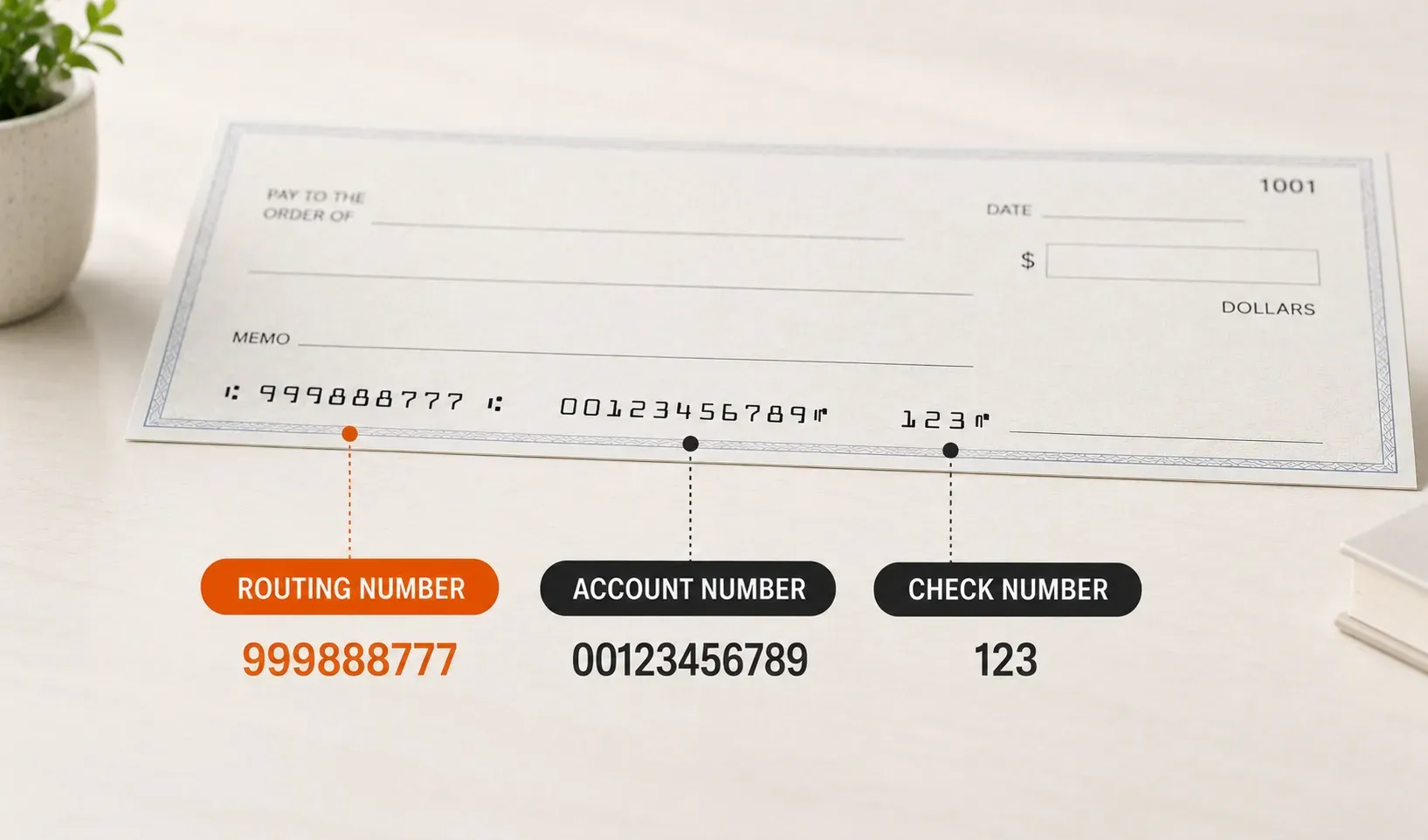
A routing number is required for some international transfers, particularly when money is being sent to a bank account in the United States or routed through a domestic US payment network. For many other destinations, the recipient’s SWIFT/BIC code, account number, IBAN, or country-specific bank code will be more important.
The exact information you need depends on the destination country, receiving bank, transfer currency, and payment method. A routing number that works for an ACH payment may not work for a wire transfer, even when both payments are going to the same bank.
MTFX has helped Canadians move money globally since 1996. Through its personal international money transfer service, Canadians can send secure payments to more than 190 countries, access competitive exchange rates, and receive specialist support when arranging transfers to overseas bank accounts.
What is a routing number?
A routing number is a numerical code that identifies a bank or financial institution within a payment network. It tells the payment system where the funds should be sent, while the recipient’s account number identifies the specific account that should receive them.
Routing numbers may be used for:
- Domestic wire transfers
- ACH payments
- Direct deposits
- Pre-authorized debits
- Electronic bill payments
- Cheque processing
- Bank account verification
The term is most closely associated with the United States, where banks use nine-digit ABA routing numbers. Canada also uses routing information, although Canadian institution and branch details follow a different structure.
You can use the MTFX bank routing number lookup to check the format and bank associated with a US routing number before submitting a payment.
What is an ABA routing number?
An ABA routing number is a nine-digit code assigned to a financial institution in the United States. It may also be called a routing transit number, bank routing number, ABA number, or Fedwire routing number.
The code identifies the bank involved in a US payment, but it does not identify the recipient’s personal account. The recipient’s account number is still required.
The Federal Reserve E-Payments Routing Directory provides routing information for institutions participating in Fedwire and FedACH. However, a bank can use different routing numbers for cheques, ACH transactions, and wire transfers, so the number should still be confirmed for the intended payment type.
Is a routing number required for an international transfer?
A routing number is sometimes required for an international transfer, but it is not a universal requirement. You will commonly need one when sending money to a US bank account, receiving funds through a US bank, or using a payment method connected to ACH or Fedwire.
For transfers to Europe and many other regions, you may need an IBAN, SWIFT/BIC code, account number, sort code, BSB, IFSC, or another local banking identifier instead.
The safest approach is to use the complete payment instructions provided by the recipient’s bank. Do not assume that a routing number, SWIFT code, or IBAN can replace another identifier.
How do Canadian routing numbers work?
Canadian bank routing information generally contains:
- A three-digit institution number identifying the financial institution
- A five-digit transit number identifying the bank branch
- The recipient’s individual account number
For some electronic payments, the institution and transit numbers are combined into a nine-digit routing code that includes a leading zero. The structure is commonly shown as:
0YYYXXXXX
- YYY represents the three-digit institution number.
- XXXXX represents the five-digit branch transit number.
Payments Canada’s wire payment guidance confirms that Canadian wire instructions may require the beneficiary’s institution number, branch transit number, account number, bank address, and SWIFT/BIC code.
Payments Canada also maintains a Financial Institutions File containing Canadian routing numbers and branch information.
When do you need a routing number for an international transfer?
A routing number is normally needed when part of the transfer must pass through a domestic payment system that uses routing codes. This is most common with transfers involving US bank accounts.
1. Sending money from Canada to the United States
International transfers to US bank accounts commonly require an ABA routing number. Depending on the receiving bank and transfer method, you may also need:
- The recipient’s full legal name
- The recipient’s residential or business address
- The bank account number
- The correct wire or ACH routing number
- The bank’s name and address
- A SWIFT/BIC code
- The payment purpose or reference
- Intermediary bank details, when applicable
Ask the recipient to request official incoming-wire instructions from their bank. The routing number printed on a cheque may be intended for ACH or cheque processing rather than an incoming wire.
Canadians planning a payment to an American recipient can review MTFX’s service for sending money to the USA and monitor the current CAD to USD exchange rate before converting their funds.
| Field | Value |
|---|---|
Amount Payable (USD) 50,000 | |
Bank Exchange Rate 1.4495 / 0.6899 | |
Total cost 72,472.53CAD |
| Field | Value |
|---|---|
Amount Payable (USD) 50,000 | |
MTFX Exchange Rate 1.4246 / 0.7020 | |
Total cost 71,229.13CAD |
You Save
CAD 1,243.4
with MTFX
13 October 2026
We use mid-market rates. This is for informational purposes only. Log in to view send rates.
2. Funding a transfer from a US-dollar account
You may also need a routing number when funding an international transfer from a US-dollar bank account. In this situation, the routing information may belong to the payment provider or collection account rather than the final overseas recipient.
Keep the two stages separate:
- Funding instructions move your money from your bank to the transfer provider.
- Beneficiary instructions direct the converted funds to the final recipient.
Using the beneficiary’s bank details when funding the transfer, or using the provider’s funding details as the beneficiary information, can leave the payment unmatched or send it through the wrong route.
3. Receiving an international wire in Canada
A person receiving money in Canada may need to provide the sender with:
- The three-digit Canadian institution number
- The five-digit branch transit number
- The recipient’s bank account number
- The bank’s SWIFT/BIC code
- The bank and branch address
- The recipient’s full legal name and address
Some sending banks provide separate fields for the institution and transit numbers. Others ask for a combined Canadian clearing code. Follow the format requested by the sending bank instead of changing the number independently.
4. Transfers involving an intermediary bank
An international payment may pass through an intermediary or correspondent bank when the sending and receiving banks do not have a direct relationship or when a particular currency requires an additional settlement institution.
The intermediary may have its own SWIFT/BIC code, account number, or routing code. Only add these details when they appear in the recipient bank’s official wire instructions.
Leaving out a required intermediary can delay a payment. Adding one that is not required can create an unnecessary routing problem.
When is a routing number not required?
A US-style ABA routing number is not used by every country. Many banking systems rely on their own domestic identifiers or include the routing information within a standardized international account format.
Examples include:
- IBAN: Used across Europe and in several other participating countries
- Sort code: Used to identify UK bank branches
- BSB: Used to identify Australian banks and branches
- IFSC: Used for electronic payments in India
- SWIFT/BIC: Used to identify institutions in international financial messaging
- Institution and transit numbers: Used for Canadian bank routing
These codes are not interchangeable. A UK sort code cannot replace a US ABA number, and a SWIFT code cannot replace the recipient’s account number.
Routing number vs SWIFT code vs IBAN
Routing numbers, SWIFT/BIC codes, and IBANs all help a payment reach the correct destination, but each identifies a different part of the transaction.
What is a SWIFT/BIC code?
A SWIFT/BIC code identifies the financial institution involved in an international transaction. It does not identify the recipient’s individual account.
According to Swift’s BIC standard, a BIC follows the ISO 9362 structure. The main code contains eight characters, with an optional three-character branch identifier.
A SWIFT/BIC normally contains:
- Four characters identifying the institution
- Two letters identifying the country
- Two characters identifying the location
- An optional three-character branch identifier
A transfer to a US bank may require both an ABA routing number and a SWIFT/BIC code because the codes serve different purposes.
You can use the MTFX SWIFT/BIC code checker to review the structure and institution associated with a code. For a deeper explanation, see the guide to what a SWIFT code is and how it works.
What is an IBAN?
An International Bank Account Number identifies a particular account in an IBAN-participating country. The number may contain the country code, check digits, domestic bank information, branch details, and account number in a standardized sequence.
Swift maintains the ISO 13616 IBAN Registry, which documents the national formats used by participating countries.
You can use the MTFX IBAN checking tool to confirm that an IBAN follows the expected country format. A correctly formatted IBAN should still be confirmed directly with the recipient because format validation does not prove that the account belongs to the intended person.
Can one bank code replace another?
Not usually. A payment may require several identifiers because each one performs a separate function.
- A European transfer may require both an IBAN and SWIFT/BIC.
- A US transfer may require an ABA routing number, account number, and SWIFT/BIC.
- A Canadian wire may require institution and transit numbers plus SWIFT/BIC.
- A correspondent payment may require beneficiary and intermediary bank codes.
Use every field requested in the official payment instructions, but do not add unverified codes simply because a transfer form provides an optional field.
What bank details are required for an international transfer?
The information required changes by country, but most international payments need a combination of recipient, account, bank, routing, and payment-reference details.
A payment can reach the correct bank but still remain unallocated when the recipient name, student number, invoice reference, property file number, or other identifying reference is missing.
How to send an international transfer using the correct bank details
- Request complete payment instructions. Ask the recipient for one complete set of official bank instructions rather than collecting the account number, routing code, and SWIFT code through separate messages.
- Identify the destination’s banking format. Check if the destination uses an ABA routing number, IBAN, SWIFT/BIC, sort code, BSB, IFSC, Canadian transit information, or another local identifier.
- Confirm the payment method. Find out if the transfer will be delivered through an international wire, domestic wire, ACH, or local payment network. The correct bank code may change with the payment method.
- Verify new or changed instructions independently. For a large payment, confirm the details using a trusted phone number or contact method already on file. Do not rely only on contact information included in an unexpected email announcing new bank details.
- Compare the exchange rate and complete cost. Review the exchange rate, FX markup, transfer fee, possible intermediary deductions, and expected amount delivered. Use MTFX’s currency exchange calculator to estimate the value of your conversion.
- Enter each detail exactly. Check names, account numbers, routing codes, IBANs, SWIFT codes, leading zeroes, currency, and payment references before confirming the transfer.
- Save the confirmation and track the payment. Keep the transaction reference, recipient information, amount, currency, and expected delivery date. These records will be needed if the payment must be traced.
For more detail on the movement of funds between financial institutions, read the MTFX guide explaining how international wire transfers work. Also, keep an eye on live exchange rates to get better value for your international payments.
Transfer funds securely while saving on exchange rates with MTFX.
Common routing mistakes that can delay your payment
A bank code can be valid and still be wrong for a particular transfer. Most routing problems are caused by using incomplete instructions, selecting the wrong payment network, or assuming that similar-looking identifiers perform the same role.
- Using the routing number printed on a cheque without confirming that it accepts wires
- Entering an ACH routing number for a Fedwire payment
- Treating a SWIFT/BIC code as a recipient account number
- Entering an IBAN in a routing-number field
- Removing leading zeroes from a routing code or account number
- Using a shortened or informal beneficiary name
- Leaving out a required payment reference
- Adding an intermediary bank that was not included in the official instructions
- Reusing old bank instructions without checking for account changes
- Sending the wrong currency to an account that cannot hold it
The differences between US domestic clearing and international payment messaging can also cause confusion. The MTFX comparison of ACH transfers and SWIFT payments explains how the two systems serve different payment needs.
Can you send money internationally without a routing number?
Yes. Many international transfers are completed without a US-style routing number.
For example, a Canadian sending euros to France may need the recipient’s IBAN and SWIFT/BIC. A payment to the UK may use an account number and sort code, with an IBAN or SWIFT/BIC added when required by the international route.
The more useful question is not simply, “Do I have a routing number?” It is:
Do I have the correct banking instructions for this destination, currency, bank, and payment method?
A transfer provider should identify the required fields before the payment is submitted. You can also review MTFX’s guide to sending money outside Canada for a broader overview of the process.
How to find and verify a routing number
The best source is the recipient or their financial institution. Ask for instructions specifically prepared for the payment method you plan to use.
You may find routing information through:
- The recipient bank’s official incoming-wire instructions
- The bank’s online account portal or mobile app
- A bank statement or void cheque
- The bank’s official website
- The MTFX routing number lookup
- The Federal Reserve routing directory
- The Payments Canada Financial Institutions Branch Directory
A lookup tool may confirm that a routing number belongs to a bank, but it may not confirm that the number accepts the intended payment type. The recipient should verify that the code is suitable for ACH, Fedwire, cheque processing, or another specific transaction.
How long does an international transfer take?
International transfer times depend on the currencies, destination, payment route, recipient bank, intermediary banks, submission time, and accuracy of the payment instructions.
A correct routing number does not guarantee immediate delivery. Payments can still be delayed by:
- Bank cut-off times
- Weekends and public holidays
- Currency conversion
- Intermediary bank processing
- Compliance or identity checks
- Incorrect beneficiary information
- Missing payment references
See the MTFX guide on how long international SWIFT transfers take for more information about typical processing stages and possible delays.
Why choose MTFX for international money transfers?
MTFX helps Canadians arrange international payments with competitive exchange rates, secure transfer options, useful bank-code tools, and specialist support. Before sending, you can review your recipient details, compare the currency conversion, and track the transfer through the MTFX platform.
- Canadian-based and helping clients since 1996
- Registered with FINTRAC as a money services business
- Transfers available to more than 190 countries
- Support for more than 50 currencies
- Routing number, SWIFT/BIC, IBAN, and FX tools
- Specialist assistance for personal international payments
Before booking your transfer, use MTFX’s live exchange rate tools to review current currency values and understand how the conversion may affect the amount your recipient receives.


Transfer money abroad with MTFX
A routing number is essential for some international transfers, but it is only one part of the payment instructions. Transfers involving US accounts often use ABA routing numbers, Canadian accounts use institution and transit numbers, and many overseas destinations rely on IBANs, SWIFT/BIC codes, or local bank identifiers.
Confirm the recipient’s account information, bank code, currency, payment method, and reference before sending. A few minutes of verification can help prevent rejected payments, returned funds, and avoidable processing delays.
MTFX can help you send money internationally with competitive exchange rates, secure transfers, bank-detail tools, payment tracking, and specialist support throughout the process. Sign up with MTFX and get your money transferred quickly across the globe.
FAQs
1. Do all international transfers require a routing number?
No. Transfers involving US bank accounts commonly require an ABA routing number, while payments to IBAN countries generally rely on an IBAN and SWIFT/BIC. Requirements depend on the destination and payment method.
2. Is a routing number the same as a SWIFT code?
No. A routing number identifies a bank within a domestic payment system. A SWIFT/BIC code identifies a financial institution for international payment messaging.
3. Is an ABA number the same as a routing number?
Yes. An ABA number is a nine-digit routing number used to identify a US financial institution. A bank may have separate ABA numbers for ACH payments and wire transfers.
4. Do Canadian banks have routing numbers?
Yes. Canadian routing information normally includes a three-digit institution number and a five-digit branch transit number. These details may be combined into a nine-digit electronic routing code.
5. Do I need both a SWIFT code and routing number to send money to the US?
You may need both. The SWIFT/BIC identifies the receiving bank internationally, while the ABA routing number directs the payment within the US banking system.
6. What happens if I use the wrong routing number?
The payment may be rejected, delayed, returned, or sent to the wrong institution. Contact your bank or transfer provider immediately after discovering an error.
7. Can I use an IBAN instead of a routing number?
Only when the recipient’s country and bank use IBANs. An IBAN cannot replace a routing number when the receiving bank specifically requires an ABA, transit, sort, or local clearing code.
8. How do I find the recipient’s routing number?
Ask the recipient to obtain official wire or ACH instructions from their bank. You can then confirm the number through an official bank website or trusted routing directory.
9. What details are required for an international wire transfer?
You generally need the recipient’s legal name, address, account number or IBAN, bank name, bank address, SWIFT/BIC, local routing code, currency, payment purpose, and reference.
10. Does the routing number appear on a cheque?
It often does, but the number printed on a cheque may not be suitable for a wire transfer. Confirm the correct routing number for the intended payment method.