Find Bank SWIFT and BIC Codes in Canada
Search for a bank SWIFT code or BIC by bank name, country and city. Find Canadian and international bank details, check branch information and confirm the code before sending money internationally.
Browse SWIFT Codes for Banks in Canada
Select a bank in Canada below to view available SWIFT and BIC codes, bank addresses, cities and branch information. Always match the code with the recipient’s official payment instructions before making an international transfer.










Found your SWIFT code? Send money with MTFX
Once you have confirmed the correct bank and branch details, let MTFX help you send money internationally with competitive exchange rates, secure transfers and expert payment support.
What is a bank SWIFT code?
A bank SWIFT code is an international identifier used to recognize a financial institution during a cross-border payment. It is also commonly called a BIC, which stands for Bank Identifier Code.
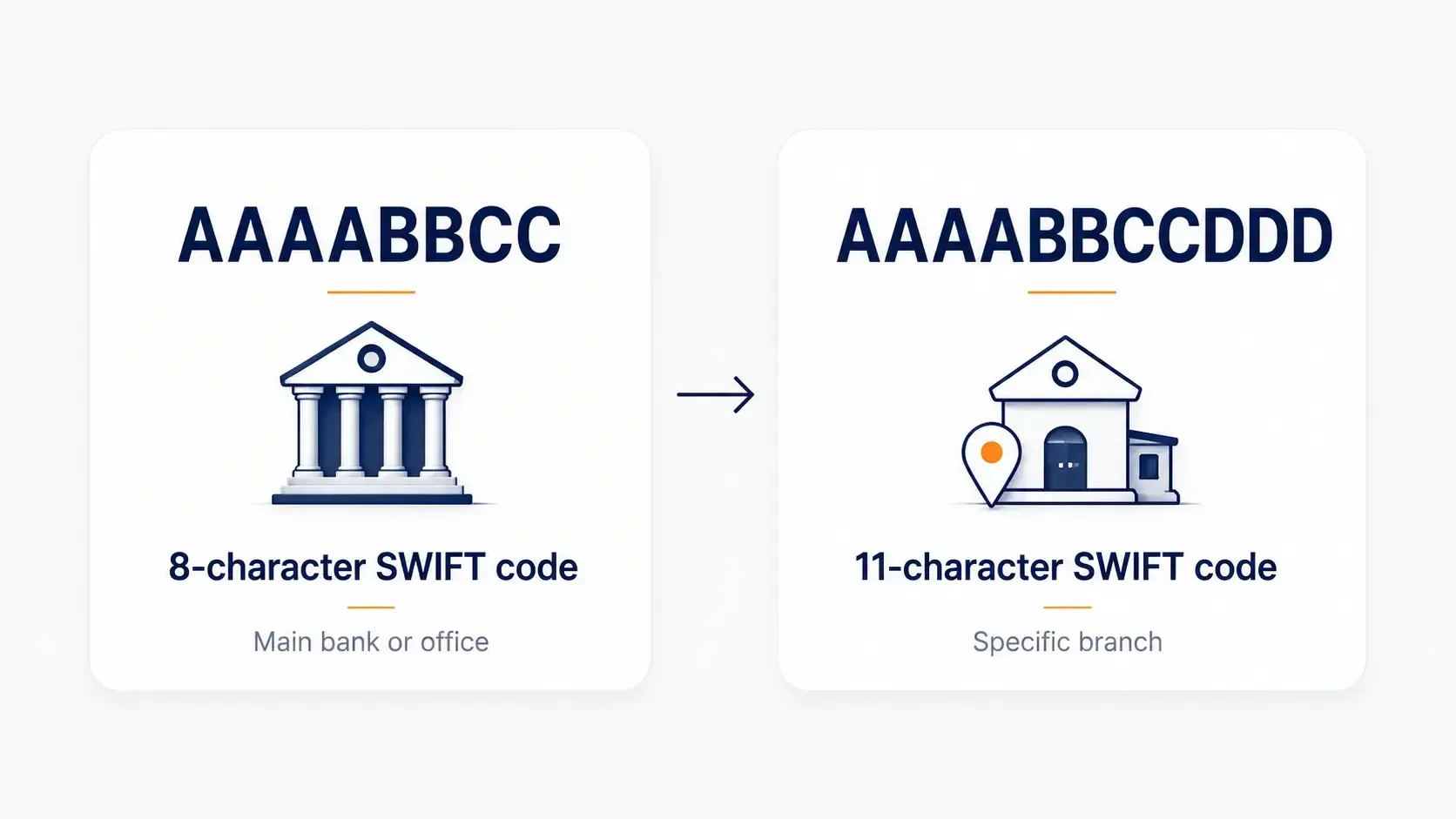
Most SWIFT/BIC codes contain 8 or 11 characters. These characters identify the bank, country and location, while the final three characters may identify a specific branch.
A SWIFT code identifies the receiving bank rather than the recipient’s individual account. You may also need an account number, IBAN, routing number, transit number or other payment details.
How do you read a SWIFT code?
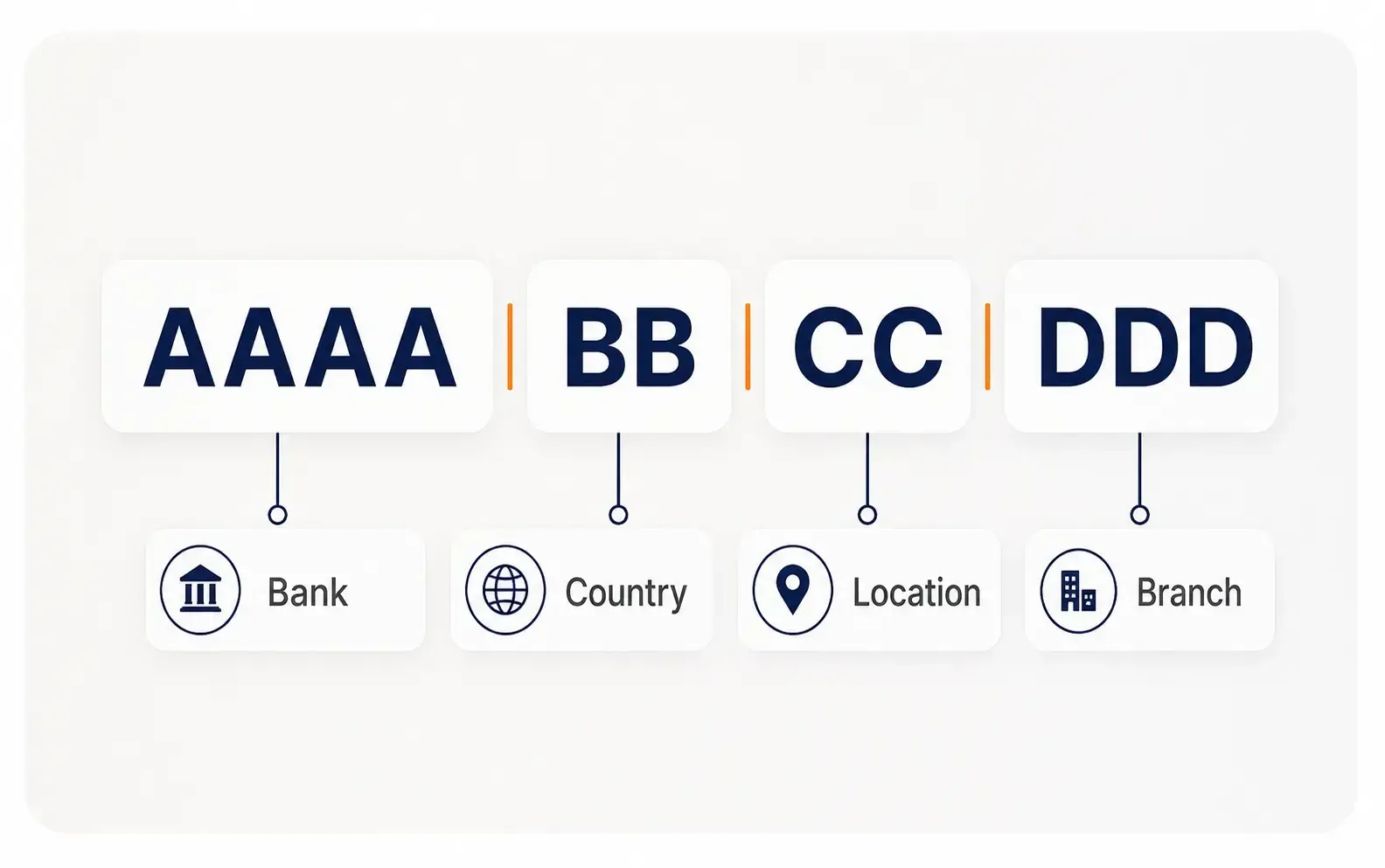
A SWIFT code is divided into sections that identify the bank and its location. For example, a code written as AAAABBCCDDD can be understood as follows:
AAAA – Bank code
Two letters identifying the country in which the bank is located.
BB – Country code
Two letters identifying the country in which the bank is located.
CC – Location code
Two letters or numbers identifying the bank’s location.
DDD – Branch code
Three optional letters or numbers identifying a specific branch.
Swift code vs bank identifiers: What’s the difference?
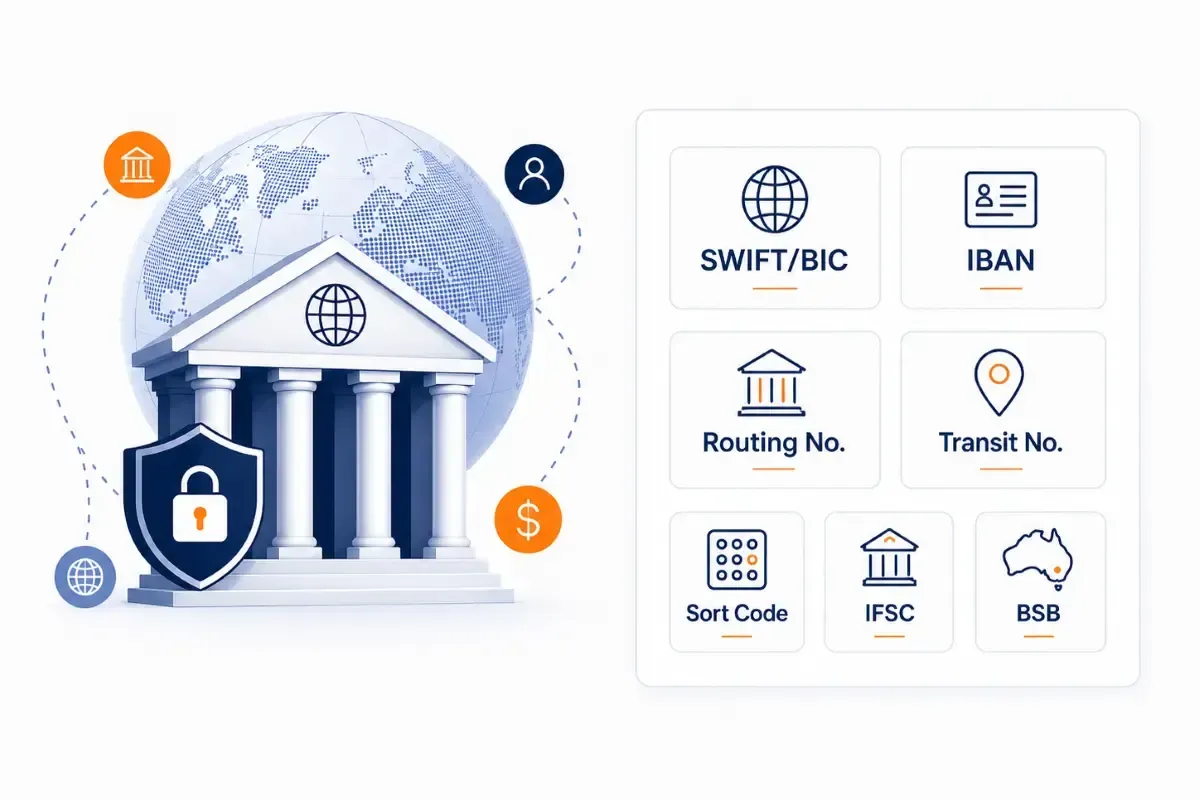
A SWIFT/BIC code identifies a bank for international payments, while identifiers such as IBANs, routing numbers, transit numbers and sort codes perform different functions. Using the wrong identifier can delay the payment, result in additional charges or cause the funds to be returned.
IBAN
Identifies an individual bank account in Europe and other countries that use the IBAN system.
Routing number
Identifies a bank or payment route used for domestic transfers within the United States.
Transit number
Identifies the specific Canadian bank branch where an account is held or managed.
Institution number
Identifies the Canadian financial institution responsible for holding and processing the account.
Sort code
Identifies a bank branch used for domestic payments in the United Kingdom and Ireland.

Do banks use the same SWIFT code for every branch?
Not necessarily. Banks may use one primary SWIFT code for some international payments and separate codes for particular branches, cities, currencies or services.
An 8-character SWIFT code generally identifies a bank or primary office. An 11-character code may include three additional characters identifying a specific branch.
This does not mean that each SWIFT code is suitable for every bank account. Use the code supplied by the recipient or confirm the correct details directly with the receiving bank.
More than 20,000 Canadians choose MTFX every year

Get bank-beating exchange rates on 50+ currencies when converting and sending money to recipients around the world.


Get support with your international payment details, transfer timing and currency conversion when you need it.
Let’s get your international payment moving.
Confirm the recipient’s banking details, access a competitive exchange rate and send your international payment securely with MTFX.
MTFX is trusted by millions around the globe



FAQs
A SWIFT code is an 8- or 11-character code used to identify a bank or bank branch during an international payment. It is commonly used when sending or receiving money across borders.
Yes. SWIFT code and BIC are commonly used to describe the same bank identifier. BIC stands for bank identifier code, while SWIFT refers to the network and organization associated with the coding system.
In Canada, a SWIFT code identifies a Canadian bank or branch for international payments. It is different from a Canadian transit number and institution number, which are primarily used to identify banks and branches within Canada.
Search using the bank’s official name, country and city. You may also find the code in the recipient’s payment instructions, on the bank’s website or by contacting the receiving bank directly.
No. A routing number is mainly used to identify a bank or payment route in the United States. A SWIFT code identifies a bank for international payments.
No. A Canadian transit number identifies a particular bank branch within Canada. A SWIFT code is used to identify a bank or branch during international payments.
Not always. Some banks use one main SWIFT code, while others have different codes for particular branches, countries, currencies or payment types. Confirm the code using the recipient’s banking instructions.
A SWIFT code is commonly required when money is sent to a bank in another country. However, the exact information required depends on the destination, receiving bank and payment network.
An incorrect SWIFT code may delay the payment, direct it to the wrong branch, result in additional fees or cause the transfer to be returned. Contact your payment provider immediately if you believe incorrect details were used.
Yes. A SWIFT code lookup by bank name helps you search for a bank’s available SWIFT/BIC codes and narrow the result by country, city, or branch.
A SWIFT code identifies a bank and is not normally considered confidential. However, you should protect personal account details, passwords, security codes and other sensitive banking information.
The SWIFT/BIC codes and bank details on this page are provided for general information only. Bank codes, branch details, and payment requirements can change. Always confirm the recipient’s banking details with the bank or recipient before sending an international transfer.