How to Check an International Supplier Invoice Before Approval
Before approving an international supplier invoice, verify the supplier, purchase terms, delivery or payment milestone, amount, currency and bank details. Check for duplicates, apply deposits and credits, confirm banking changes, and resolve discrepancies before authorised sign-off.
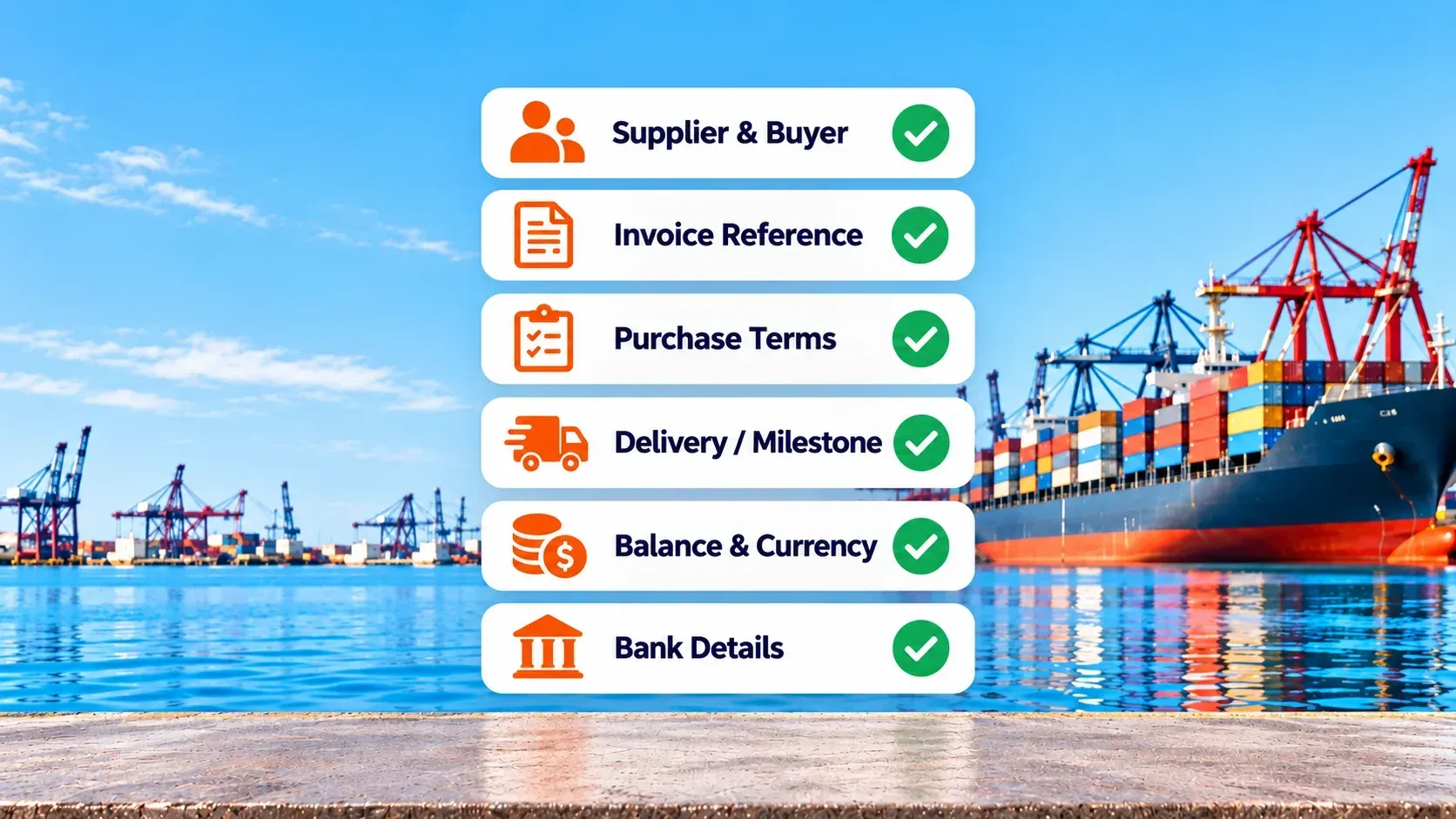
Before approving an international supplier invoice, confirm that the purchase was authorised, the amount matches the agreed terms, and the payment milestone has been met. Check the supplier’s identity, invoice currency, outstanding balance and approved bank details. Investigate duplicates, unexplained charges and banking changes before giving approval.
A familiar supplier name and a professional-looking PDF can make an invoice feel ready to pay. But the document may still contain an incorrect currency, an unapplied deposit or payment instructions that differ from your records. Finding those issues before approval is usually easier than resolving them after money has moved.
For Canadian businesses, foreign invoices also introduce a separate question: how much CAD will be needed to settle the approved amount? This international supplier invoice checklist helps your team establish what is owed before arranging an international invoice payment through MTFX.
International supplier invoice checklist: What to verify before approval
Review the invoice alongside your supplier record, purchase agreement and supporting documents. The supplier invoice approval checklist below helps you complete foreign supplier invoice checks before approving payment; legal invoice requirements depend on the jurisdiction and transaction.
For supplier invoices issued in USD, compare CAD to USD exchange rates below to estimate how much your business will need in Canadian dollars.
| Field | Value |
|---|---|
Amount Payable (USD) 50,000 | |
Bank Exchange Rate 1.4505 / 0.6894 | |
Total cost 72,523.53CAD |
| Field | Value |
|---|---|
Amount Payable (USD) 50,000 | |
MTFX Exchange Rate 1.4256 / 0.7015 | |
Total cost 71,279.25CAD |
You Save
CAD 1,244.28
with MTFX
6 October 2026
We use mid-market rates. This is for informational purposes only. Log in to view send rates.
What details should supplier invoice approval checklist include?
A useful invoice identifies the parties, explains the purchase and states the amount being requested. Payment instructions may appear on the invoice or in a separately verified supplier record.
- Supplier and buyer information
Check the supplier’s legal name and address against the approved record. Confirm the invoice is addressed to the company that made the purchase. A group with several entities should resolve an invoice addressed to its parent company when a subsidiary placed the order.
- Invoice number, dates and purchase reference
Look for a unique invoice number, issue date, due date and purchase order or contract reference where applicable. Confirm how the due date is calculated. “Net 30” may run from the invoice date or another agreed event; the contract should settle that question.
- Goods or services, quantities and prices
The description should be specific enough to connect the charge to a purchase. For goods, review units and quantities. For services, look for the service period, deliverable, hours or milestone. A vague description such as “consulting” may need supporting detail.
- Invoice currency, total and payment terms
An invoice currency code removes ambiguity that a symbol cannot. “$25,000” does not establish CAD or USD. ISO 4217 currency codes provide standard identifiers such as CAD, USD and EUR. Confirm the invoice currency matches the agreement and that subtotals, discounts, taxes and charges reconcile to the total.
- Match the invoice to your order and delivery record
Use three-way invoice matching to compare the supplier invoice, purchase order and goods receipt or delivery record. Check that quantities, unit prices and totals agree, and resolve any discrepancies before approving payment. For services, use evidence that the agreed work was completed and accepted.
How to verify an international supplier invoice before approval
Use a repeatable review process, with an assigned owner for exceptions. The following steps can be adapted to your purchasing and accounts payable policies.
Step 1: Confirm the supplier and purchasing entity
Start with your existing supplier record, rather than treating information on the incoming document as authoritative. Check the supplier name, contact and contractual relationship. For a new supplier, complete the required onboarding before allowing the invoice through the normal approval route.
Step 2: Match the invoice to the purchase order or contract
Compare each charge with what was agreed: product or service, quantity, unit price, currency and additional costs. If a supplier substitutes an item or increases freight charges, obtain the supporting approval. A correct grand total can still conceal an incorrect line item.
For a non-PO invoice, use the contract, approved quote or other purchase authorisation. Record who requested the expense and which budget owner can confirm it. The absence of a purchase order should lead to an alternative evidence check.
Step 3: Confirm delivery or the agreed payment milestone
Three-way matching compares the invoice, purchase order and goods receipt. It helps identify differences between what was ordered, received and billed. Microsoft’s invoice matching guidance explains checks on prices and received quantities, including configured tolerances.
Apply the evidence appropriate to the agreement. A service invoice may need confirmation from the project owner. A deposit can be due before shipment, while a final instalment may depend on acceptance. For partial deliveries, establish which quantities or milestone the supplier is billing.
Step 4: Recalculate the amount still outstanding
Review the arithmetic, then reconcile the invoice with the supplier account. Deduct applicable deposits, credit notes and previous payments. If USD 10,000 has already been paid towards a USD 50,000 purchase, confirm how that deposit appears in the supplier’s billing.
Distinguish a statement showing several unpaid invoices from a new invoice. Otherwise, the same obligation could enter the approval queue twice.
Step 5: Check duplicates and conflicting instructions
Search existing records using the supplier, invoice number, amount, currency and purchase reference. Consider small formatting differences: “INV-1048” and “INV1048” may refer to the same bill. A revised invoice should identify what changed and replace or adjust the earlier version under your process.
Step 6: Record the review and obtain authorised approval
Attach the invoice, matching evidence and resolved exceptions to the approval record. Record the approver, date and amount authorised. Where practical, separate supplier-record changes, invoice approval and payment release. If staffing is limited, use a documented second review for higher-risk changes.
How to verify supplier bank details and payment changes
Supplier invoice bank details deserve their own check. An invoice can accurately describe a genuine purchase while directing the payment to the wrong account.
1. Compare instructions with the approved beneficiary record
Review the beneficiary name, account identifier, bank and required routing information. Requirements vary by destination and payment method. Confirm the account can receive the agreed currency. Investigate a beneficiary name or bank country that differs from your records; legitimate arrangements still need supporting evidence.
2. Verify changed banking details independently
Contact an established supplier representative through a trusted route already held on file. The Canadian Anti-Fraud Centre recommends verifying payment requests, especially bank changes, using a trusted phone number rather than one provided in the email. Document the confirmation and obtain the required authorisation before updating the supplier record.
3. Use banking tools for the checks they support
The MTFX IBAN checker helps check account-number structure, while the SWIFT/BIC tool helps identify the bank associated with a code. A formatting check does not establish account ownership or authorise a payment. Retain independent verification for new or amended instructions.
What Canadian businesses should check on foreign invoices
International invoice approval also needs a clear distinction between the supplier’s request, the business’s funding requirement and any transaction-specific documentation.
1. Separate the foreign amount from the CAD estimate
Record the amount owed in the agreed currency. Then estimate the CAD funding requirement separately, including known fees. For illustration, USD 40,000 at 1.36 CAD per USD requires CAD 54,400 before fees. At 1.39, it requires CAD 55,600. The USD balance is unchanged; the funding estimate rises by CAD 1,200.
These are hypothetical rates, not live quotes. Record the estimate’s date and basis, and follow your accounting policy for booking the liability. An approval-stage estimate may differ from the eventual conversion cost.
2. Review tax treatment for the actual transaction
Do not assume every foreign invoice has the same tax treatment. Clarify unexpected taxes and refer uncertain cases to the appropriate reviewer. For example, CRA guidance on non-resident services performed in Canada addresses withholding obligations for that situation. It does not make withholding a universal requirement for overseas purchases.
3. Check import documentation when goods enter Canada
For imported goods, confirm the relevant shipment documents are available to the person handling customs. CBSA invoice guidance covers details such as parties, goods, quantities, values and currency of settlement. Customs documentation and internal payment approval serve different purposes; completing one does not automatically complete the other.
Reduce FX costs on your international business payments.
When should you hold an international invoice for clarification?
Hold the invoice when an unresolved issue could change who is paid, what is owed or the authority to pay it. Assign a reviewer and request specific evidence so the issue has a clear route to resolution.
Common invoice exceptions and the next action
An unusual detail is a reason to investigate, not proof of fraud. Keep the invoice on hold until the required checks are complete. An urgent email should not replace the evidence your approval process requires.
Example: Reviewing a USD supplier invoice before approval
Consider a hypothetical Canadian importer buying equipment for USD 50,000. The agreement requires a USD 10,000 deposit and the remainder after delivery. The deposit has been paid, and the equipment has arrived.
The supplier sends a USD 50,000 invoice marked “due immediately” with new bank details. Three points need clarification: the amount now due, the payment deadline and the beneficiary account.
- Balance: reconcile the deposit and confirm that USD 40,000 remains payable.
- Terms: check the agreed deadline and ask the supplier to correct conflicting wording.
- Delivery: retain the receipt or acceptance evidence required by the agreement.
- Banking: independently verify the new account and complete the approved update process.
Once the discrepancies are resolved, the approver receives the corrected billing evidence and verified beneficiary record. Finance can then prepare funding for the confirmed balance, rather than using the original invoice total.


After approval: Prepare your international invoice payment
Approval establishes the obligation your business has authorised. Payment preparation turns that decision into an instruction: approved beneficiary, amount, currency, reference and intended timing. Recheck any detail that changes between those stages.
Confirm fee responsibility and the amount the supplier expects to receive. Ask the provider about processing estimates, cut-off times and required documents. For recurring purchases, planning ahead can prevent the due date from becoming the first time anyone considers funding.
MTFX supports Canadian businesses with cross-border business payments. After completing your internal checks, discuss the payment currency, exchange rate and timing with a specialist. For a broader review of the transfer stage, read about common international business payment mistakes.
A well-reviewed invoice gives your team a clear starting point: the right obligation, supported by evidence, ready for payment planning. Sign up with MTFX and send your supplier payments without any complexities.
FAQs
1. What should I check before approving an international supplier invoice?
Confirm the supplier, purchasing entity, purchase authorisation, payment milestone, amount outstanding, currency and approved bank details. Check for duplicates and resolve exceptions before recording approval.
2. What details should a foreign supplier invoice include?
Core details include the parties, invoice number, dates, purchase description, quantities or service period, prices, currency, total and payment terms. Additional requirements depend on the transaction and jurisdiction.
3. What is three-way matching?
Three-way matching compares a supplier invoice with the purchase order and goods receipt. It checks billing against agreed purchasing details and recorded delivery, subject to the business’s matching rules.
4. Can an invoice be approved without a purchase order?
Yes, if your policy allows it. Use alternative evidence such as an authorized contract or quote, confirm the relevant payment milestone, and route the expense to the designated individual.
5. How do I verify supplier invoice bank details?
Compare them with the approved beneficiary record. Independently confirm new or changed details through an established supplier contact, then document the verification and authorize the record update.
6. What should I do if a supplier changes its bank account?
Hold use of the new instructions until verification is complete. Contact the supplier through a trusted route already on file, investigate discrepancies and follow your banking-change approval process.
7. Which currency code should appear on an international invoice?
The invoice should clearly identify the agreed currency, using a code such as CAD, USD or EUR. Ask for clarification if it shows only an ambiguous symbol or conflicts with the contract.
8. Can a deposit invoice be approved before delivery?
Yes, when an authorised agreement requires a deposit. Verify the contractual trigger, amount, beneficiary and approval authority, then record the deposit for reconciliation against later invoices.
9. How do I identify a duplicate foreign invoice?
Compare supplier, invoice number, amount, currency, dates and purchase reference across submitted and paid records. Investigate revised invoices and small reference changes before treating them as separate obligations.
10. Is invoice approval the same as payment authorization?
They can be separate controls. Invoice approval confirms the authorized obligation; payment authorization approves the transfer instruction. Follow your policy for each stage and recheck any amended payment details.